
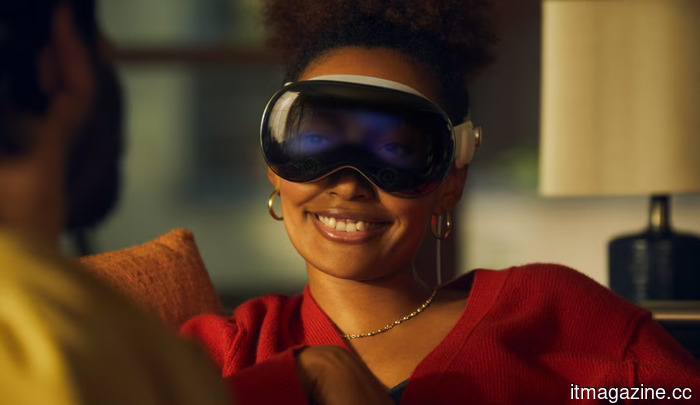
OpenAI has appointed Paul Meade, the head of Apple’s Vision Pro division.
Paul Meade, the chief of Apple’s Vision Pro, is departing to develop devices at OpenAI. This marks the most significant departure from Apple yet, highlighting the ongoing competition for AI hardware talent aimed at Cupertino.
Typically, Apple does not allow vice presidents to join competing firms. This unspoken rule has been upheld for years, with designers occasionally drifting to Jony Ive’s circle and a few executives moving to Meta, but the engineering backbone remained intact. However, on June 26, that norm was broken at the highest level.
Paul Meade, who has been in charge of the Vision Pro headset and Apple’s smart glasses initiative, is set to join OpenAI. Bloomberg’s Mark Gurman broke the story, which was subsequently confirmed by The Information and TechCrunch the following day. Both Apple and OpenAI refrained from commenting.
According to Gurman, Meade will depart Apple by next week to take a position within OpenAI’s hardware division, where he will contribute to the company’s upcoming lineup of AI-enabled devices. Following the announcement, Apple shares saw a slight reduction in gains, trading up approximately 2%.
This loss is significant due to Meade's standing. He became part of Apple in 2010, overseeing early iPad development before managing iPhone program management. He transitioned to the Vision Products Group in 2017 and has directed Vision Pro hardware engineering for the past seven years. His deputy, Fletcher Rothkopf, will assume substantial responsibilities in his absence.
Reforming Apple’s old hardware leadership
While one executive's departure is a personnel matter, the more revealing aspect is his new destination. At OpenAI, Meade reunites with former Apple associates Jony Ive, Tang Tan, and Evans Hankey, who once led design and hardware at Apple. Their startup was acquired by OpenAI last year for $6.5 billion.
Thus, OpenAI is not merely recruiting a senior engineer; it is reestablishing a version of Apple’s former hardware leadership within an AI research environment. The team is pursuing the same goal Meade sought at Apple: creating the next device post-smartphone. Altman has characterized OpenAI’s initial endeavor as being more tranquil and serene than an iPhone.
Developing that device has proven challenging. Reports from last autumn indicated that Ive and OpenAI were still grappling with fundamental issues. Meade’s role is to transform an idea into a market-ready product, the exact task he undertook with the Vision Pro.
A talent competition that Apple continues to lose
While Meade may be the highest profile departure, he’s not the first. OpenAI has gradually been attracting engineers from Apple's hardware sector, and in December, Alan Dye, Apple’s human interface chief, left for Meta. This trend is becoming increasingly evident and consistently favors one direction.
The timing seems intentional. Meade is part of a hardware organization that Johny Srouji, the new chief hardware officer, has recently reorganized. A number of vice presidents, including Meade, now find themselves at a lower level under a new manager, with some feeling they were demoted, as reported by Gurman. This shift came after John Ternus was promoted to run Apple as chief executive from September 1.
The headset that struggled to take off
Meade exits a product category in decline. The Vision Pro has not sold well, prompting Apple to quietly deprioritize enclosed headsets. A revamped model isn’t anticipated until 2028 or 2029. Instead, the company is shifting its focus toward lighter, display-free smart glasses, scheduled for release next year, to rival Meta.
This glasses initiative was also part of Meade’s responsibilities, along with long-term plans for augmented reality glasses aimed at the decade’s end. His departure not only supplies a competitor with talent but also offers insights into Apple’s vision for wearables.
Apple still has many projects underway, from camera-enabled AirPods to a tabletop robot and a wearable pendant, but it is facing increasing pressure in the AI domain. Meanwhile, OpenAI is expanding its hardware ambitions and now has the personnel to pursue them.
The question now is no longer whether OpenAI can recruit Apple's talent—it undoubtedly can. The real question is whether a company that has yet to release a consumer device can achieve what Apple, despite its considerable talent, could not: getting people to embrace the future on their faces.
Other articles
 A Chinese AI lab claims it can compete with Anthropic’s extremely powerful Claude Mythos in identifying security vulnerabilities.
The Wall Street Journal has reported that China's GLM-5.2 AI model is capable of competing with Anthropic's Mythos in cybersecurity functions, indicating a swiftly decreasing disparity in AI technology.
A Chinese AI lab claims it can compete with Anthropic’s extremely powerful Claude Mythos in identifying security vulnerabilities.
The Wall Street Journal has reported that China's GLM-5.2 AI model is capable of competing with Anthropic's Mythos in cybersecurity functions, indicating a swiftly decreasing disparity in AI technology.
 Amazon's swift delivery initiative has led to a $15 billion loss for India's Eternal and Swiggy.
Eternal and Swiggy have seen their market value decline by over $15 billion as Amazon broadens its 'delivery in minutes' service throughout India.
Amazon's swift delivery initiative has led to a $15 billion loss for India's Eternal and Swiggy.
Eternal and Swiggy have seen their market value decline by over $15 billion as Amazon broadens its 'delivery in minutes' service throughout India.
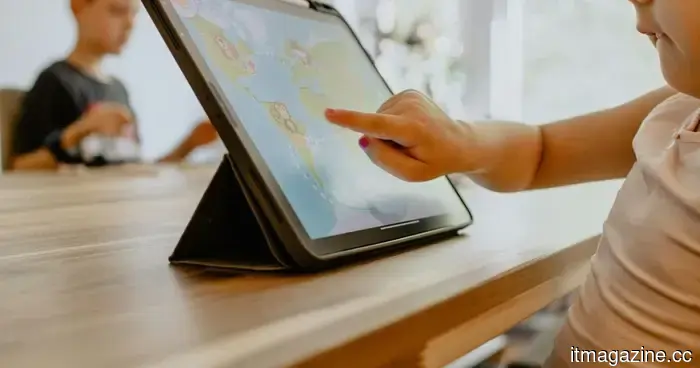 A study cautions that exposure to screens before the age of two may pose significant developmental risks.
Researchers advise that infants and toddlers under the age of two should steer clear of regular screen time, cautioning that smartphones and tablets can replace opportunities for play, sleep, language development, and interactions with caregivers.
A study cautions that exposure to screens before the age of two may pose significant developmental risks.
Researchers advise that infants and toddlers under the age of two should steer clear of regular screen time, cautioning that smartphones and tablets can replace opportunities for play, sleep, language development, and interactions with caregivers.
 SpaceX's Starpipe: a gas pipeline designed for Starship.
SpaceX is developing Starpipe, an 8-mile natural gas pipeline to Starbase, in order to increase the frequency of Starship launches and gain greater control over its supply chain.
SpaceX's Starpipe: a gas pipeline designed for Starship.
SpaceX is developing Starpipe, an 8-mile natural gas pipeline to Starbase, in order to increase the frequency of Starship launches and gain greater control over its supply chain.
 Mirendil secures $200 million to develop AI that enhances AI.
Mirendil, established by a pair of former researchers from Anthropic, secured $200 million at a valuation of $1 billion to offer self-enhancing AI research to a wider audience.
Mirendil secures $200 million to develop AI that enhances AI.
Mirendil, established by a pair of former researchers from Anthropic, secured $200 million at a valuation of $1 billion to offer self-enhancing AI research to a wider audience.
 Australia takes steps to increase penalties for Big Tech and empower its regulator in relation to the ban for those under 16.
Australia's new legislation would increase penalties for Big Tech to A$99 million and empower the eSafety Commissioner to demand board minutes and internal emails.
Australia takes steps to increase penalties for Big Tech and empower its regulator in relation to the ban for those under 16.
Australia's new legislation would increase penalties for Big Tech to A$99 million and empower the eSafety Commissioner to demand board minutes and internal emails.
OpenAI has appointed Paul Meade, the head of Apple’s Vision Pro division.
Paul Meade, the head of Apple’s Vision Pro, is departing to join OpenAI’s hardware team, marking the highest-profile departure from Apple in the competition for AI devices.