

Mirendil secures $200 million to develop AI that enhances AI.
Mirendil, established by two researchers who departed from Anthropic after less than a year, has successfully raised $200 million at a valuation of $1 billion. Their proposition is to sell the self-enhancing AI that large labs create for their own use while keeping it away from others.
The leading AI laboratories share a common belief: the quickest way to develop superior AI is to have AI tackle the challenge of creating AI. They maintain this process internally, enforcing terms of service that prevent outsiders from mimicking it. Now, two former researchers aim to unlock this barrier with their new venture.
The startup is named Mirendil, which announced its seed funding on June 24. This amount is notable for a company without a product: a $200 million investment at a $1 billion valuation, marking it as one of the largest seed funding rounds in the industry. The funding was jointly led by Andreessen Horowitz and Kleiner Perkins, with Nvidia participating as well.
The founders, Behnam Neyshabur and Harsh Mehta, first met at Google in 2019, transitioned to Anthropic in late 2024, and then left in December 2025, shortly after the launch of Claude Opus 4.5. Neyshabur, who is now the CEO, previously spent over five years at Alphabet co-leading reasoning research for Gemini.
Unlike many lab alumni who have started their own enterprises, Mirendil is targeting a different layer. The aim is to develop AI that performs the tasks of an AI researcher: designing experiments, identifying optimal settings, evaluating models, and initiating the next training phases. The concept is to provide a platform that organizations can use to address their specific challenges.
What sets this platform apart is its intended audience. Neyshabur describes it as “AI for AI for science,” rather than simply AI for science. A university biology lab could employ it to construct a drug-target model without needing a dedicated machine-learning team. He mentions a model that estimates a person's risk of Alzheimer’s as an example of what a customer could create. The proposal suggests that tasks which currently consume months for labs could be completed in mere days.
The key detail that strengthens this concept is the challenge it seeks to overcome. As of May, Anthropic reported that its Claude model generated over 80% of the company’s own code. However, their terms of service prohibit using their tools to develop competing services. Anthropic informed the Wall Street Journal that this policy is typical among model providers, aimed at preventing frontier AI from falling into the hands of adversaries.
This gap is where the business opportunity lies. As noted by Matt Bornstein from Andreessen Horowitz, labs act as “rational economic actors” when they deny clients the ability to enhance their own models. He stated, “Structurally, there has to be an independent company.” Mirendil aspires to fill that role.
The technical term for this development loop is recursive self-improvement, and it is a subject of debate. Anthropic has warned about its potential risks, suggesting that a model could exceed human oversight if it rewrites its own code. The founders, however, contend that it is the “shortest path” to expedite scientific progress and that it can be monitored rather than avoided.
This perspective arises during a challenging period for Anthropic. The company recently restricted access to its powerful Mythos and Fable models following the Trump administration's export controls. Around the same time, critics accused it of subtly diluting information related to AI development. Against this backdrop, a startup is emerging with a mission to provide others with such capabilities.
Mirendil's team is small yet experienced, consisting of about 20 researchers and engineers sourced from Anthropic, xAI, Google DeepMind, and OpenAI. The founding team also includes Shayan Salehian, an early member of xAI, and Tara Rezaei, a 23-year-old MIT graduate. There’s an interesting irony in the founding team’s background; Mehta was responsible for creating the initial version of Anthropic’s internal AI research platform, often working alone. Now, he is reconstructing that idea to commercialize it. The Information was the first to reveal some details about this funding round.
The valuation is plausible only in light of the influx of capital surrounding it. In 2025, AI accounted for nearly half of all global venture capital funding, totaling approximately $202 billion—a more than 75% increase from the previous year, according to Crunchbase. The AI infrastructure sector alone reached around $337 billion in revenue by the end of 2025 and is projected to grow to $1.2 trillion by 2030.
Mirendil also occupies a niche within a specific cluster of lab spinouts, which enhances its standing in comparison. Ilya Sutskever’s Safe Superintelligence has raised $6 billion at a $32 billion valuation, while Mira Murati’s Thinking
Other articles
 OpenAI has appointed Paul Meade, the head of Apple’s Vision Pro division.
Paul Meade, the head of Apple’s Vision Pro, is departing to join OpenAI’s hardware team, marking the highest-profile departure from Apple in the competition for AI devices.
Prosus profit nearly doubles as its investments in e-commerce and stake in Tencent yield results.
Prosus announced approximately $7.3 billion in revenue for the year ending March 2026, with headline EPS increasing by 91–100% due to improved performance in e-commerce and results from Tencent.
OpenAI has appointed Paul Meade, the head of Apple’s Vision Pro division.
Paul Meade, the head of Apple’s Vision Pro, is departing to join OpenAI’s hardware team, marking the highest-profile departure from Apple in the competition for AI devices.
Prosus profit nearly doubles as its investments in e-commerce and stake in Tencent yield results.
Prosus announced approximately $7.3 billion in revenue for the year ending March 2026, with headline EPS increasing by 91–100% due to improved performance in e-commerce and results from Tencent.
 Australia plans to increase fines for Big Tech companies and empower its regulator regarding the ban on individuals under 16.
Australia's proposed legislation would increase fines for Big Tech to A$99 million and grant the eSafety Commissioner the authority to request board meeting minutes and internal emails.
Australia plans to increase fines for Big Tech companies and empower its regulator regarding the ban on individuals under 16.
Australia's proposed legislation would increase fines for Big Tech to A$99 million and grant the eSafety Commissioner the authority to request board meeting minutes and internal emails.
 Tesla FSD: settlement concludes one case while investigation continues.
Tesla discreetly reached a settlement regarding a lawsuit stemming from a deadly FSD crash, yet the NHTSA investigation into Tesla's FSD that might lead to a recall remains ongoing.
Tesla FSD: settlement concludes one case while investigation continues.
Tesla discreetly reached a settlement regarding a lawsuit stemming from a deadly FSD crash, yet the NHTSA investigation into Tesla's FSD that might lead to a recall remains ongoing.
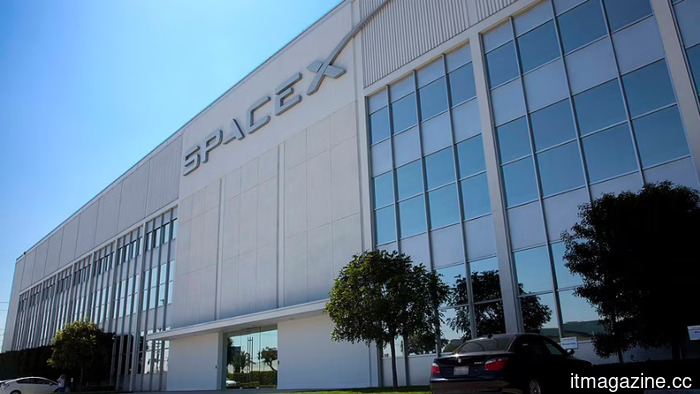 SpaceX's Starpipe: a gas pipeline designed for Starship.
SpaceX is developing Starpipe, an 8-mile natural gas pipeline to Starbase, in order to increase the frequency of Starship launches and gain greater control over its supply chain.
SpaceX's Starpipe: a gas pipeline designed for Starship.
SpaceX is developing Starpipe, an 8-mile natural gas pipeline to Starbase, in order to increase the frequency of Starship launches and gain greater control over its supply chain.
 400 newspapers are suing OpenAI and Microsoft regarding AI issues.
Almost 400 local newspapers in the US are filing a lawsuit against OpenAI and Microsoft, claiming that their reporting was used without compensation to train ChatGPT and Copilot.
400 newspapers are suing OpenAI and Microsoft regarding AI issues.
Almost 400 local newspapers in the US are filing a lawsuit against OpenAI and Microsoft, claiming that their reporting was used without compensation to train ChatGPT and Copilot.
Mirendil secures $200 million to develop AI that enhances AI.
Mirendil, established by a pair of former researchers from Anthropic, secured $200 million at a valuation of $1 billion to offer self-enhancing AI research to a wider audience.