
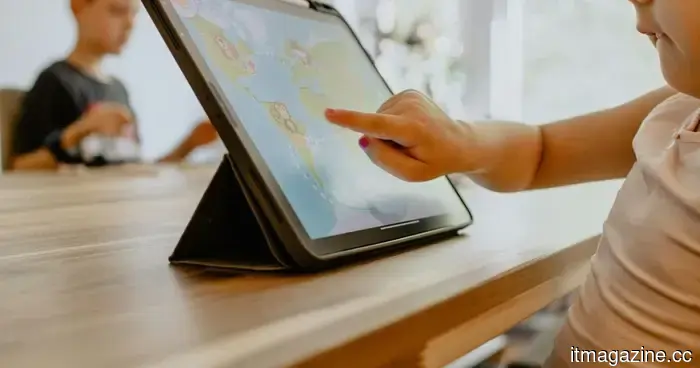
A study cautions that exposure to screens before the age of two may pose significant developmental risks.
Relying on a phone or tablet to entertain your baby is not advisable.
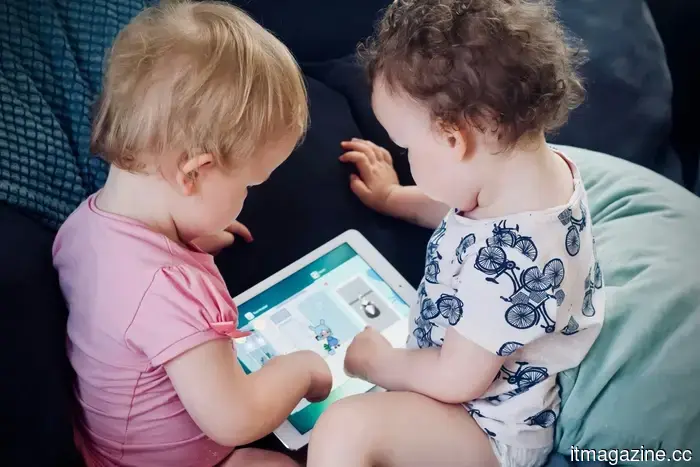
Screens have turned into digital pacifiers for numerous infants. Parents often resort to phones and tablets during feeding, bedtime, chores, and whenever they need a respite. A significant new study now cautions that frequent screen exposure before the age of two may pose developmental risks.
Researchers from four universities in the UK assert that infants and toddlers under two should refrain from regular intentional screen time. The analysis connects increased screen exposure in the first two years with issues such as sleep disturbances, language delays, behavioral problems, a higher risk of obesity, nearsightedness, and later challenges in forming friendships and social interactions.
The risks emerge early
The study, which was commissioned by the 1001 Critical Days Foundation and carried out by the iADDICT research group, examined global research on screen usage during the critical first 1,001 days, from pregnancy to age two. It also included a survey of parents and caregivers of children under two years old. It was reported that over 70% of infants and toddlers were exposed to screens. One in ten babies frequently dozed off while watching a screen, and some children used screens for several hours a day.
While the review does not establish a direct causal link between screens and every identified developmental issue, the message remains evident. Infants require exposure to language, physical play, sleep, eye contact, attention from caregivers, and normal social interactions. Regular screen usage can hinder these vital experiences, particularly when devices are utilized as a standard method of comfort.
The issue of "iPad kids" begins somewhere
This warning comes at a time when parents, educators, and health professionals are increasingly concerned about children becoming overly reliant on screens. The term "iPad kid" has become a shorthand reference for children who find it difficult to disengage from devices, anticipate constant digital engagement, or turn to screens as their primary source of comfort.
The review indicates that these habits may develop earlier than many families realize. The concern extends beyond what infants are viewing to how rapidly screens become integrated into daily care routines. If a child is accustomed to using phones and tablets as a regular means of comfort before the age of two, it shouldn’t be surprising if they later develop an attachment to those devices.




Other articles
 China's CXMT reportedly secures a $3 billion memory contract with Tencent.
CXMT has reached an agreement to provide Tencent with approximately $3 billion worth of memory chips, according to two sources who spoke to Reuters, further advancing China's goal for self-sufficiency in memory production.
China's CXMT reportedly secures a $3 billion memory contract with Tencent.
CXMT has reached an agreement to provide Tencent with approximately $3 billion worth of memory chips, according to two sources who spoke to Reuters, further advancing China's goal for self-sufficiency in memory production.
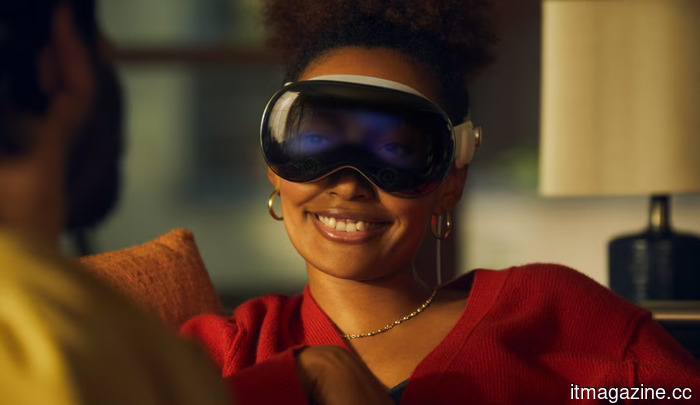 OpenAI has appointed Paul Meade, the head of Apple’s Vision Pro division.
Paul Meade, the head of Apple’s Vision Pro, is departing to join OpenAI’s hardware team, marking the highest-profile departure from Apple in the competition for AI devices.
OpenAI has appointed Paul Meade, the head of Apple’s Vision Pro division.
Paul Meade, the head of Apple’s Vision Pro, is departing to join OpenAI’s hardware team, marking the highest-profile departure from Apple in the competition for AI devices.
 400 newspapers are suing OpenAI and Microsoft regarding AI issues.
Almost 400 local newspapers in the US are filing a lawsuit against OpenAI and Microsoft, claiming that their reporting was used without compensation to train ChatGPT and Copilot.
400 newspapers are suing OpenAI and Microsoft regarding AI issues.
Almost 400 local newspapers in the US are filing a lawsuit against OpenAI and Microsoft, claiming that their reporting was used without compensation to train ChatGPT and Copilot.
 Amazon's quick delivery initiative has led to a loss of $15 billion for India's Eternal and Swiggy.
Eternal and Swiggy have seen a decline of over $15 billion in their market value as Amazon broadens its 'delivery in minutes' service throughout India.
Amazon's quick delivery initiative has led to a loss of $15 billion for India's Eternal and Swiggy.
Eternal and Swiggy have seen a decline of over $15 billion in their market value as Amazon broadens its 'delivery in minutes' service throughout India.
 400 newspapers file a lawsuit against OpenAI and Microsoft regarding AI.
Almost 400 local newspapers in the US are pursuing legal action against OpenAI and Microsoft, claiming that their articles were used without compensation to train ChatGPT and Copilot.
400 newspapers file a lawsuit against OpenAI and Microsoft regarding AI.
Almost 400 local newspapers in the US are pursuing legal action against OpenAI and Microsoft, claiming that their articles were used without compensation to train ChatGPT and Copilot.
 Mirendil secures $200 million to develop AI that enhances AI.
Mirendil, established by a pair of former researchers from Anthropic, secured $200 million at a valuation of $1 billion to offer self-enhancing AI research to a wider audience.
Mirendil secures $200 million to develop AI that enhances AI.
Mirendil, established by a pair of former researchers from Anthropic, secured $200 million at a valuation of $1 billion to offer self-enhancing AI research to a wider audience.
A study cautions that exposure to screens before the age of two may pose significant developmental risks.
Researchers advise that infants and toddlers under the age of two should steer clear of regular screen time, cautioning that smartphones and tablets can replace opportunities for play, sleep, language development, and interactions with caregivers.