
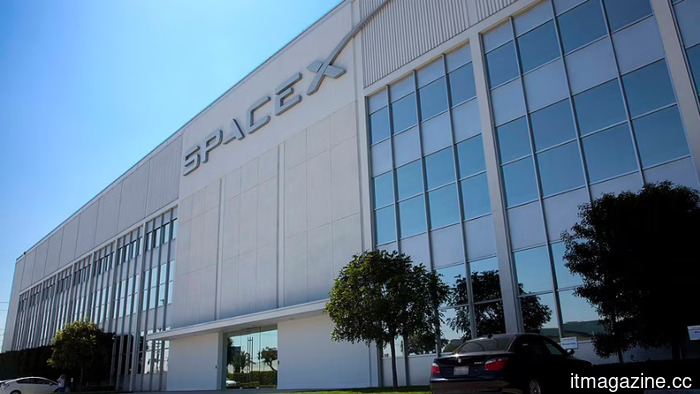
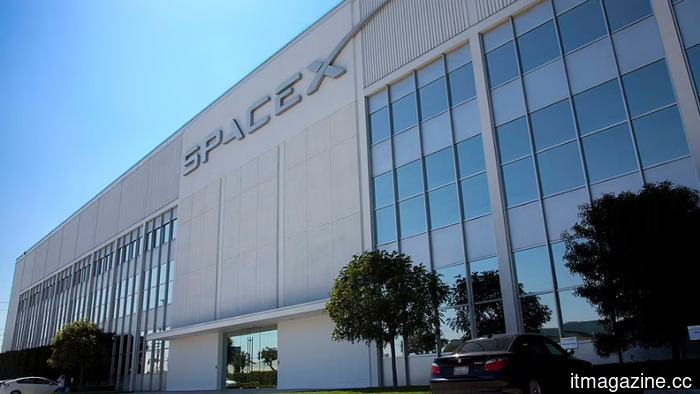
SpaceX's Starpipe: a gas pipeline designed for Starship.
Most rocket companies purchase their fuel, but SpaceX intends to transport it via pipeline. Filings in Texas indicate that the company aims to construct its own natural gas pipeline, an uncommon approach for a space organization, yet a significant one.
SpaceX has named the pipeline Starpipe. It will extend eight miles, roughly 13 km, to Starbase, SpaceX’s company town located on the Texas coast, supplying fuel for the next-generation Starship rocket. Reuters reported on this development, referencing county filings and stating that construction might commence as early as next month.
An associated company, Lone Star Mineral Development, submitted the project proposal to the Texas Railroad Commission last month, according to documents reviewed by Reuters. Starpipe is expected to be operational by January 26. The Rio Grande Valley Business Journal was the first to cover the pipeline's news.
The motivation behind this initiative is logistics. The Starship consumes approximately 630,000 gallons, or about 2.4 million liters, of liquid methane for each launch. Currently, this fuel is delivered by trucks, with hundreds of tankers inching along for hours. This pace is insufficient to meet Elon Musk's future aspirations.
SpaceX has conducted 12 Starship test flights since the beginning of 2023. Musk has spoken of conducting dozens of launches annually, then scaling up to hundreds, and eventually thousands. A pipeline could streamline this process considerably, akin to the difference between filling a car at a gas station versus transporting fuel by bucket.
The pipeline represents a visible aspect of a broader strategy. SpaceX has spent years investigating its own gas drilling near Starbase and throughout Texas, as revealed by land records from Reuters. Since 2023, it has entered into over 100 paid oil and gas leases with Texas landowners.
On the day SpaceX became publicly traded, president Gwynne Shotwell explained the vision on CNBC. The company plans to construct pipelines, manufacture its own propellant, and explore gas drilling. For a rocket manufacturer, this ambitious vision spans from extracting gas deep underground to storing methane in a launch tank.
The drilling aspect would be a significant step forward. Stan Lindsey, a Texas oil and gas consultant, remarked, “I’m not saying it’s beyond the realm of possibility,” while also noting SpaceX's lack of experience in this area. He added that if drilling efforts prove unsuccessful, Starpipe would serve as a “fallback position.”
Details about Starpipe’s geography are emerging. The pipeline will begin at an 83-acre site at the Port of Brownsville. A port official informed Reuters that SpaceX is negotiating a 50-year lease for this land. Plans submitted to the US Army Corps of Engineers suggest that at Starbase, SpaceX aims to establish a liquefaction plant to convert the piped gas into liquid methane on-site.
Interestingly, the company might not need to drill to supply the pipeline. According to Lindsey, SpaceX could utilize Enbridge’s nearby Valley Crossing pipeline expansion. Enbridge did not respond to inquiries. Regardless, SpaceX would control the entire supply chain from source to launchpad, reflecting a similar drive for natural gas that is propelling tech giants into energy ventures.
The dimensions of the pipe suggest a demand that exceeds the current allowance of 25 launches per year set by the Federal Aviation Administration. The 16-inch diameter of Starpipe indicates aspirations for future expansion that SpaceX is not yet legally permitted to pursue.
This prospective future is immense. Starship is central to Starlink, the planned AI data center satellites, and Musk’s aspirations for lunar and Martian exploration. SpaceX’s prospectus envisions thousands of solar-powered AI satellites harnessing energy amounting to nearly one-fifth of the US power grid.
Starpipe represents a small, unusual initial step toward these ambitions: a space company beginning to adopt an oil and gas company mentality. Whether regulatory frameworks and the laws of physics will allow it to expand to that extent remains an unanswered question buried within the eight-mile pipeline.
Other articles
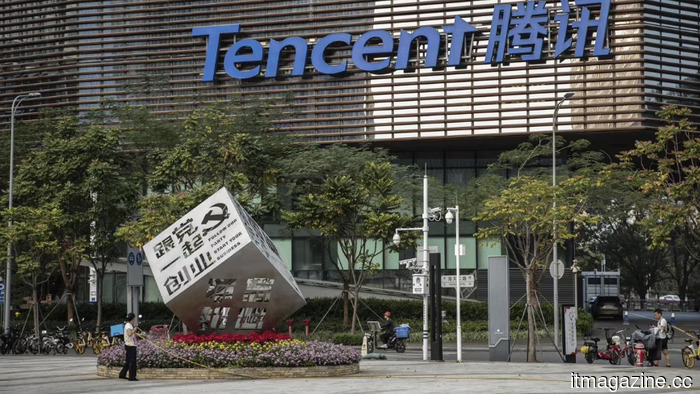 China's CXMT reportedly secures a $3 billion memory contract with Tencent.
CXMT has reached an agreement to provide Tencent with approximately $3 billion worth of memory chips, according to two sources who spoke to Reuters, further advancing China's goal for self-sufficiency in memory production.
China's CXMT reportedly secures a $3 billion memory contract with Tencent.
CXMT has reached an agreement to provide Tencent with approximately $3 billion worth of memory chips, according to two sources who spoke to Reuters, further advancing China's goal for self-sufficiency in memory production.
 Trump warns of imposing 100% tariffs in response to digital services taxes.
Trump warns of imposing a 100% tariff on any nation that enacts digital services taxes targeting US tech companies, just a day after the EU finalized a trade agreement. Brussels remains steadfast.
Trump warns of imposing 100% tariffs in response to digital services taxes.
Trump warns of imposing a 100% tariff on any nation that enacts digital services taxes targeting US tech companies, just a day after the EU finalized a trade agreement. Brussels remains steadfast.
 A Chinese AI lab claims it can compete with Anthropic’s extremely powerful Claude Mythos in identifying security vulnerabilities.
The Wall Street Journal has reported that China's GLM-5.2 AI model is capable of competing with Anthropic's Mythos in cybersecurity functions, indicating a swiftly decreasing disparity in AI technology.
A Chinese AI lab claims it can compete with Anthropic’s extremely powerful Claude Mythos in identifying security vulnerabilities.
The Wall Street Journal has reported that China's GLM-5.2 AI model is capable of competing with Anthropic's Mythos in cybersecurity functions, indicating a swiftly decreasing disparity in AI technology.
 Australia plans to increase fines for Big Tech companies and empower its regulator regarding the ban on individuals under 16.
Australia's proposed legislation would increase fines for Big Tech to A$99 million and grant the eSafety Commissioner the authority to request board meeting minutes and internal emails.
Australia plans to increase fines for Big Tech companies and empower its regulator regarding the ban on individuals under 16.
Australia's proposed legislation would increase fines for Big Tech to A$99 million and grant the eSafety Commissioner the authority to request board meeting minutes and internal emails.
 400 newspapers file a lawsuit against OpenAI and Microsoft regarding AI.
Almost 400 local newspapers in the US are pursuing legal action against OpenAI and Microsoft, claiming that their articles were used without compensation to train ChatGPT and Copilot.
400 newspapers file a lawsuit against OpenAI and Microsoft regarding AI.
Almost 400 local newspapers in the US are pursuing legal action against OpenAI and Microsoft, claiming that their articles were used without compensation to train ChatGPT and Copilot.
 SpaceX's Starpipe: a natural gas pipeline for Starship
SpaceX is proposing Starpipe, an 8-mile natural gas pipeline to Starbase, to facilitate a quicker Starship launch rate and gain greater control over its supply chain.
SpaceX's Starpipe: a natural gas pipeline for Starship
SpaceX is proposing Starpipe, an 8-mile natural gas pipeline to Starbase, to facilitate a quicker Starship launch rate and gain greater control over its supply chain.
SpaceX's Starpipe: a gas pipeline designed for Starship.
SpaceX is developing Starpipe, an 8-mile natural gas pipeline to Starbase, in order to increase the frequency of Starship launches and gain greater control over its supply chain.