
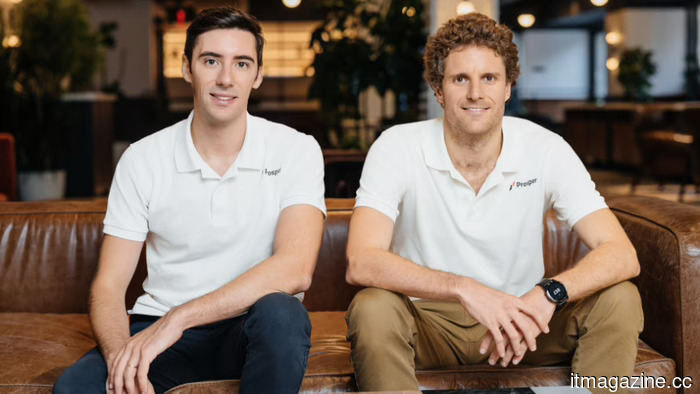
Prosper AI secures $30 million in funding from a16z to streamline the patient journey through automation.
Much of the expense associated with American healthcare occurs before a doctor meets a patient and thereafter. Tasks include scheduling appointments, confirming insurance details, calculating patient costs, and following up with payers when claims encounter delays. This process is tedious and disjointed, leading to estimates of wasted funds amounting to hundreds of billions of dollars annually. Prosper AI has successfully secured $30 million in funding to deploy a team of AI phone agents to address this issue.
The Series A funding round was spearheaded by Andreessen Horowitz, with Base10 participating and existing supporters Emergence Capital, Y Combinator, and Company Ventures joining in again. Prosper was established in 2023 by MIT and Harvard graduates Xavier de Gracia and Josep Mingot, with operations in both Madrid and New York. The company had only raised a $5 million seed round in September, indicating the rapid pace at which it claims to be evolving. Since that funding, Prosper asserts it has quintupled its revenue and acquired more than 40 healthcare organizations as clients.
The company argues that scheduling is merely the initial step. While the first generation of healthcare voice AI focused solely on appointment booking, Prosper's platform is capable of managing patient calls, scheduling within electronic health records, verifying insurance benefits, automating billing, and contacting insurers when additional claim information is required.
Prosper positions itself as overseeing both patient and payer interactions for every appointment, from the initial call to payment reimbursement, claiming it can reduce administrative costs for providers by over 40 percent.
The potential market for this service is significant and well-documented. Independent studies estimate that billing and insurance-related administrative costs in US healthcare range between $400 billion and $496 billion annually, making Prosper’s claim of “over $450 billion” in waste well-supported.
The more challenging aspect is the existing fragmentation: scheduling, verification, and billing have traditionally operated within separate systems managed by different teams, which is the gap Prosper aims to bridge.
The company has notable clients, such as the PE-backed dermatology group Preferred Dermatology, Jackson Memorial Hospital in Florida, and on the technology front, leaders like Athenahealth, one of the largest ambulatory EHR platforms in the US, and ImagineSoftware, which processes over $65 billion in claims each year.
Prosper states that both Athenahealth and ImagineSoftware chose its services after thorough evaluations against competitors, with the company claiming to win approximately 80 percent of the competitive assessments it participates in.
For a16z, the attraction lies in the potential for growth. "Providers would start using Prosper AI for scheduling, and then quickly request assistance with insurance verification, billing, etc.," explained Jay Rughani, a partner at the firm. “That progression occurs when your technology can effectively support patients throughout their entire care journey.” This investment aligns with a broader trend observed from a16z-backed Telepatia in Latin America to the increased interest in enterprise AI ‘teammates.’
Prosper intends to use the new funding to enhance its engineering and customer service teams while strengthening integrations with major EHR systems. The long-term goal, according to co-CEO de Gracia, is to create “a unified platform capable of managing the workflows that determine the provision of care and the payment to providers.”
Other articles
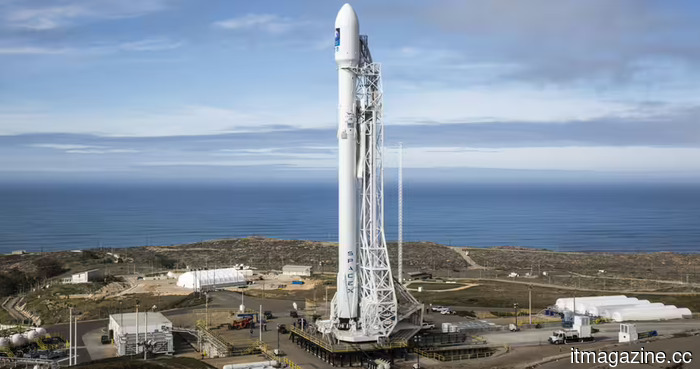 SpaceX launches its first sale of investment-grade bonds.
A few days following its historic IPO, SpaceX is securing a minimum of $20 billion through its initial investment-grade bond sale to finance a significant expansion of its AI data center.
SpaceX launches its first sale of investment-grade bonds.
A few days following its historic IPO, SpaceX is securing a minimum of $20 billion through its initial investment-grade bond sale to finance a significant expansion of its AI data center.
 China’s trade restrictions have affected 56 American companies following a Pentagon designation.
China's trade restrictions have affected 56 American companies, including those involved in rare-earth mining and drone manufacturing, as a response to the Pentagon's broadened military blacklist.
China’s trade restrictions have affected 56 American companies following a Pentagon designation.
China's trade restrictions have affected 56 American companies, including those involved in rare-earth mining and drone manufacturing, as a response to the Pentagon's broadened military blacklist.
 Germany informs Trump: no moon landing without European technology.
Germany's space minister has stated that NASA's Artemis missions rely on equipment manufactured in Germany, amidst an increasing transatlantic technology sovereignty conflict.
Germany informs Trump: no moon landing without European technology.
Germany's space minister has stated that NASA's Artemis missions rely on equipment manufactured in Germany, amidst an increasing transatlantic technology sovereignty conflict.
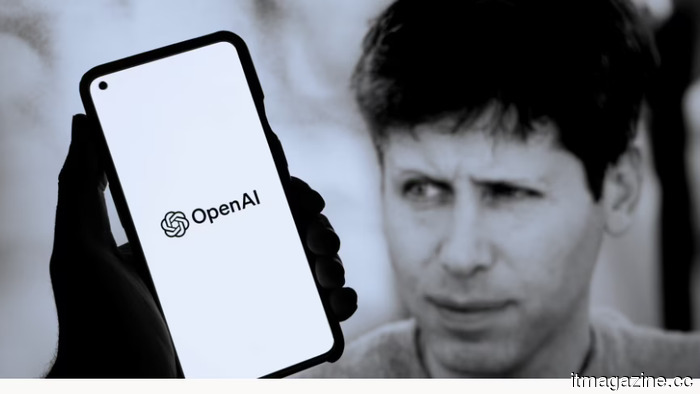 OpenAI's lean balance sheet presents challenges for a potential IPO.
OpenAI has no debt and only $46 million in quarterly capital expenditures. As it approaches its IPO, that remarkably tidy balance sheet is raising questions rather than serving as a selling point.
OpenAI's lean balance sheet presents challenges for a potential IPO.
OpenAI has no debt and only $46 million in quarterly capital expenditures. As it approaches its IPO, that remarkably tidy balance sheet is raising questions rather than serving as a selling point.
 Lime IPO: Uber plays a key role in the scooter company's market launch.
The Lime IPO is priced at a maximum of $180.9 million, with Uber, a longstanding supporter, expected to anchor the deal at approximately a $1.8 billion valuation.
Lime IPO: Uber plays a key role in the scooter company's market launch.
The Lime IPO is priced at a maximum of $180.9 million, with Uber, a longstanding supporter, expected to anchor the deal at approximately a $1.8 billion valuation.
 Ireland assumes the EU presidency amid tensions with Big Tech.
Ireland will take on the EU Council presidency starting 1 July, with the responsibility of negotiating tech sovereignty agreements, even as Apple and Microsoft contribute 40% of its corporate tax.
Ireland assumes the EU presidency amid tensions with Big Tech.
Ireland will take on the EU Council presidency starting 1 July, with the responsibility of negotiating tech sovereignty agreements, even as Apple and Microsoft contribute 40% of its corporate tax.
Prosper AI secures $30 million in funding from a16z to streamline the patient journey through automation.
Prosper AI, which operates in both Madrid and New York, has secured $30 million in a Series A funding round led by Andreessen Horowitz to expand its healthcare voice AI capabilities beyond just scheduling.