
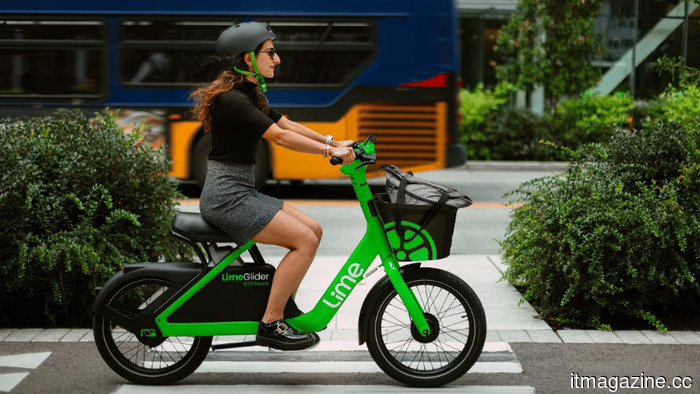
Lime IPO: Uber plays a key role in the scooter company's market launch.
The Lime IPO has a set price and an anchor investor: Uber, the ride-hailing leader that already has a stake in the scooter company and is now supporting its market launch.
Lime is making its public debut with the support of a familiar backer: Uber. The scooter and bike-rental company, officially known as Neutron Holdings, has established the details for its offering. It aims to raise up to $180.9 million by selling 6.7 million shares priced between $24 and $26 each. Current stakeholders, including CEO Wayne Ting and co-founder Brad Bao, will also sell an additional 276,731 shares.
If priced at the top of that range, Lime would be valued at approximately $1.7 billion. Reports indicate that the firm is striving for a valuation closer to $1.8 billion and hopes to raise around $200 million during this week’s road show.
The shares will be listed on Nasdaq under the ticker LIME. Goldman Sachs and JPMorgan are spearheading the offering, which Lime filed for last month.
Uber's involvement is significant. An updated prospectus will identify it as an anchor investor, contributing what The Information described as a "meaningful" investment.
The two companies are closely connected; Uber owns over 10 percent of Lime and backs some of its debt. Approximately 14 percent of Lime’s revenue is generated through the Uber app.
The connection even extends to the top levels, as Ting previously served as chief of staff to Uber CEO Dara Khosrowshahi.
Lime is going public as one of the few remaining venture-backed companies in the micromobility space, which has seen many of its prominent players struggle in recent years. VanMoof went under in 2023 after securing over €200 million, while Rad Power, once valued at $1.65 billion, filed for bankruptcy in late 2025.
The survivors have split into two groups: Lectric has thrived without venture funding, whereas Lime has relied on wealthy investors to reach the public markets. “Lime was founded on a simple but radical idea: people and cities deserve a future where transportation is shared, affordable, and carbon-free,” Ting stated in a letter to potential investors.
The emphasis is on growth. Lime's revenue rose to $886.7 million in 2025, up from $686.6 million the previous year, and first-quarter revenue increased by 32 percent. The company reported 3.8 million monthly active users last year, a growth of over 20 percent from 2024. Lime's bikes and scooters are now available in over 230 cities, from Sacramento to Sofia to Sydney.
However, profitability is another story. Lime’s net loss grew to $59.3 million in 2025, compared to $33.9 million the prior year. The company's valuation has fluctuated significantly; it was valued at $2.4 billion in 2019, then dropped to just $510 million in a 2020 funding round led by Uber. A successful IPO would symbolize a significant rebound.
Lime first considered going public back in 2021 but navigated through a challenging phase for the industry.
The timing is crucial. Lime is launching a relatively modest offering just as the record-setting SpaceX IPO is dominating the public debut narrative. Smaller tech IPOs have struggled to gain attention alongside larger companies. Lime's IPO will gauge whether investors are still interested in a low-margin, hardware-driven business focused on shared scooters.
For Lime, the hope is that scale and an Uber-type safety net will suffice. For others, it will provide insight into the current openness of the IPO market.
Other articles
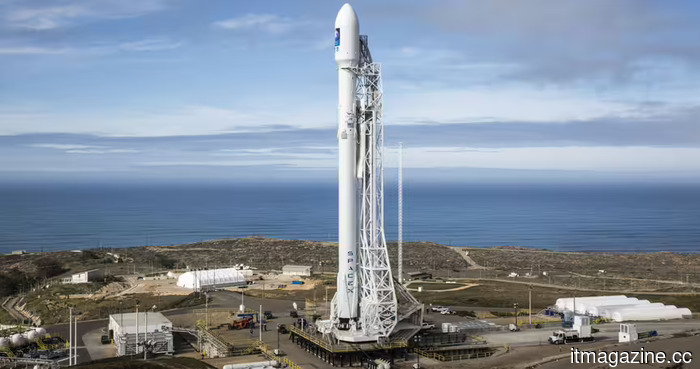 SpaceX launches its first sale of investment-grade bonds.
Just days after its record-breaking IPO, SpaceX is set to raise at least $20 billion through its inaugural investment-grade bond sale to finance a significant expansion of its AI data center.
SpaceX launches its first sale of investment-grade bonds.
Just days after its record-breaking IPO, SpaceX is set to raise at least $20 billion through its inaugural investment-grade bond sale to finance a significant expansion of its AI data center.
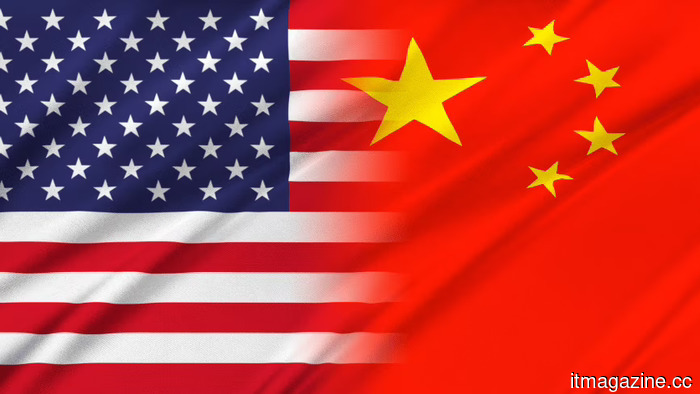 China's trade restrictions affect 56 US companies following the Pentagon's listing.
China's trade restrictions affected 56 American companies, including rare-earth mining firms and drone manufacturers, as a response to the Pentagon's broadened military blacklist.
China's trade restrictions affect 56 US companies following the Pentagon's listing.
China's trade restrictions affected 56 American companies, including rare-earth mining firms and drone manufacturers, as a response to the Pentagon's broadened military blacklist.
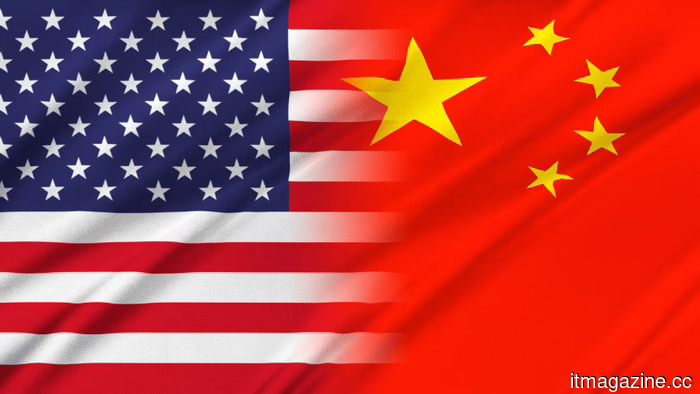 China’s trade restrictions have affected 56 American companies following a Pentagon designation.
China's trade restrictions have affected 56 American companies, including those involved in rare-earth mining and drone manufacturing, as a response to the Pentagon's broadened military blacklist.
China’s trade restrictions have affected 56 American companies following a Pentagon designation.
China's trade restrictions have affected 56 American companies, including those involved in rare-earth mining and drone manufacturing, as a response to the Pentagon's broadened military blacklist.
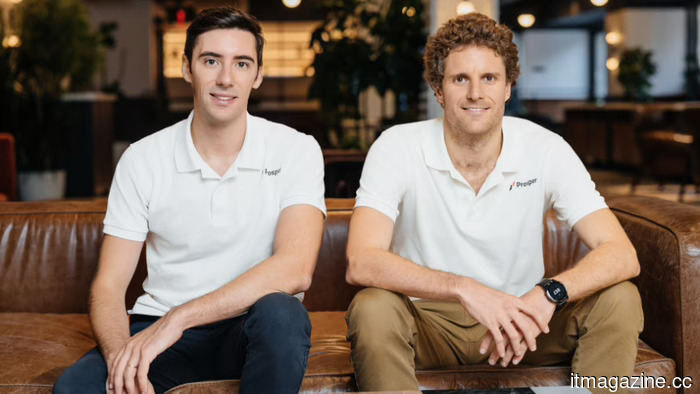 Prosper AI secures $30 million in funding from a16z to streamline the patient journey through automation.
Prosper AI, which operates in both Madrid and New York, has secured $30 million in a Series A funding round led by Andreessen Horowitz to expand its healthcare voice AI capabilities beyond just scheduling.
Prosper AI secures $30 million in funding from a16z to streamline the patient journey through automation.
Prosper AI, which operates in both Madrid and New York, has secured $30 million in a Series A funding round led by Andreessen Horowitz to expand its healthcare voice AI capabilities beyond just scheduling.
 JD.com plans to replace its 700,000 delivery couriers with robots.
Richard Liu, the founder of JD.com, stated that the company's robots will eventually replace its 700,000 couriers, but he promises to provide retraining for them.
JD.com plans to replace its 700,000 delivery couriers with robots.
Richard Liu, the founder of JD.com, stated that the company's robots will eventually replace its 700,000 couriers, but he promises to provide retraining for them.
 OpenAI's minimal balance sheet encounters a challenging prospect for an IPO.
OpenAI holds no debt and has only $46 million in quarterly capital expenditures. As it approaches its IPO, this seemingly pristine balance sheet is raising questions rather than supporting the pitch.
OpenAI's minimal balance sheet encounters a challenging prospect for an IPO.
OpenAI holds no debt and has only $46 million in quarterly capital expenditures. As it approaches its IPO, this seemingly pristine balance sheet is raising questions rather than supporting the pitch.
Lime IPO: Uber plays a key role in the scooter company's market launch.
The Lime IPO is priced at a maximum of $180.9 million, with Uber, a longstanding supporter, expected to anchor the deal at approximately a $1.8 billion valuation.