
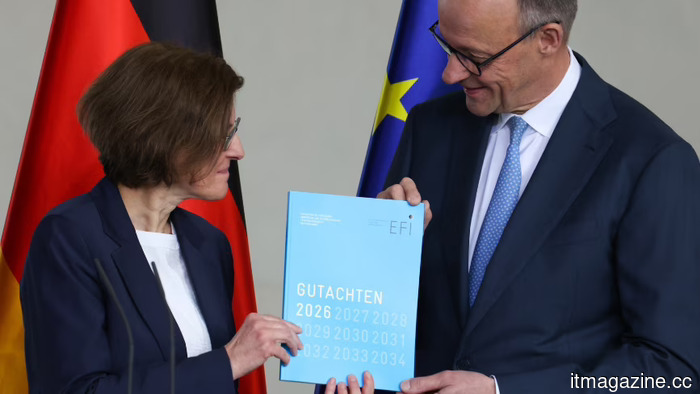
Germany informs Trump: no moon landing without European technology.
Germany’s space minister has informed Washington that American lunar missions rely on European-made equipment, specifically referencing the Orion spacecraft’s European Service Module constructed in Bremen. Her comments come amid a growing transatlantic technology conflict over AI export regulations and EU sovereignty initiatives.
In an interview with Politico at the VivaTech trade fair in Paris, Dorothee Bär emphasized that Europe supplies “critical key technologies” essential for U.S. space programs, stating firmly: “Without us, it cannot be done.”
This assertion is backed by facts, as NASA calls the European Service Module the “powerhouse” of the Orion spacecraft, which provides electricity, propulsion, thermal management, air, and water for the capsule that took astronauts around the moon during this year’s Artemis II mission.
Constructed in Bremen by Airbus under a European Space Agency contract, the European Service Module incorporates parts from 13 ESA member nations and over 100 suppliers. Bär asserted to Politico, “Without the European Service Module, the United States would not be able to fly to the moon.”
Additionally, the German company Jena-Optronik manufactures the star trackers that help Orion ascertain its orientation in space. These sensors analyze images of the star field against an onboard catalogue, enabling the spacecraft's navigation system to adjust its trajectory, as noted by NASA.
Bär’s comments coincide with a widening dispute over technology control between the transatlantic partners. Last week, the U.S. directed Anthropic to deactivate its two most advanced AI models for all global users after national security concerns were raised by the Commerce Department’s Bureau of Industry and Security, abruptly cutting off European clients.
This action strengthened the European Commission’s efforts for technological sovereignty, which had already led to a comprehensive proposal on June 3 for new cloud restrictions, a revised Chips Act, and strategies to diminish the bloc's reliance on American companies. Currently, the EU depends on non-European nations for more than 80% of crucial digital products and services, according to the Commission.
The geopolitical context adds urgency to the situation, as Bär cautioned that “a strong alliance is forming on the other side,” comprising Russia, China, North Korea, and Iran. She expressed her desire not to see these nations prevail in the space race, though she did not elaborate on the specifics of this space alliance.
On the U.S. front, major private companies like SpaceX and Blue Origin are leading advancements. Jeff Bezos shared with VivaTech attendees on Wednesday that there is an “insatiable” demand for launches, and Blue Origin already has a significant backlog, with CEO David Limp indicating plans for another flight by the end of 2026.
Bär directed her most pointed criticism at the EU’s regulatory goals, questioning the necessity of the proposed EU Space Act introduced in June 2025 and asking: “Do we really need yet another Act?” Germany has opposed the proposal, and the U.S. administration has warned of retaliation if the regulations disproportionately affect American companies. FCC chair Brendan Carr has indicated potential new regulatory challenges for European firms if the act is enacted as is.
“We want to reduce bureaucracy. Yet at the same time we continue creating new requirements,” Bär observed.
The struggle between competitiveness and regulation has characterized European tech policy over the past year, and the space industry is now involved in this ongoing discussion. The German government is developing a national space law intended to facilitate quicker technology deployment, signaling Berlin's preference for domestic deregulation over Brussels-led policies.
Europe has faced challenges in keeping up with the U.S. and China in the commercial space sector. Bär's remarks reframe the dialogue: While Europe may not have its own SpaceX, the equipment that transports Americans to the moon is still marked “Made in Germany.”
Other articles
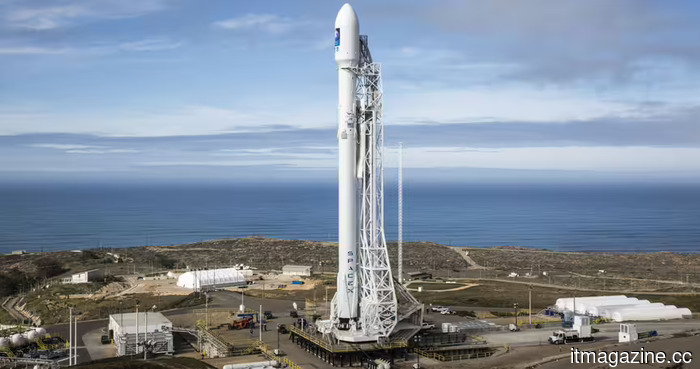 SpaceX launches its first sale of investment-grade bonds.
Just days after its record-breaking IPO, SpaceX is set to raise at least $20 billion through its inaugural investment-grade bond sale to finance a significant expansion of its AI data center.
SpaceX launches its first sale of investment-grade bonds.
Just days after its record-breaking IPO, SpaceX is set to raise at least $20 billion through its inaugural investment-grade bond sale to finance a significant expansion of its AI data center.
 OpenAI's lean balance sheet presents challenges for a potential IPO.
OpenAI has no debt and only $46 million in quarterly capital expenditures. As it approaches its IPO, that remarkably tidy balance sheet is raising questions rather than serving as a selling point.
OpenAI's lean balance sheet presents challenges for a potential IPO.
OpenAI has no debt and only $46 million in quarterly capital expenditures. As it approaches its IPO, that remarkably tidy balance sheet is raising questions rather than serving as a selling point.
 JD.com plans to replace its 700,000 delivery couriers with robots.
Richard Liu, the founder of JD.com, stated that the company's robots will eventually replace its 700,000 couriers, but he promises to provide retraining for them.
JD.com plans to replace its 700,000 delivery couriers with robots.
Richard Liu, the founder of JD.com, stated that the company's robots will eventually replace its 700,000 couriers, but he promises to provide retraining for them.
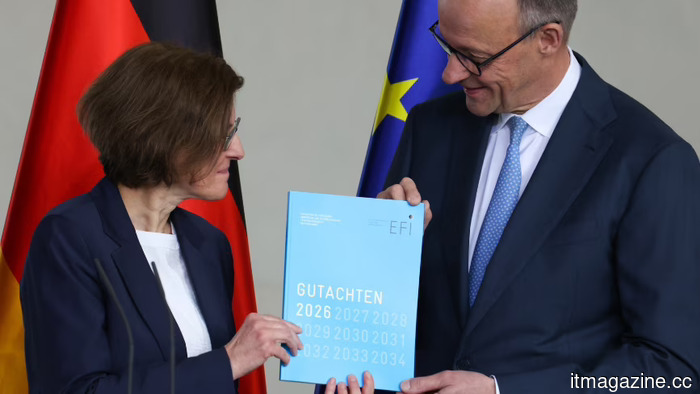 Germany informs Trump: no moon landing without European technology.
Germany's space minister has stated that NASA's Artemis missions rely on hardware manufactured in Germany, amid an escalating transatlantic technology sovereignty conflict.
Germany informs Trump: no moon landing without European technology.
Germany's space minister has stated that NASA's Artemis missions rely on hardware manufactured in Germany, amid an escalating transatlantic technology sovereignty conflict.
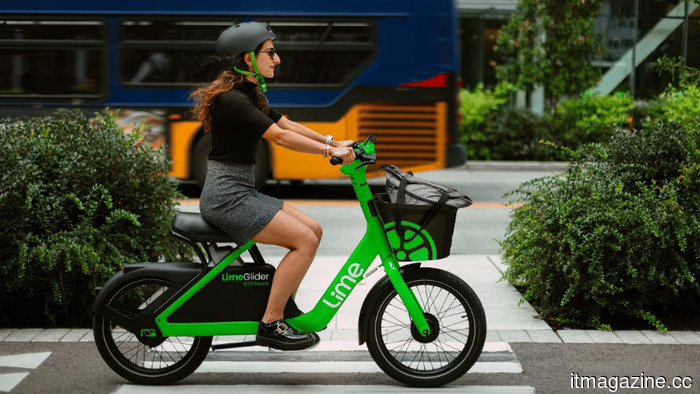 Lime IPO: Uber plays a key role in the scooter company's market launch.
The Lime IPO is priced at a maximum of $180.9 million, with Uber, a longstanding supporter, expected to anchor the deal at approximately a $1.8 billion valuation.
Lime IPO: Uber plays a key role in the scooter company's market launch.
The Lime IPO is priced at a maximum of $180.9 million, with Uber, a longstanding supporter, expected to anchor the deal at approximately a $1.8 billion valuation.
 Meta acquires a stake in Cred and appoints a new head for WhatsApp.
Meta is putting $900 million into India's Cred for approximately a 20% ownership, and appointing founder Kunal Shah as the new head of WhatsApp, taking over from Will Cathcart.
Meta acquires a stake in Cred and appoints a new head for WhatsApp.
Meta is putting $900 million into India's Cred for approximately a 20% ownership, and appointing founder Kunal Shah as the new head of WhatsApp, taking over from Will Cathcart.
Germany informs Trump: no moon landing without European technology.
Germany's space minister has stated that NASA's Artemis missions rely on equipment manufactured in Germany, amidst an increasing transatlantic technology sovereignty conflict.