

OpenAI's lean balance sheet presents challenges for a potential IPO.
OpenAI's financial statements indicate no debt and a quarterly capital expenditure of just $46 million. However, as noted by The Information, there are approximately $665 billion in commitments that remain off the balance sheet and are soon to be reviewed by regulators.
On the surface, OpenAI appears to operate as a streamlined software company, but the reality is much more complex. As of March 31, the creator of ChatGPT reported zero debt and under $750 million in lease obligations, as analyzed by The Information based on its financial disclosures. The capital spending for the quarter was only $46 million, which is less than what Salesforce, a purely software-selling company, spends.
For a technology firm that is heavily dependent on hardware, these figures are astonishing.
The $665 billion hidden from view
These costs haven’t disappeared; they’ve simply shifted off the balance sheet. OpenAI bears around $665 billion in purchase commitments that do not count as debt, primarily for computing resources, including long-term agreements for data center and chip rentals essential for its models.
The company relies on major providers like Microsoft, Oracle, and Amazon, along with joint ventures such as Stargate and Fluidstack, to meet these capacities. These obligations are substantial and very real but are not reflected where investors typically check.
A network of connected parties
This structure raises another issue: who is on the opposite end of these agreements?
Approximately 72% of OpenAI’s cost of revenue is directed to related entities such as Microsoft. Microsoft serves as both a significant investor in and a key supplier to OpenAI.
This level of concentration poses questions regarding potential conflicts of interest, which is precisely the kind of arrangement that regulators in the public market often investigate.
Why this timing is significant
This situation arises as OpenAI gears up for a public offering. It submitted a confidential filing to the SEC on June 8, shortly after rival Anthropic, with Goldman Sachs and Morgan Stanley managing the deal.
The filing estimates OpenAI’s value at around $852 billion, and analysts predict that its debut could propel it beyond $1 trillion, likely this fall. This comes on the heels of SpaceX's recent IPO, which was the largest in history.
The filing also provides financial regulators their first comprehensive insight into OpenAI’s accounting practices and its complex business relationships.
The valuation needs to align
However, these issues would be less concerning if growth were already evident. Unfortunately, it is not.
OpenAI anticipates that its advertising revenue will surge from $2.4 billion this year to $102 billion by 2030, predicting that ads will constitute over a third of its sales. The advertising group WPP estimates that the entire AI search and chatbot advertising market will be worth around $101 billion by 2030, inclusive of Google.
In essence, OpenAI is forecasting that it can independently capture an entire market that other industry players will also be competing for.
The conclusion
Meanwhile, cash outflows are substantial. OpenAI spent about $34 billion last year and depleted $3.7 billion within the first quarter of 2026 alone.
A pristine balance sheet typically provides confidence to investors, but in this case, it may have the opposite effect. Zero debt loses its significance when $665 billion in commitments sits just outside the spotlight. Skeptics are already warning that a misstep by OpenAI could have reverberations throughout the entire AI supply chain.
Other articles
 OpenAI's minimal balance sheet encounters a challenging prospect for an IPO.
OpenAI holds no debt and has only $46 million in quarterly capital expenditures. As it approaches its IPO, this seemingly pristine balance sheet is raising questions rather than supporting the pitch.
OpenAI's minimal balance sheet encounters a challenging prospect for an IPO.
OpenAI holds no debt and has only $46 million in quarterly capital expenditures. As it approaches its IPO, this seemingly pristine balance sheet is raising questions rather than supporting the pitch.
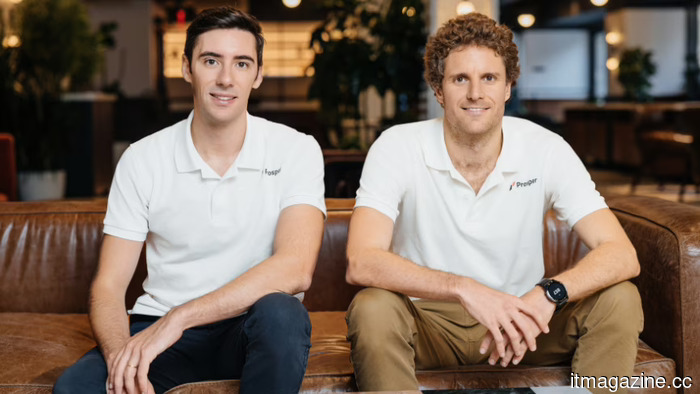 Prosper AI secures $30 million from a16z to streamline the patient journey through automation.
Prosper AI, which operates out of Madrid and New York, has secured $30 million in Series A funding led by Andreessen Horowitz to expand its healthcare voice AI capabilities beyond just scheduling.
Prosper AI secures $30 million from a16z to streamline the patient journey through automation.
Prosper AI, which operates out of Madrid and New York, has secured $30 million in Series A funding led by Andreessen Horowitz to expand its healthcare voice AI capabilities beyond just scheduling.
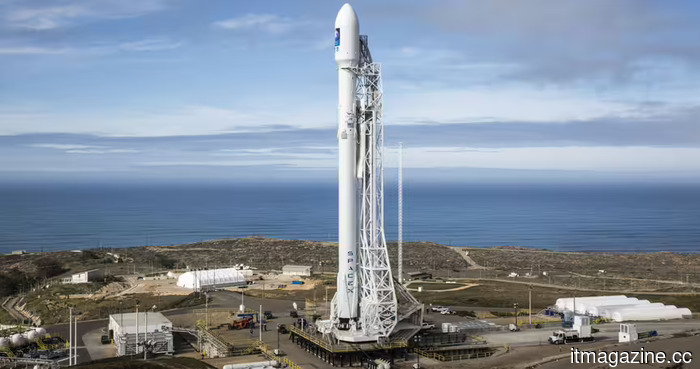 SpaceX launches its first sale of investment-grade bonds.
Just days after its record-breaking IPO, SpaceX is set to raise at least $20 billion through its inaugural investment-grade bond sale to finance a significant expansion of its AI data center.
SpaceX launches its first sale of investment-grade bonds.
Just days after its record-breaking IPO, SpaceX is set to raise at least $20 billion through its inaugural investment-grade bond sale to finance a significant expansion of its AI data center.
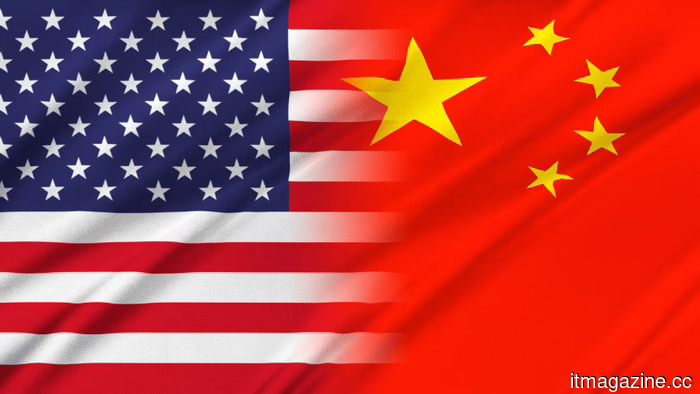 China’s trade restrictions have affected 56 American companies following a Pentagon designation.
China's trade restrictions have affected 56 American companies, including those involved in rare-earth mining and drone manufacturing, as a response to the Pentagon's broadened military blacklist.
China’s trade restrictions have affected 56 American companies following a Pentagon designation.
China's trade restrictions have affected 56 American companies, including those involved in rare-earth mining and drone manufacturing, as a response to the Pentagon's broadened military blacklist.
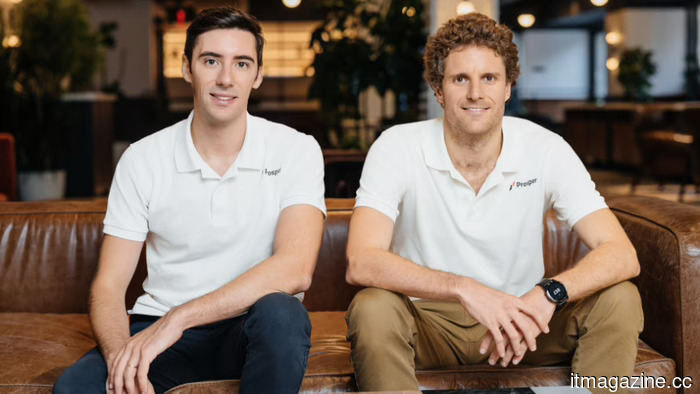 Prosper AI secures $30 million in funding from a16z to streamline the patient journey through automation.
Prosper AI, which operates in both Madrid and New York, has secured $30 million in a Series A funding round led by Andreessen Horowitz to expand its healthcare voice AI capabilities beyond just scheduling.
Prosper AI secures $30 million in funding from a16z to streamline the patient journey through automation.
Prosper AI, which operates in both Madrid and New York, has secured $30 million in a Series A funding round led by Andreessen Horowitz to expand its healthcare voice AI capabilities beyond just scheduling.
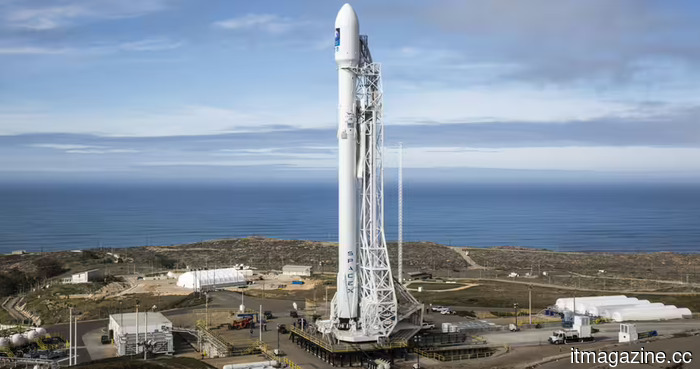 SpaceX launches its first sale of investment-grade bonds.
A few days following its historic IPO, SpaceX is securing a minimum of $20 billion through its initial investment-grade bond sale to finance a significant expansion of its AI data center.
SpaceX launches its first sale of investment-grade bonds.
A few days following its historic IPO, SpaceX is securing a minimum of $20 billion through its initial investment-grade bond sale to finance a significant expansion of its AI data center.
OpenAI's lean balance sheet presents challenges for a potential IPO.
OpenAI has no debt and only $46 million in quarterly capital expenditures. As it approaches its IPO, that remarkably tidy balance sheet is raising questions rather than serving as a selling point.