
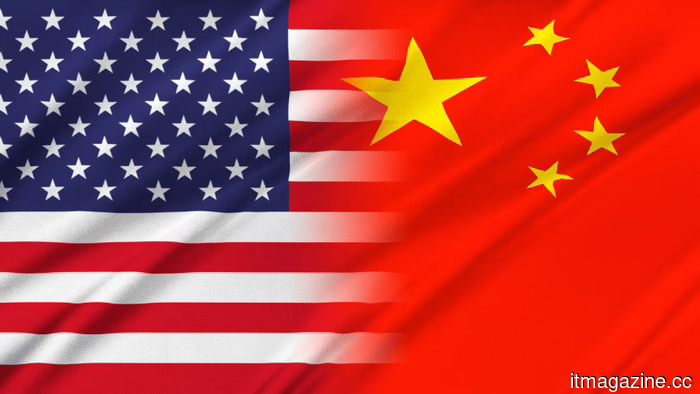
China’s trade restrictions have affected 56 American companies following a Pentagon designation.
China has instituted new trade restrictions aimed at 56 American companies, including those involved in rare-earth mining and drone manufacturing. This action is a direct response to the United States' recent inclusion of Chinese companies on its military blacklist.
In retaliation for the Pentagon's actions, China released its own blacklist. On Monday, Beijing imposed trade restrictions on 56 US firms, particularly affecting drone manufacturers and defense contractors. Notably, two rare-earth companies receiving U.S. support to diminish China's control over essential minerals were specifically targeted.
This response is overtly retaliatory. Earlier this month, the U.S. Defense Department broadened its military list under Section 1260H by including additional Chinese technology businesses. China's response came in two segments.
The first segment involved the Ministry of Commerce, which added 10 American firms to its export-control list. Consequently, Chinese exporters are prohibited from sending dual-use items to these companies, and no one can redirect any dual-use goods of Chinese origin to them. Ongoing shipments must cease, although exporters have the option to request a waiver from Beijing.
These 10 companies represent various sectors of the U.S. defense technology industry, including drone manufacturers Red Cat Holdings and Teal Drones, as well as radar company IMSAR, Jaia Robotics, Ball Aerospace, Oshkosh Defense, and L3Harris Maritime Services. Two names that stand out are MP Materials and USA Rare Earth, which are central to Washington's initiative to create a critical minerals supply chain independent of China. Beijing has now severed their access to Chinese dual-use resources.
The second segment was enacted by the Ministry of Finance, which prohibited government buyers from sourcing products from 46 U.S. companies, effective immediately. This list includes major American defense firms such as Lockheed Martin, Raytheon, Boeing Defense, Anduril, Shield AI, and Edge Autonomy, although their Chinese subsidiaries are exempt.
The targeting of rare-earth companies conveys a significant message. China processes about 90% of the world's rare earths, which are crucial for manufacturing magnets used in electric vehicles, wind turbines, fighter jets, and missiles.
MP Materials operates the only large rare-earth mine in the United States, while USA Rare Earth is developing magnet production capabilities. Both aim to reduce American reliance on China, and the U.S. government has supported their initiatives with public funding. Beijing's actions represent a direct rebuttal to these efforts.
This approach aligns with a broader strategy, as Beijing has been reinforcing its control over strategic materials throughout the year. This includes implementing tighter regulations on other rare metals and establishing more extensive licensing protocols.
China has previously limited exports of gallium, germanium, and antimony—elements that are critical to chip manufacturing and defense systems.
This ongoing exchange is part of a protracted conflict. The U.S. has spent years limiting China’s access to advanced semiconductor technology and the necessary manufacturing equipment. Recently, this dispute has also involved ASML, a Dutch company known for producing cutting-edge lithography machines.
China is leveraging its dominance over critical materials as a response strategy. At the same time, it is attempting to build goodwill in other regions by offering affordable AI technologies to developing countries, despite the tension with Washington.
The impact of these measures varies among the affected companies. Defense contractors, which engage minimally with China, may manage to cope with the procurement ban. On the other hand, the export controls will have a more significant effect, restricting essential Chinese inputs that these companies may still rely on.
The overarching message is clear: each time the U.S. intensifies its restrictions on Chinese technology, Beijing is prepared with its own countermeasures. Furthermore, the rare-earth issue, which is a primary concern for the U.S., remains firmly within China's control.
Other articles
 Lime IPO: Uber plays a key role in the scooter company's market launch.
The Lime IPO is priced at a maximum of $180.9 million, with Uber, a longstanding supporter, expected to anchor the deal at approximately a $1.8 billion valuation.
Lime IPO: Uber plays a key role in the scooter company's market launch.
The Lime IPO is priced at a maximum of $180.9 million, with Uber, a longstanding supporter, expected to anchor the deal at approximately a $1.8 billion valuation.
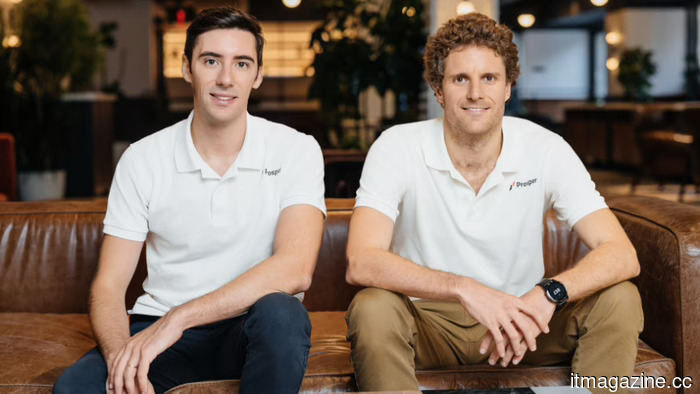 Prosper AI secures $30 million in funding from a16z to streamline the patient journey through automation.
Prosper AI, which operates in both Madrid and New York, has secured $30 million in a Series A funding round led by Andreessen Horowitz to expand its healthcare voice AI capabilities beyond just scheduling.
Prosper AI secures $30 million in funding from a16z to streamline the patient journey through automation.
Prosper AI, which operates in both Madrid and New York, has secured $30 million in a Series A funding round led by Andreessen Horowitz to expand its healthcare voice AI capabilities beyond just scheduling.
 UPS allocates $48 million to cold chain investments amid the rise in biologics.
UPS is enhancing 27 temperature-controlled freight centers across three continents due to the rising demand for biologics and GLP-1 medications, which is fueling a boom in the pharmaceutical cold chain market.
UPS allocates $48 million to cold chain investments amid the rise in biologics.
UPS is enhancing 27 temperature-controlled freight centers across three continents due to the rising demand for biologics and GLP-1 medications, which is fueling a boom in the pharmaceutical cold chain market.
 OpenAI's lean balance sheet presents challenges for a potential IPO.
OpenAI has no debt and only $46 million in quarterly capital expenditures. As it approaches its IPO, that remarkably tidy balance sheet is raising questions rather than serving as a selling point.
OpenAI's lean balance sheet presents challenges for a potential IPO.
OpenAI has no debt and only $46 million in quarterly capital expenditures. As it approaches its IPO, that remarkably tidy balance sheet is raising questions rather than serving as a selling point.
 Lime IPO: Uber supports the scooter company's market launch.
The Lime IPO is valued at as much as $180.9 million, with its long-term supporter Uber poised to anchor the offering at an estimated valuation of around $1.8 billion.
Lime IPO: Uber supports the scooter company's market launch.
The Lime IPO is valued at as much as $180.9 million, with its long-term supporter Uber poised to anchor the offering at an estimated valuation of around $1.8 billion.
 UPS allocates $48 million towards cold chain development in response to the increasing demand for biologics.
UPS is enhancing 27 temperature-sensitive freight hubs across three continents in response to the increasing demand for biologics and GLP-1 medications, which is fueling growth in the pharmaceutical cold chain industry.
UPS allocates $48 million towards cold chain development in response to the increasing demand for biologics.
UPS is enhancing 27 temperature-sensitive freight hubs across three continents in response to the increasing demand for biologics and GLP-1 medications, which is fueling growth in the pharmaceutical cold chain industry.
China’s trade restrictions have affected 56 American companies following a Pentagon designation.
China's trade restrictions have affected 56 American companies, including those involved in rare-earth mining and drone manufacturing, as a response to the Pentagon's broadened military blacklist.