

Ireland assumes the EU presidency amid tensions with Big Tech.
Ireland is set to assume the rotating presidency of the EU Council on July 1, facing a legislative agenda focused on technology despite its economy being reliant on the very companies these regulations affect. Reports suggest that two major firms, likely Apple and Microsoft, contributed approximately 40 percent of all corporate tax revenue in Ireland for 2024.
Taking on this presidency means Ireland will need to navigate a range of proposals aimed at reducing Europe's dependency on American technology, streamlining digital regulations, evaluating the potential ban on children using social media, and reforming telecom rules. The presidency requires acting as an impartial mediator among the 27 EU member states rather than pursuing national interests.
This impartiality is complicated by the fact that many significant tech firms, including 16 of the 20 largest companies globally, have operations in Ireland, employing over 100,000 individuals in the sector.
Regarding taxes, the Irish Fiscal Advisory Council announced earlier this year that just two companies, thought to be Apple and Microsoft, accounted for nearly 40 percent of all corporate tax collected in Ireland in 2024, amounting to about €11 billion. Including a third company, believed to be Eli Lilly, the total rises to 46 percent.
Michael McNamara, a liberal MEP who co-led the European Parliament's initiative to amend parts of the AI Act, noted, “It’s widely recognized, including by the Irish Fiscal Advisory Council, that Ireland is overly dependent on large tech companies,” stressing the need for Ireland to remain aware of the challenges that may arise from companies based in Dublin during its presidency.
Ireland’s presidency agenda includes regulatory challenges for which it has faced consistent criticism. The Irish Data Protection Commission has been accused of being overly lenient in enforcing GDPR compliance among tech companies in Dublin, and concerns have been raised about the interplay between the regulator and the tech sector.
The Irish Council for Civil Liberties has suggested that Ireland abstain from managing any digital files during its presidency. Lynn Boylan, a left-wing MEP from Sinn Féin, pointed out that Ireland’s economic framework is closely linked to the comfort of a small number of predominantly American tech firms, which creates a clear conflict of interest.
In advance of the presidency, tech companies outlined their priorities during a public consultation. The CCIA Europe, representing Big Tech interests, urged Ireland to “reinforce” its efforts to simplify tech regulations and to “firmly reject” sovereignty clauses that could disadvantage foreign entities.
Meta encouraged Ireland to “take a leadership role in shaping Europe’s digital agenda,” advocating for an “extensive overhaul” of existing digital regulations and a “halt on the implementation” of new ones. The company also suggested that Ireland leverage its “unique relationship with the U.S.” during its presidency.
Bram Vranken of the Corporate Europe Observatory pointed out that while tech firms lobby all countries holding the presidency, “in the case of Ireland they perceive greater influence.” Irish officials highlighted their transparency in publishing all lobby submissions received during the consultation as a sign of their commitment to openness.
Supporters of Ireland note its history of effective presidency, recalling how during its last term in 2013, Ireland pushed hard for GDPR negotiations, leading to recognition for their dedication from then-Justice Commissioner Viviane Reding.
Two EU diplomats, speaking anonymously, indicated that Ireland had been “very fair” and “very professional” on past digital files. Niamh Smyth, Ireland’s minister of state for artificial intelligence, dismissed the notion that the presence of Big Tech would undermine the presidency’s integrity. “We have had many presidencies before, and we have always performed our responsibilities competently and impartially,” Smyth remarked.
Billy Kelleher, a liberal MEP from the ruling Fianna Fáil party, asserted that Ireland should take pride in its success story. The critical factor over the next six months will be whether Dublin can distinguish between what benefits its economy and what is in the best interest of the EU as a whole, as this will ultimately shape the evaluation of its presidency.
Other articles
 JD.com plans to replace its 700,000 delivery couriers with robots.
Richard Liu, the founder of JD.com, stated that the company's robots will eventually replace its 700,000 couriers, but he promises to provide retraining for them.
JD.com plans to replace its 700,000 delivery couriers with robots.
Richard Liu, the founder of JD.com, stated that the company's robots will eventually replace its 700,000 couriers, but he promises to provide retraining for them.
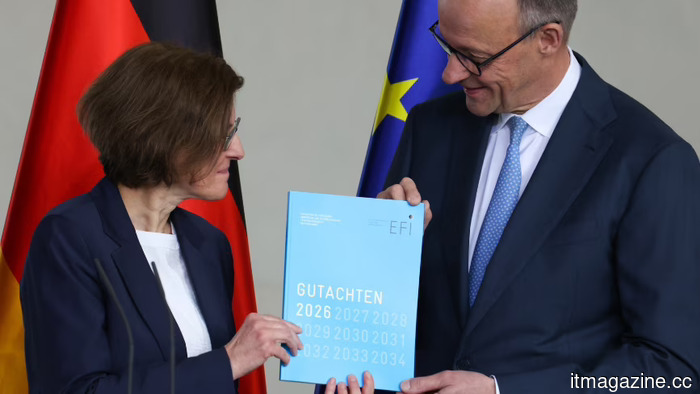 Germany informs Trump: no moon landing without European technology.
Germany's space minister has stated that NASA's Artemis missions rely on hardware manufactured in Germany, amid an escalating transatlantic technology sovereignty conflict.
Germany informs Trump: no moon landing without European technology.
Germany's space minister has stated that NASA's Artemis missions rely on hardware manufactured in Germany, amid an escalating transatlantic technology sovereignty conflict.
 UPS allocates $48 million towards cold chain development in response to the increasing demand for biologics.
UPS is enhancing 27 temperature-sensitive freight hubs across three continents in response to the increasing demand for biologics and GLP-1 medications, which is fueling growth in the pharmaceutical cold chain industry.
UPS allocates $48 million towards cold chain development in response to the increasing demand for biologics.
UPS is enhancing 27 temperature-sensitive freight hubs across three continents in response to the increasing demand for biologics and GLP-1 medications, which is fueling growth in the pharmaceutical cold chain industry.
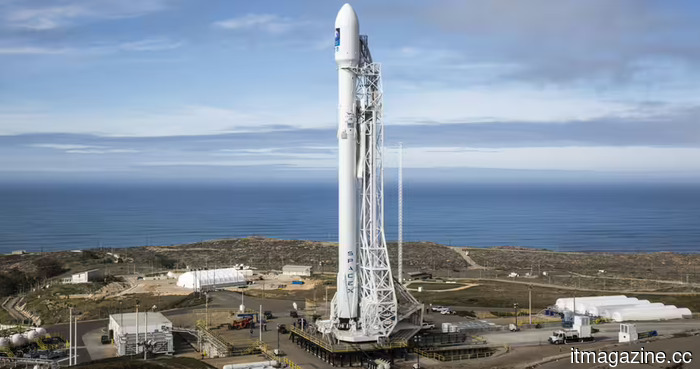 SpaceX launches its first sale of investment-grade bonds.
A few days following its historic IPO, SpaceX is securing a minimum of $20 billion through its initial investment-grade bond sale to finance a significant expansion of its AI data center.
SpaceX launches its first sale of investment-grade bonds.
A few days following its historic IPO, SpaceX is securing a minimum of $20 billion through its initial investment-grade bond sale to finance a significant expansion of its AI data center.
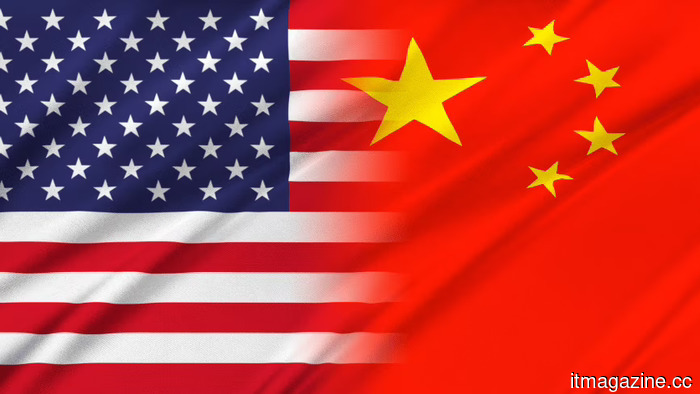 China's trade restrictions affect 56 US companies following the Pentagon's listing.
China's trade restrictions affected 56 American companies, including rare-earth mining firms and drone manufacturers, as a response to the Pentagon's broadened military blacklist.
China's trade restrictions affect 56 US companies following the Pentagon's listing.
China's trade restrictions affected 56 American companies, including rare-earth mining firms and drone manufacturers, as a response to the Pentagon's broadened military blacklist.
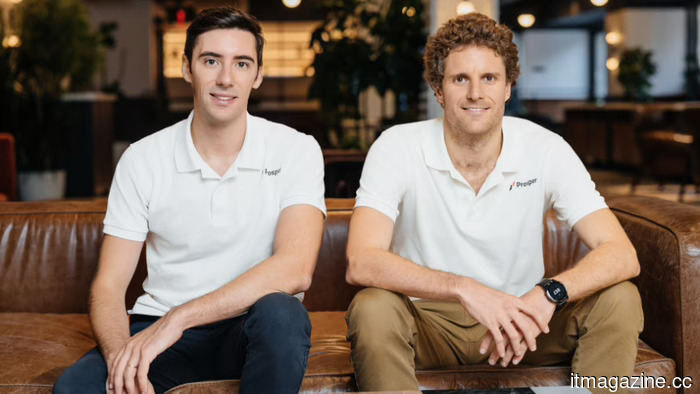 Prosper AI secures $30 million in funding from a16z to streamline the patient journey through automation.
Prosper AI, which operates in both Madrid and New York, has secured $30 million in a Series A funding round led by Andreessen Horowitz to expand its healthcare voice AI capabilities beyond just scheduling.
Prosper AI secures $30 million in funding from a16z to streamline the patient journey through automation.
Prosper AI, which operates in both Madrid and New York, has secured $30 million in a Series A funding round led by Andreessen Horowitz to expand its healthcare voice AI capabilities beyond just scheduling.
Ireland assumes the EU presidency amid tensions with Big Tech.
Ireland will take on the EU Council presidency starting 1 July, with the responsibility of negotiating tech sovereignty agreements, even as Apple and Microsoft contribute 40% of its corporate tax.