
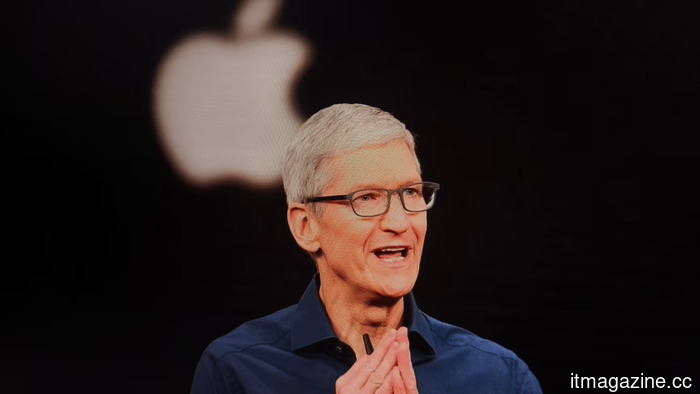
Apple investors are growing frustrated with the delays in AI development following the WWDC.
Apple investors are growing impatient with the company’s AI approach following a lackluster WWDC. The stock is coming off its worst week since February after the annual Worldwide Developers Conference failed to assure Wall Street that the anticipated upgrade cycle is any closer.
“There’s a bit of fatigue with Apple and AI,” stated Tim Chubb, chief investment officer at Girard, a division of Univest Wealth, according to Bloomberg. “It’s challenging to extend them the same benefit of the doubt we once did, given the numerous delays.”
The disappointment at WWDC
Apple’s redesigned Siri AI assistant is set to launch this fall, but only in beta. The company has rebuilt Siri on a custom Google Gemini model utilizing Nvidia Blackwell GPUs, which makes it heavily reliant on the infrastructure of its biggest rival.
Initially, the new AI features will be unavailable in the European Union or China, which are two of Apple’s key markets. This marks the second delay for Apple Intelligence in Europe, now with no timeline for resolution, after the company and EU regulators reached a standstill regarding Digital Markets Act requirements.
Analysts remained largely indifferent. According to Bloomberg, not one analyst updated revenue forecasts for 2027 or 2028 after the conference, indicating that the presentations did not provide new insights the market had not already factored in.
Valuation mismatch
Apple’s stock trades at over 33 times the estimated earnings for the next year, significantly higher than its 10-year average of 23. It ranks as the second most expensive stock among the Magnificent Seven, only surpassed by Tesla.
This premium is predicated on an AI-enhanced iPhone upgrade cycle that has been promised since 2024 and continually postponed. The stock surged 15% in May due to pre-WWDC optimism, marking its best month since July 2022, but it lost some of those gains shortly after.
Revenue growth is projected to reach about 15% in fiscal 2026, which concludes in September, a rise from 6.4% in fiscal 2025. Analysts anticipate that this growth rate will slow to 8.6% in fiscal 2027 and further decline thereafter, making the current valuation difficult to justify without a definitive catalyst.
The bullish perspective—and its challenges
The counterpoint is simple: Apple possesses a vast cash reserve, a strong balance sheet, continuous stock buybacks, and an installed base exceeding a billion devices. Additionally, it is developing a framework for third-party AI extensions for Siri that could potentially transform the iPhone into a platform for Claude, ChatGPT, and Gemini.
Shares experienced a boost on Tuesday after Bloomberg reported that next-generation, camera-equipped AirPods, a foldable phone, and a 20th-anniversary iPhone are in the works for 2027. However, the report emphasized that the timeline “remains fluid and could change,” which could also describe Apple’s overall AI strategy.
“It wasn’t terrible, but it wasn’t particularly encouraging either,” said Jed Ellerbroek, portfolio manager at Argent Capital Management, to Bloomberg. “In terms of Apple and AI, I feel like Charlie Brown with the football.”
Needham analyst Laura Martin was more critical. She noted that Apple “did nothing to indicate that it can charge more for its AI tools and capabilities, or save costs from using AI,” and pointed out that it appears “overly dependent” on Alphabet, its largest competitor in the smartphone sector.
Other articles
 China promotes free AI for developing nations as the G7 discusses access to American models.
China's leading diplomat has proposed the establishment of a global organization for AI collaboration while the G7 deliberated on "trusted partner" access to American models. Two different perspectives on AI governance are emerging.
China promotes free AI for developing nations as the G7 discusses access to American models.
China's leading diplomat has proposed the establishment of a global organization for AI collaboration while the G7 deliberated on "trusted partner" access to American models. Two different perspectives on AI governance are emerging.
 European automakers are shifting their focus to defense as the demand for electric vehicles declines and military expenditures increase.
In the past week, Ineos, Daimler Truck, Mercedes-Benz, and Renault have all revealed partnerships in the military vehicle sector. The automotive industry is adapting for a renewed focus on armament.
European automakers are shifting their focus to defense as the demand for electric vehicles declines and military expenditures increase.
In the past week, Ineos, Daimler Truck, Mercedes-Benz, and Renault have all revealed partnerships in the military vehicle sector. The automotive industry is adapting for a renewed focus on armament.
 France disrupts EDF's hydropower monopoly through new auction legislation.
The French Parliament has passed a legislation that changes EDF's hydropower concessions into permits and mandates annual auctions of 6 GW. EDF is said to be planning an investment of 4.5 billion euros in new pumped-hydro projects.
France disrupts EDF's hydropower monopoly through new auction legislation.
The French Parliament has passed a legislation that changes EDF's hydropower concessions into permits and mandates annual auctions of 6 GW. EDF is said to be planning an investment of 4.5 billion euros in new pumped-hydro projects.
 China has established new safety regulations for electric vehicles. The United States should take similar action.
China's updated safety regulations for electric vehicles implement stricter battery fire testing and require physical power shutoff mechanisms, setting a higher standard as the U.S. considers ways to enhance the safety of electric cars.
China has established new safety regulations for electric vehicles. The United States should take similar action.
China's updated safety regulations for electric vehicles implement stricter battery fire testing and require physical power shutoff mechanisms, setting a higher standard as the U.S. considers ways to enhance the safety of electric cars.
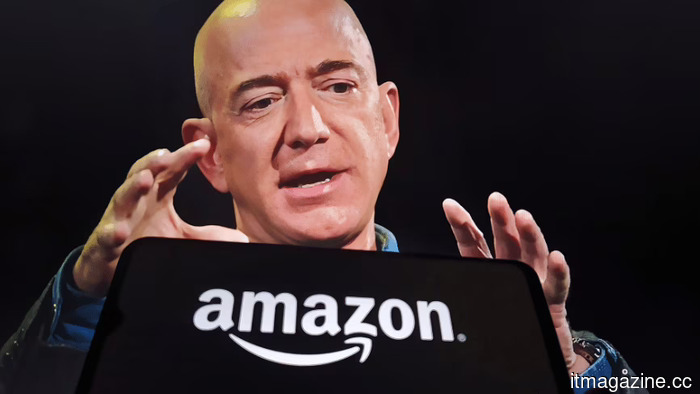 The head of Amazon AI acknowledges that their models fall behind those of OpenAI and Anthropic.
Peter DeSantis states that Amazon's AI models "haven't been at the forefront" and expresses optimism about bridging the gap within a year, using custom chips and exclusive data.
The head of Amazon AI acknowledges that their models fall behind those of OpenAI and Anthropic.
Peter DeSantis states that Amazon's AI models "haven't been at the forefront" and expresses optimism about bridging the gap within a year, using custom chips and exclusive data.
 Do you have a smartwatch? You can now participate in a study that examines how the football World Cup impacts your heart.
Bielefeld University is calling on smartwatch users to participate in a World Cup research project that monitors how football games influence fans' heart rates, stress levels, movement, and sleep patterns.
Do you have a smartwatch? You can now participate in a study that examines how the football World Cup impacts your heart.
Bielefeld University is calling on smartwatch users to participate in a World Cup research project that monitors how football games influence fans' heart rates, stress levels, movement, and sleep patterns.
Apple investors are growing frustrated with the delays in AI development following the WWDC.
Apple's stock is lagging behind the Nasdaq 100 by nine points this year. Following a disappointing WWDC and the launch of Siri AI as a beta, Wall Street is seeking results rather than plans.