
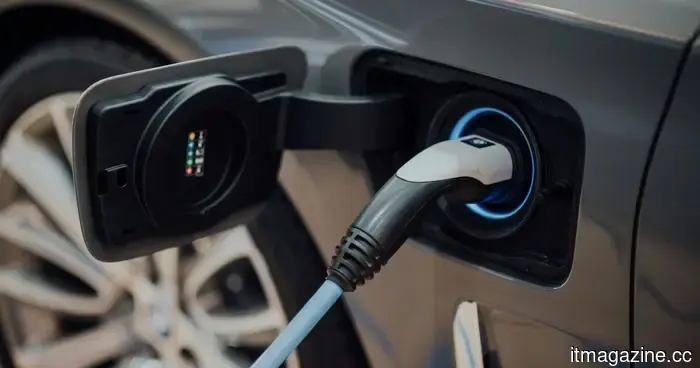
China has established new safety regulations for electric vehicles. The United States should take similar action.
Mandatory fire protections for batteries and hard power cutoffs illustrate what a more rigorous EV safety framework could look like in the U.S.
China’s upcoming EV safety regulations will require automakers to demonstrate that their vehicles can fail safely, rather than merely providing warnings before issues escalate.
Beginning July 1, 2026, two national standards will mandate enhanced safeguards for batteries and a physical method to instantly disconnect high-voltage power in emergencies. The primary concerns are those that drivers, firefighters, insurers, and regulators can no longer overlook, such as battery fires, crash damage, smoke exposure, and access for rescues following severe incidents.
The U.S. should pay closer attention. China is employing stringent tests to address EV risks as a clear pass-or-fail issue, which is the kind of transparency that the U.S. market still requires.
How comprehensive are China’s tests?
The battery requirement sends a decisive message. China is transitioning from a warning-first model to a prevention-first standard, mandating that enclosed batteries prevent fires or explosions while still providing notifications. A smoke requirement has also been added to protect occupants, integrating cabin exposure into safety considerations.
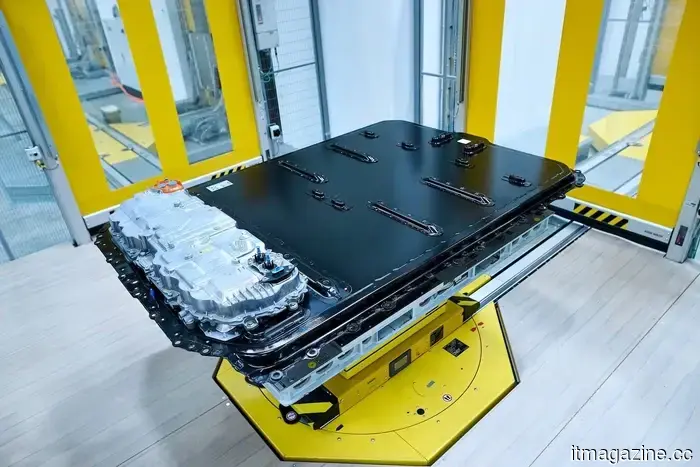
Additionally, the mandate goes beyond mere lab assurances. Battery packs will undergo a new bottom-impact test for underbody strikes, a durability test after 300 rapid charging cycles, and an external short-circuit test. Manufacturers can no longer claim safety while neglecting charging wear and damage that can occur on regular roads.
Why should the U.S. take notice now?
China’s strategy connects the battery, the vehicle, and emergency response rather than treating each aspect in isolation. By the end of 2025, its EV fleet had already reached 43.97 million new energy vehicles, with production and sales data in May 2026 indicating a market rebound. This growth has brought safety discussions to the forefront.
The U.S. doesn’t need to replicate China's approach verbatim but should engage in a serious national dialogue regarding the entire spectrum of EV failures, from battery reactions post-fast charging to the capability of first responders to isolate hazardous voltage without reliance on software.
What actions should regulators take next?
China’s stricter testing protocols will likely increase costs for certain battery packs and new models after July 2026. This is a challenge that the U.S. should address now, while EV sales are still growing and safety expectations remain relatively lenient compared to more stringent requirements.
The next steps should be well-defined. U.S. regulators ought to establish a clear national baseline for EV safety standards focused on battery fire prevention, impact protection, charging durability, smoke safety, and access for emergency shutoff. China's experience has demonstrated how much weight a robust standard can carry. The U.S. should not wait for a crisis to catch up.
Paulo Vargas is an English major who has transitioned from reporter to technical writer, with a career consistently revolving around…
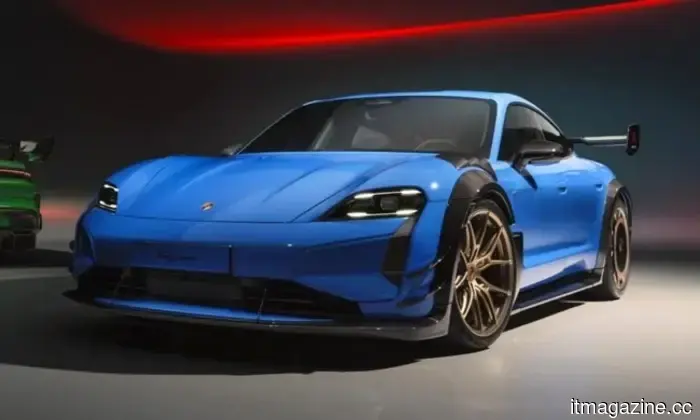
Porsche’s 2027 Taycan introduces virtual E-Shift gears connected to real paddle shifters.
Porsche is attempting to tackle one of the most significant issues facing EV hardware through software solutions.
While electric performance vehicles have become quite fast, especially in terms of straight-line speed, they still struggle to offer the engaging experience typical of traditional sports cars. The absence of gear shifts, rev build-up, and physical feedback contributes to this disparity.
Porsche believes it can rectify this with software, and the 2027 Taycan update represents its most significant effort to date. The vehicle features E-Shift, a system incorporating eight virtual gears that can be controlled using the paddle shifters situated behind the steering wheel.
Read more…
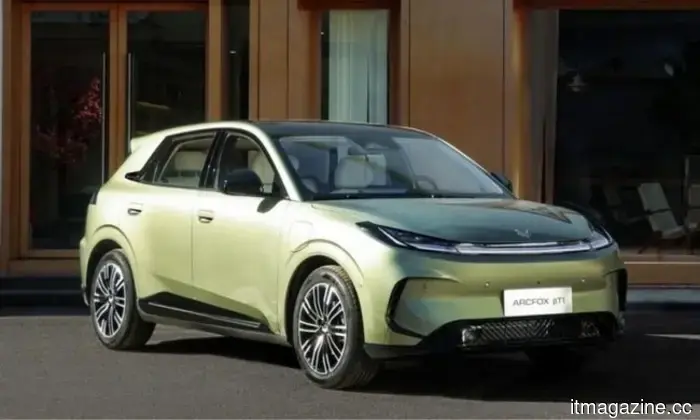
Mercedes’ Chinese partner has developed an EV priced below $10,000 that appears surprisingly stylish.
At approximately $10,000, the Arcfox Beta T1 boasts features that outshine several $30,000 EVs in the U.S.
BAIC, the Beijing-based manufacturer producing Mercedes-Benz vehicles in China, launched the updated Arcfox Beta T1 on June 16. This compact EV is priced between $9,200 and $11,700, depending on the trim level.
While it won’t be available in the United States, the fact that its most economical variant undercuts the cheapest new car sold here by around $13,000 and the least expensive EV by nearly $20,000 deserves attention. What BAIC has accomplished serves as a direct critique of the high costs for EVs in America.
Read more…
The world’s leading battery manufacturer has tempered enthusiasm for solid-state EV technology.
According to CATL chairman Robin Zeng, this technology is still in the research and development stage, with widespread market adoption not expected before 2030.
Solid-state batteries have been touted as the breakthrough technology that will revolutionize electric vehicles, promising greater energy density, quicker charging times, and enhanced safety compared to the lithium-ion batteries currently used in most vehicles. However, the head of the world’s largest battery producer urges consumers not to expect immediate results.
Dr. Robin


Other articles
 Anthropic and Google DeepMind proposed a US-led AI coalition at the G7, and Canada agreed.
At a private G7 lunch with Trump and other world leaders, Dario Amodei and Demis Hassabis suggested a US-led coalition to establish AI regulations. However, no binding agreements were reached.
Anthropic and Google DeepMind proposed a US-led AI coalition at the G7, and Canada agreed.
At a private G7 lunch with Trump and other world leaders, Dario Amodei and Demis Hassabis suggested a US-led coalition to establish AI regulations. However, no binding agreements were reached.
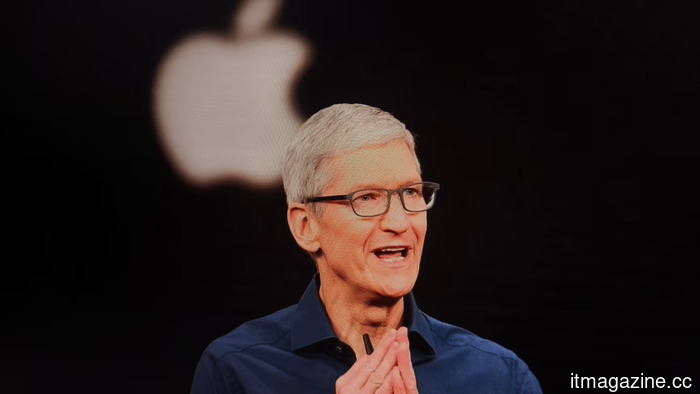 Apple investors are growing frustrated with the delays in AI development following the WWDC.
Apple's stock is lagging behind the Nasdaq 100 by nine points this year. Following a disappointing WWDC and the launch of Siri AI as a beta, Wall Street is seeking results rather than plans.
Apple investors are growing frustrated with the delays in AI development following the WWDC.
Apple's stock is lagging behind the Nasdaq 100 by nine points this year. Following a disappointing WWDC and the launch of Siri AI as a beta, Wall Street is seeking results rather than plans.
 One million Dutch individuals depend solely on social media for their news.
The 2026 Digital News Report reveals that 7% of Dutch adults rely exclusively on social media for news, an increase from 2% in 2018, although trust and interest continue to decline.
One million Dutch individuals depend solely on social media for their news.
The 2026 Digital News Report reveals that 7% of Dutch adults rely exclusively on social media for news, an increase from 2% in 2018, although trust and interest continue to decline.
 Meloni states that children can easily circumvent social media restrictions.
Italy's Prime Minister stated at the G7 that prohibiting children from using social media is "easily bypassed" and that it should be the platforms, rather than parents, who take on the responsibility.
Meloni states that children can easily circumvent social media restrictions.
Italy's Prime Minister stated at the G7 that prohibiting children from using social media is "easily bypassed" and that it should be the platforms, rather than parents, who take on the responsibility.
 Mastodon introduces email newsletters, allowing those who prefer not to have an account to still keep up with creators on the open social web.
Mastodon 4.6 allows creators to send posts to email subscribers who do not possess fediverse accounts. This feature is aimed at institutions and independent publishers.
Mastodon introduces email newsletters, allowing those who prefer not to have an account to still keep up with creators on the open social web.
Mastodon 4.6 allows creators to send posts to email subscribers who do not possess fediverse accounts. This feature is aimed at institutions and independent publishers.
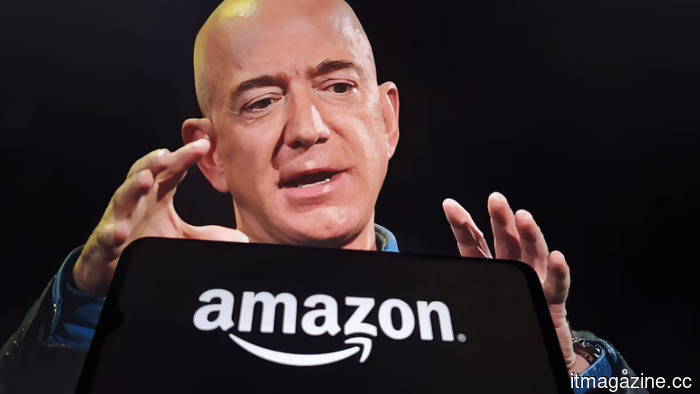 The head of Amazon's AI division acknowledges that their models are behind those of OpenAI and Anthropic.
Peter DeSantis mentions that Amazon's AI models "haven't been at the forefront" and expresses his hope to narrow the gap within a year, utilizing custom chips and exclusive data.
The head of Amazon's AI division acknowledges that their models are behind those of OpenAI and Anthropic.
Peter DeSantis mentions that Amazon's AI models "haven't been at the forefront" and expresses his hope to narrow the gap within a year, utilizing custom chips and exclusive data.
China has established new safety regulations for electric vehicles. The United States should take similar action.
China's updated safety regulations for electric vehicles implement stricter battery fire testing and require physical power shutoff mechanisms, setting a higher standard as the U.S. considers ways to enhance the safety of electric cars.