

Do you have a smartwatch? You can now participate in a study that examines how the football World Cup impacts your heart.
Your World Cup disappointment could turn into valuable smartwatch data now
Watching the World Cup is often a thrilling experience that can elevate your heart rate. Now, your smartwatch may be capable of measuring how emotionally invested you became in your favorite team's victories or defeats. Researchers at Bielefeld University are inviting football enthusiasts to participate in the World Cup Fever Study, which aims to utilize smartwatch and fitness tracker data to analyze how fans physically react to matches during the 2026 FIFA World Cup.
The study focuses on monitoring heart rate, stress levels, movement, and sleep to gauge how significant football events, such as goals, wins, losses, and tense moments, manifest in the body.
How is the study being conducted?
Alejandro Arditi / Bielefeld University
Initially, the study was supported by Garmin, but it has since broadened to include devices from 13 major brands, such as Apple Watch, Google Pixel Watch, Samsung Health, Garmin, Fitbit, Oura, Polar, Amazfit, Coros, Whoop, Xiaomi Mi Fitness, Withings, and Wahoo. Fans can still enroll even though the World Cup has already started. Participants can sign up online by providing information such as their country of residence, gender, nationality, preferred team, and level of support.
Once a sufficient number of fans from a specific national team have registered, selected individuals will receive email instructions on how to connect their smartwatches. Throughout the tournament, they will be asked which matches they viewed live and whether they watched on television or attended a public viewing event. Data will be collected anonymously through a data-protection-compliant interface. Participants must grant one-time permission for their devices to automatically send the relevant health and activity data.
Football fever is more literal than you might think
Mark Jansen / Digital Trends
This initiative builds upon a previous study conducted by Bielefeld during the 2025 DFB Cup final, tracking 229 supporters of DSC Arminia Bielefeld over 12 weeks. Findings indicated that fans present in the stadium had an average heart rate of 94 beats per minute, compared to 79 beats per minute for those watching on television. Heart rates surged by as much as 36% after a goal was scored, and stress levels began to rise as early as 14 hours before kickoff.
This provides researchers with an ideal opportunity to observe emotionally charged fans from various countries, allowing them to compare the impacts of nationality, team loyalty, and match excitement on the body.


Other articles
 PsiQuantum makes advancements in the development of a utility-scale quantum computer.
The Palo Alto startup has begun construction in Queensland, supported by A$940 million from the Australian government and $100 million from the US CHIPS Act. A functional machine is still years in the future.
PsiQuantum makes advancements in the development of a utility-scale quantum computer.
The Palo Alto startup has begun construction in Queensland, supported by A$940 million from the Australian government and $100 million from the US CHIPS Act. A functional machine is still years in the future.
 Marcus cautions that the OpenAI IPO might jeopardize the AI supply chain.
AI researcher Gary Marcus states that OpenAI's issues with its IPO would have a ripple effect on Nvidia, Oracle, and CoreWeave, as spending on enterprise AI declines and cash burn increases.
Marcus cautions that the OpenAI IPO might jeopardize the AI supply chain.
AI researcher Gary Marcus states that OpenAI's issues with its IPO would have a ripple effect on Nvidia, Oracle, and CoreWeave, as spending on enterprise AI declines and cash burn increases.
 China promotes free AI for developing nations as the G7 discusses access to American models.
China's leading diplomat has proposed the establishment of a global organization for AI collaboration while the G7 deliberated on "trusted partner" access to American models. Two different perspectives on AI governance are emerging.
China promotes free AI for developing nations as the G7 discusses access to American models.
China's leading diplomat has proposed the establishment of a global organization for AI collaboration while the G7 deliberated on "trusted partner" access to American models. Two different perspectives on AI governance are emerging.
 France disrupts EDF's hydropower monopoly through new auction legislation.
The French Parliament has passed a legislation that changes EDF's hydropower concessions into permits and mandates annual auctions of 6 GW. EDF is said to be planning an investment of 4.5 billion euros in new pumped-hydro projects.
France disrupts EDF's hydropower monopoly through new auction legislation.
The French Parliament has passed a legislation that changes EDF's hydropower concessions into permits and mandates annual auctions of 6 GW. EDF is said to be planning an investment of 4.5 billion euros in new pumped-hydro projects.
 Anthropic and Google DeepMind proposed a US-led AI coalition at the G7, and Canada agreed.
At a private G7 lunch with Trump and other world leaders, Dario Amodei and Demis Hassabis suggested a US-led coalition to establish AI regulations. However, no binding agreements were reached.
Anthropic and Google DeepMind proposed a US-led AI coalition at the G7, and Canada agreed.
At a private G7 lunch with Trump and other world leaders, Dario Amodei and Demis Hassabis suggested a US-led coalition to establish AI regulations. However, no binding agreements were reached.
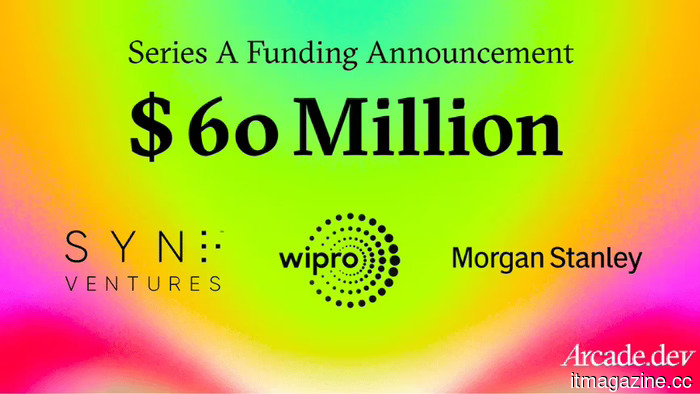 Arcade.dev has secured $60 million to enhance its enterprise AI agents.
Arcade.dev secured a $60M Series A funding round led by SYN Ventures to regulate the actions AI agents can perform within company systems, effectively containing the agents within pilot programs.
Arcade.dev has secured $60 million to enhance its enterprise AI agents.
Arcade.dev secured a $60M Series A funding round led by SYN Ventures to regulate the actions AI agents can perform within company systems, effectively containing the agents within pilot programs.
Do you have a smartwatch? You can now participate in a study that examines how the football World Cup impacts your heart.
Bielefeld University is calling on smartwatch users to participate in a World Cup research project that monitors how football games influence fans' heart rates, stress levels, movement, and sleep patterns.