
Uber selects Munich for its upcoming robotaxi initiative, collaborating with Autobrains and Nvidia.
The ride-hailing company is counting on Germany’s automotive hub, along with a less sensor-intensive method for autonomy, to finally bring robotaxis to scale in Europe. Munich is set to test a specific hypothesis: that the most cost-effective way to deploy a driverless taxi in Europe is to avoid designing specialized vehicles for it. On Sunday, Uber announced that it will initiate a robotaxi program in the German city in partnership with Autobrains, an Israeli autonomy firm, using vehicles that operate on Nvidia’s DRIVE Hyperion platform.
This announcement was made at Nvidia’s GTC conference in Taipei, and the rollout hinges on receiving approval from German regulators. The selection of Munich is strategic. The city is home to BMW and a significant number of suppliers, and it embodies the environment Uber seeks: narrow city streets, quick ring roads, and what the company describes as “a thoughtful German regulatory framework.”
Since 2021, Germany has had federal regulations allowing driverless vehicles in designated areas, making it one of the few European markets where a Level 4 service is primarily a matter of paperwork rather than a legal hurdle.
What sets this approach apart is the autonomy stack. Most robotaxis currently operating, like those from Waymo and others, rely on custom-built vehicles equipped with lidar and a single, large end-to-end model trained to handle all driving scenarios simultaneously. On the contrary, Autobrains offers a solution where its “agentic AI” divides the driving task into specialized components, each addressing a specific aspect of the problem, utilizing standard automotive sensors and typical automotive-grade computing. The advantage claimed is that this method is more cost-effective to develop and can be easily integrated into vehicles from various manufacturers.
This last point is a key commercial concept that Uber emphasizes. The three companies describe the program as “OEM-agnostic,” indicating that the software is designed to operate across different car manufacturers rather than being limited to a single custom fleet. “Autonomous driving will not scale by depending on a single model to address every driving scenario,” stated Igal Raichelgauz, CEO and founder of Autobrains. “It requires systems that can reason, adapt, and make decisions amid uncertainty.”
Uber, which divested its own self-driving unit in 2020, has spent the subsequent years forming precisely this type of partnership instead of developing the technology in-house. This same approach is evident in its Tokyo pilot with Wayve and Nissan, and its collaboration with Pony.ai and Verne, whose vehicles recently became the first commercial robotaxi service in Zagreb earlier this year. Sarfraz Maredia, Uber’s global head of autonomous mobility, expressed that the real challenge lies in “bringing them into a commercial network where they can reliably serve riders at scale.”
Several details remained unspecified, including the launch date, fleet size, and vehicle type. They did not disclose which car manufacturer, if any, would provide the cars, nor whether the initial rides would include safety operators, as seen in Zagreb.
The Munich initiative also aligns with a target Uber outlined last year, when it first indicated its goal to start self-driving operations in the city, thus solidifying an existing timeline rather than establishing a new one.
Europe has witnessed numerous announcements about robotaxis that are often not realized. Munich is now among the locations where this trend is expected to shift, contingent upon regulatory approval.
Other articles
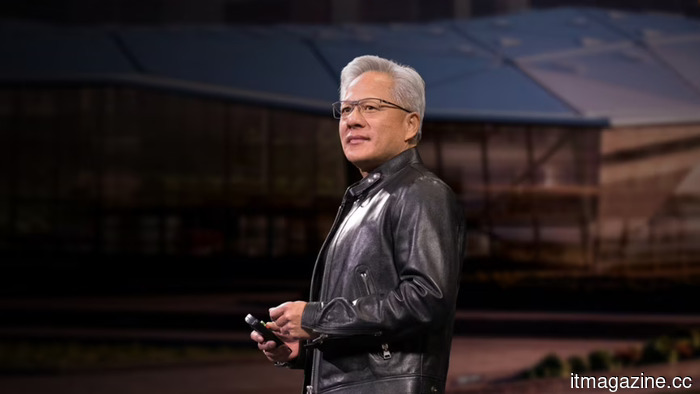 Jensen Huang states that workers should be compensated "as much as possible," just days after Nvidia allocates 50% of its free cash to shareholders.
At Computex, Jensen Huang stated that employees should receive "as much as possible," supporting Samsung's memory-bonus system. However, this comment comes just days after Nvidia pledged $80 billion towards buybacks and dedicated 50% of its free cash flow to returning money to shareholders.
Jensen Huang states that workers should be compensated "as much as possible," just days after Nvidia allocates 50% of its free cash to shareholders.
At Computex, Jensen Huang stated that employees should receive "as much as possible," supporting Samsung's memory-bonus system. However, this comment comes just days after Nvidia pledged $80 billion towards buybacks and dedicated 50% of its free cash flow to returning money to shareholders.
 As Microsoft approaches Build, it's faced with the challenge of having AI integrated throughout its offerings and dealing with issues related to its paying customers.
Microsoft launches its Build developer conference in San Francisco, anticipated to integrate AI further into Windows and Copilot, while the rate of adoption remains uncertain.
As Microsoft approaches Build, it's faced with the challenge of having AI integrated throughout its offerings and dealing with issues related to its paying customers.
Microsoft launches its Build developer conference in San Francisco, anticipated to integrate AI further into Windows and Copilot, while the rate of adoption remains uncertain.
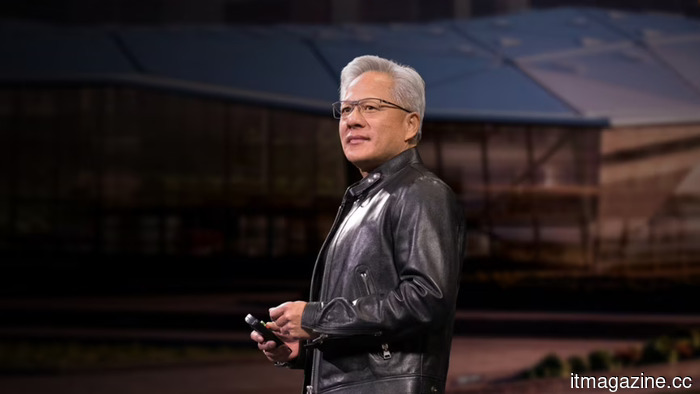 Jensen Huang advises to compensate workers 'as much as possible' shortly after Nvidia pledges 50% of its free cash to shareholders.
At Computex, Jensen Huang stated that employees should be compensated "as much as possible," supporting the Samsung memory-bonus system. However, his comment comes just days after Nvidia announced an $80 billion commitment for buybacks and allocated 50% of its free cash flow to shareholder returns.
Jensen Huang advises to compensate workers 'as much as possible' shortly after Nvidia pledges 50% of its free cash to shareholders.
At Computex, Jensen Huang stated that employees should be compensated "as much as possible," supporting the Samsung memory-bonus system. However, his comment comes just days after Nvidia announced an $80 billion commitment for buybacks and allocated 50% of its free cash flow to shareholder returns.
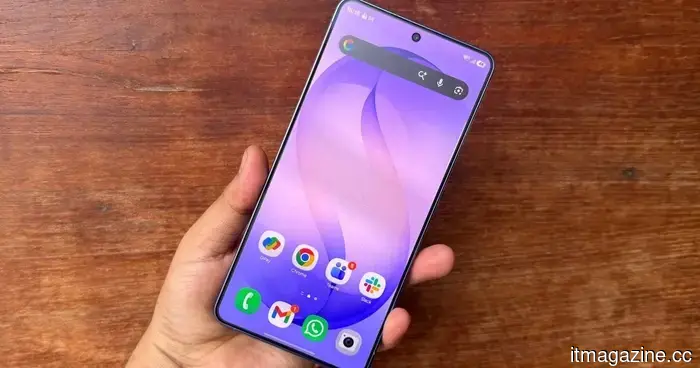 Samsung One UI 9 will deactivate your fingerprint every time you access the power menu.
One UI 9 Beta 2 automates the lockdown mode on Samsung Galaxy devices, eliminating the need for a manual activation step.
Samsung One UI 9 will deactivate your fingerprint every time you access the power menu.
One UI 9 Beta 2 automates the lockdown mode on Samsung Galaxy devices, eliminating the need for a manual activation step.
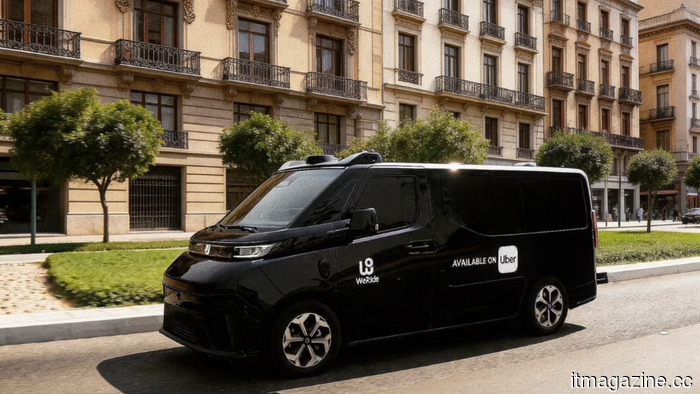 WeRide and Uber expand their robotaxi collaboration to Madrid.
WeRide, Uber, and fleet operator AVOMO are set to launch Madrid’s inaugural commercial robotaxi pilot later this year, initially featuring safety operators.
WeRide and Uber expand their robotaxi collaboration to Madrid.
WeRide, Uber, and fleet operator AVOMO are set to launch Madrid’s inaugural commercial robotaxi pilot later this year, initially featuring safety operators.
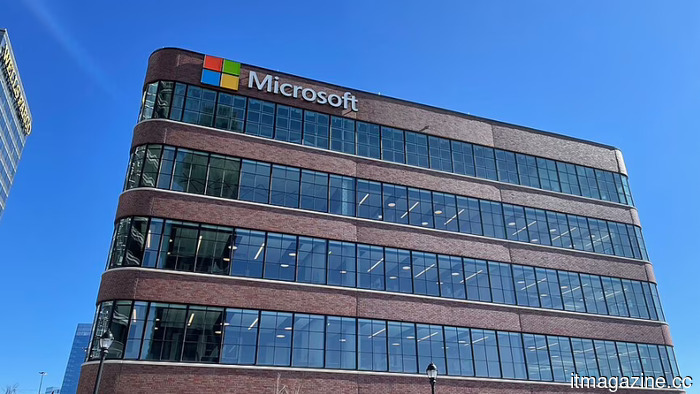 As Microsoft approaches Build, it faces a challenge with AI integrated throughout its offerings and a dilemma regarding paying customers.
Microsoft kicks off its Build developer conference in San Francisco, aiming to integrate AI further into Windows and Copilot, although adoption remains uncertain.
As Microsoft approaches Build, it faces a challenge with AI integrated throughout its offerings and a dilemma regarding paying customers.
Microsoft kicks off its Build developer conference in San Francisco, aiming to integrate AI further into Windows and Copilot, although adoption remains uncertain.
Uber selects Munich for its upcoming robotaxi initiative, collaborating with Autobrains and Nvidia.
Uber and the Israeli company Autobrains are set to initiate a robotaxi program in Munich using Nvidia DRIVE Hyperion, subject to approval from German regulators.