
Uber selects Munich for its upcoming robotaxi initiative, partnering with Autobrains and Nvidia.
The ride-hailing company is optimistic that Germany’s automotive hub, combined with a less sensor-intensive method of autonomy, can enable robotaxis to become more widespread in Europe. Munich is set to serve as a test for a specific hypothesis: that the most cost-effective way to introduce a driverless taxi on European roads is to refrain from creating specialized vehicles for this purpose. On Sunday, Uber announced plans to initiate a robotaxi program in this German city in collaboration with Autobrains, an Israeli autonomy company, using vehicles equipped with Nvidia’s DRIVE Hyperion platform.
This announcement was made during Nvidia’s GTC conference in Taipei, with the rollout dependent on approval from German regulators. The selection of Munich is strategic; it is the headquarters of BMW and a concentration of suppliers, creating the urban environment Uber seeks: narrow city streets, swift ring roads, and what the company describes as “a thoughtful German regulatory framework.” Since 2021, Germany has had federal legislation allowing driverless vehicles in designated operational zones, positioning it as one of the few European markets where a Level 4 service is more about regulatory paperwork than legal limitations.
What truly distinguishes this endeavor is the autonomy technology being utilized. The majority of current robotaxis, operated by Waymo and others, rely on custom-built vehicles equipped with lidar and a singular large model designed to handle all driving tasks simultaneously. In contrast, Autobrains offers a different approach with its “agentic AI,” which divides the driving task into specialized segments, each managed by individual agents, using standard automotive sensors and conventional automotive-grade computing. The argument here is that this method is more affordable to produce and can be integrated into any carmaker’s vehicle.
This concept of versatility is a recurring commercial strategy for Uber. The three companies characterize the initiative as “OEM-agnostic,” indicating that the software is designed to work across various manufacturers’ cars rather than being tailored to a single custom fleet. “Autonomous driving will not scale by relying on a single model to solve every driving scenario,” stated Igal Raichelgauz, the CEO and founder of Autobrains. “It necessitates systems that can reason, adapt, and decide under uncertainty.”
Since selling its self-driving division in 2020, Uber has focused on forming partnerships like this instead of owning the technology. This strategy is similar to its Tokyo pilot with Wayve and Nissan, as well as its collaboration with Pony.ai and Verne, which recently launched Europe’s first commercial robotaxi service in Zagreb. Sarfraz Maredia, Uber’s global leader in autonomous mobility, discussed the Munich initiative in similar terms, noting that the challenge lies in “integrating them into a commercial network where they can reliably serve riders at scale.”
Several aspects remain unaddressed. The companies did not provide a launch date, fleet size, or specific vehicle details. They also did not disclose which car manufacturer, if any, would supply the vehicles or whether initial rides would include safety operators, like in Zagreb.
The Munich initiative aligns with a goal that Uber outlined last year, signaling its intention to commence self-driving operations in the city, which solidifies a timeline rather than establishing a new one. Europe has been a continent where robotaxis are frequently announced without much actual ridership. With this plan, Munich is now among the locations aimed at changing that, pending regulatory approval.
Other articles
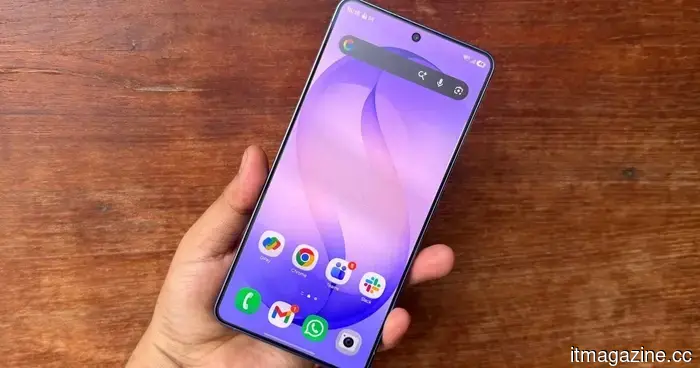 Samsung One UI 9 will turn off your fingerprint recognition every time you access the power menu.
One UI 9 Beta 2 automates the lockdown mode on Samsung Galaxy devices, eliminating the need for manual activation.
Samsung One UI 9 will turn off your fingerprint recognition every time you access the power menu.
One UI 9 Beta 2 automates the lockdown mode on Samsung Galaxy devices, eliminating the need for manual activation.
 Marvell rises after Jensen Huang labels it as the next trillion-dollar company.
Marvell's stock jumped approximately 25% in premarket trading following Nvidia's Jensen Huang's prediction at Computex that it would become the next $1 trillion company.
Marvell rises after Jensen Huang labels it as the next trillion-dollar company.
Marvell's stock jumped approximately 25% in premarket trading following Nvidia's Jensen Huang's prediction at Computex that it would become the next $1 trillion company.
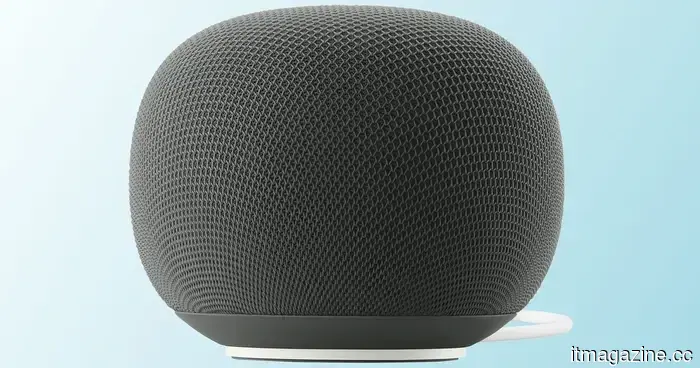 Google's first new smart speaker in six years may finally have a launch date.
Google remained silent about its Home Speaker powered by Gemini during the entirety of I/O 2026.
Google's first new smart speaker in six years may finally have a launch date.
Google remained silent about its Home Speaker powered by Gemini during the entirety of I/O 2026.
 SoftBank is said to be in preliminary discussions to support an $800 million funding round for Agile Robots.
According to Bloomberg, SoftBank is in preliminary discussions to invest over $300 million in a funding round of approximately $800 million for the Munich-based robotics company Agile Robots.
SoftBank is said to be in preliminary discussions to support an $800 million funding round for Agile Robots.
According to Bloomberg, SoftBank is in preliminary discussions to invest over $300 million in a funding round of approximately $800 million for the Munich-based robotics company Agile Robots.
 As Microsoft approaches Build, it faces a challenge with AI integrated throughout its offerings and a dilemma regarding paying customers.
Microsoft kicks off its Build developer conference in San Francisco, aiming to integrate AI further into Windows and Copilot, although adoption remains uncertain.
As Microsoft approaches Build, it faces a challenge with AI integrated throughout its offerings and a dilemma regarding paying customers.
Microsoft kicks off its Build developer conference in San Francisco, aiming to integrate AI further into Windows and Copilot, although adoption remains uncertain.
 Uber has chosen Munich as the location for its upcoming robotaxi initiative, collaborating with Autobrains and Nvidia.
Uber and the Israeli company Autobrains are set to introduce a robotaxi initiative in Munich, utilizing Nvidia DRIVE Hyperion, subject to approval from German regulators.
Uber has chosen Munich as the location for its upcoming robotaxi initiative, collaborating with Autobrains and Nvidia.
Uber and the Israeli company Autobrains are set to introduce a robotaxi initiative in Munich, utilizing Nvidia DRIVE Hyperion, subject to approval from German regulators.
Uber selects Munich for its upcoming robotaxi initiative, partnering with Autobrains and Nvidia.
Uber and the Israeli company Autobrains are set to introduce a robotaxi program in Munich using Nvidia DRIVE Hyperion, subject to German regulatory approval.