
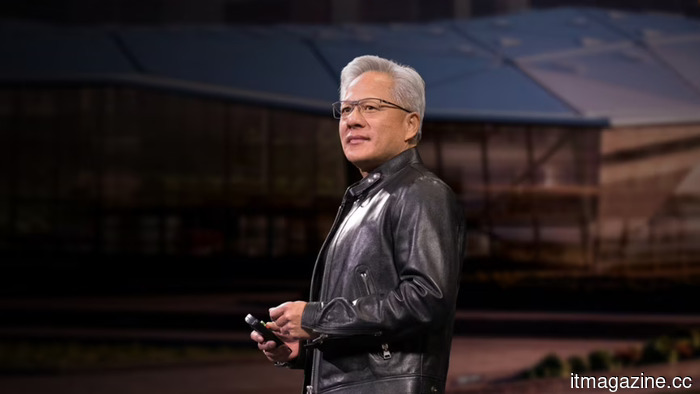
Jensen Huang advises to compensate workers 'as much as possible' shortly after Nvidia pledges 50% of its free cash to shareholders.
Jensen Huang's remarks at Computex support Samsung's bonus system that awards $400,000 to chip engineers, coinciding with an $80 billion Nvidia buyback revealed two weeks prior. Jensen Huang, Nvidia's CEO, expressed to reporters in Taipei on Tuesday that employees should receive "as much as possible," framing his statement in response to inquiries regarding Samsung Electronics’ new bonus plan, which could yield $400,000 to memory chip engineers.
"I pay my employees as much as I can," Huang stated, but added, "it doesn’t make this right,” marking a rare instance of a CEO hedging their comments publicly.
The context of Samsung's situation prompted the question. Earlier in the month, the Korean memory company’s union and management negotiated an agreement after nearly facing a strike, which included a commitment of 10.5% of semiconductor operating profits to bonuses for the chip division. Workers in the memory division could receive payouts of up to 600 million won (around $400,000) based on profit targets through 2035.
This arrangement has been characterized by Reuters as the largest single profit-sharing commitment in the history of major Korean corporations. Samsung provides HBM4 chips to Nvidia for the Vera Rubin platform, making the inquiry to Huang particularly relevant.
However, the pressing context is Nvidia’s cash return strategy declared two weeks before Huang’s comments, which included an $80 billion share buyback, an increase in the quarterly cash dividend from $0.01 to $0.25 per share (a 2,400% rise), and a commitment to return at least 50% of free cash flow to shareholders through 2026 and beyond. Nvidia returned a record $20 billion to shareholders just in that quarter.
Nvidia's $81.6 billion quarterly revenue and an 85% year-on-year growth support this return strategy, but the figures are significant: the buyback alone exceeds Nvidia's total annual payroll multiple times over.
Huang’s public stance that workers should be compensated generously while Nvidia should return half its free cash flow to shareholders is not necessarily contradictory; both can coexist as the company has the resources to manage both.
However, how these points are conveyed is crucial as corporate productivity gains in AI are increasingly benefiting shareholders rather than workers, especially with Morgan Stanley's recent European banking forecast projecting a doubled estimate of AI-related job losses to 20%.
Huang's instinctive advocacy for high worker compensation, even with the qualification "it doesn’t make this right," is the first significant acknowledgment by a major AI-infrastructure CEO of the labor-capital tension arising from the AI expansion.
Additionally, another noteworthy comment from Huang at Computex was about Nvidia engineers utilizing AI tokens, valued at about half their annual salary each year, to maintain productivity, suggesting that not using AI tools is akin to designing chips with traditional methods.
This perspective, in terms of justification, supports generous worker compensation through token allowances rather than just salary figures: if engineers are allocated $100,000-$150,000 annually for token purchases in addition to their base salary, their overall compensation package is significantly higher than what is reflected in the base salary alone.
It should also be noted that this perspective hinges on the stability of AI-token prices, which could increase as pointed out by Commonwealth Bank's Matt Comyn earlier this week.
Nvidia employs around 36,000 people worldwide, with average compensation per employee, based on the latest disclosures, amounting to several hundred thousand dollars, including stock options. The AI surge has driven Nvidia's share price up approximately 1,170% over the last five years, turning many employees with restricted stock units into millionaires through typical vesting periods.
Therefore, his remarks fit into Nvidia’s compensation reality, which already appears to be notably favorable to workers in comparison to other large public tech firms. Huang is scheduled to visit Seoul this week to meet with Samsung Electronics chairman Lee Jae-yong and other South Korean industrial leaders, and the bonus structure topic is likely to arise again. Huang's public stance now is more difficult to retract than a typical executive non-response.
Other articles
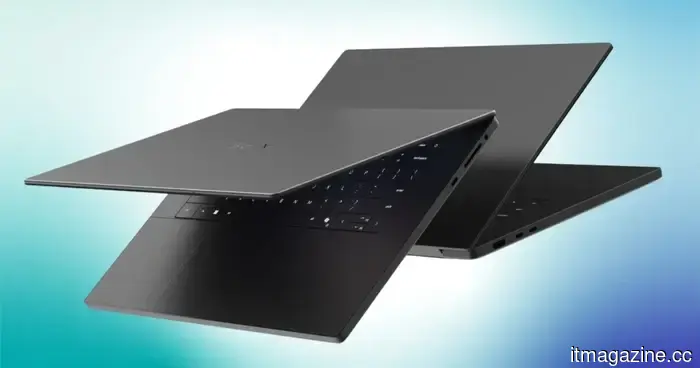 Dell's latest XPS 16 Creator Edition aims to serve as a substitute for your MacBook Pro.
Dell's XPS 16 Creator Edition features Nvidia RTX Spark, a Tandem OLED screen, as much as 128GB of unified memory, and includes the ports that MacBook Pro users have been longing for.
Dell's latest XPS 16 Creator Edition aims to serve as a substitute for your MacBook Pro.
Dell's XPS 16 Creator Edition features Nvidia RTX Spark, a Tandem OLED screen, as much as 128GB of unified memory, and includes the ports that MacBook Pro users have been longing for.
 Meta's AI bot assisted hackers in stealing Instagram accounts, and it was alarmingly simple to deceive.
Instagram has fixed a major security vulnerability that allowed hackers to utilize Meta's AI support chatbot to gain access to accounts without needing the victim’s password or email.
Meta's AI bot assisted hackers in stealing Instagram accounts, and it was alarmingly simple to deceive.
Instagram has fixed a major security vulnerability that allowed hackers to utilize Meta's AI support chatbot to gain access to accounts without needing the victim’s password or email.
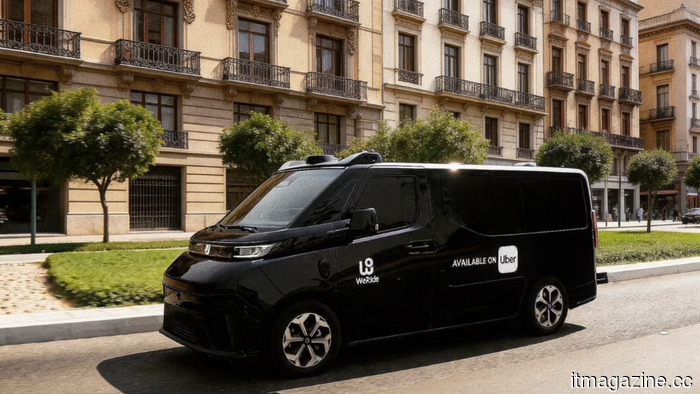 WeRide and Uber expand their robotaxi collaboration to Madrid.
WeRide, Uber, and fleet operator AVOMO are set to launch Madrid’s inaugural commercial robotaxi pilot later this year, initially featuring safety operators.
WeRide and Uber expand their robotaxi collaboration to Madrid.
WeRide, Uber, and fleet operator AVOMO are set to launch Madrid’s inaugural commercial robotaxi pilot later this year, initially featuring safety operators.
 Uber selects Munich for its upcoming robotaxi initiative, partnering with Autobrains and Nvidia.
Uber and the Israeli company Autobrains are set to introduce a robotaxi program in Munich using Nvidia DRIVE Hyperion, subject to German regulatory approval.
Uber selects Munich for its upcoming robotaxi initiative, partnering with Autobrains and Nvidia.
Uber and the Israeli company Autobrains are set to introduce a robotaxi program in Munich using Nvidia DRIVE Hyperion, subject to German regulatory approval.
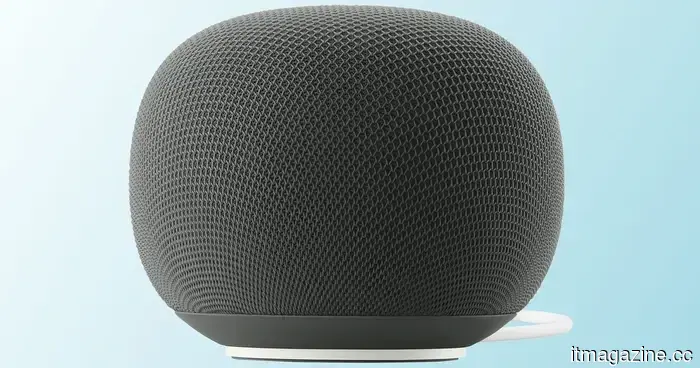 Google's first new smart speaker in six years may finally have a launch date.
Google remained silent about its Home Speaker powered by Gemini during the entirety of I/O 2026.
Google's first new smart speaker in six years may finally have a launch date.
Google remained silent about its Home Speaker powered by Gemini during the entirety of I/O 2026.
 Uber selects Munich for its upcoming robotaxi initiative, collaborating with Autobrains and Nvidia.
Uber and the Israeli company Autobrains are set to initiate a robotaxi program in Munich using Nvidia DRIVE Hyperion, subject to approval from German regulators.
Uber selects Munich for its upcoming robotaxi initiative, collaborating with Autobrains and Nvidia.
Uber and the Israeli company Autobrains are set to initiate a robotaxi program in Munich using Nvidia DRIVE Hyperion, subject to approval from German regulators.
Jensen Huang advises to compensate workers 'as much as possible' shortly after Nvidia pledges 50% of its free cash to shareholders.
At Computex, Jensen Huang stated that employees should be compensated "as much as possible," supporting the Samsung memory-bonus system. However, his comment comes just days after Nvidia announced an $80 billion commitment for buybacks and allocated 50% of its free cash flow to shareholder returns.