
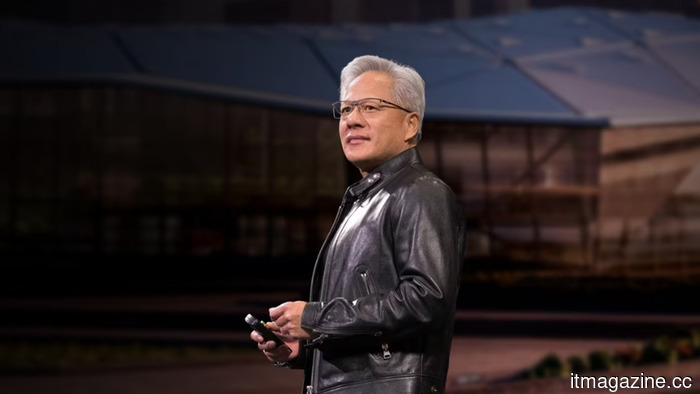
Jensen Huang states that employees should be compensated ‘as much as possible’ just days after Nvidia allocates 50% of its free cash to shareholders.
Jensen Huang’s remarks at Computex defended Samsung's bonus system, which awards $400,000 to chip engineers, while coinciding with Nvidia's announcement of an $80 billion buyback made two weeks earlier. Jensen Huang, the CEO of Nvidia, stated to reporters at Computex in Taipei on Tuesday that employees should be compensated "as much as possible." He expressed this viewpoint in response to inquiries about Samsung Electronics’ new bonus policy that offers memory chip engineers bonuses of up to $400,000.
“I pay my employees as much as I can,” Huang commented, but he also stated, “but it doesn’t make this right,” marking a rare moment of public hesitation from a CEO who typically does not qualify his statements in real-time. The context for the question stems from Samsung, whose union and management reached an agreement earlier this month following a near-strike, which allocated 10.5% of semiconductor operating profit to bonuses in the chip division, offering payouts as high as 600 million won (approximately $400,000) to each memory worker based on sustained profit targets through 2035. Reuters described the deal as the largest single profit-share commitment in the history of major Korean corporations. Samsung provides HBM4 to Nvidia for the Vera Rubin platform, making the inquiry to Huang contextually significant.
Additionally, Nvidia's commitment to returning cash to shareholders, announced shortly before Huang's comments, adds complexity. The company's fiscal Q1 2027 results revealed an $80 billion share buyback authorization and a significant increase in quarterly cash dividends from $0.01 to $0.25 per share (a 2,400% increase), alongside a pledge to return at least 50% of free cash flow to shareholders through 2026 and beyond. Nvidia returned an unprecedented $20 billion to shareholders in that quarter.
Nvidia's quarterly revenue of $81.6 billion and an 85% year-over-year growth support this return strategy, but it's noteworthy that the buyback alone is several times greater than Nvidia’s total annual payroll. The dual stances Huang has taken—advocating for high worker compensation and prioritizing shareholder returns—are not necessarily at odds; both can coexist, as the company has the resources for both.
However, the way this is publicly framed is significant, especially as gains from corporate AI productivity are increasingly favoring shareholders over workers, with Morgan Stanley recently doubling its forecast of AI-driven job losses in Europe to 20%. Huang’s defense of high employee pay, even with the qualifying remark, is one of the few instances where a prominent AI-infrastructure CEO has openly acknowledged the ongoing tension between labor and capital in the AI expansion.
Another notable comment from Huang during his Computex appearances was directed to a different audience where he suggested Nvidia engineers should utilize AI tokens equivalent to half their annual salary each year to maintain productivity, likening the failure to use AI tools to designing chips with pencil and paper. This position can be seen as a defense of generous worker compensation through token distribution rather than traditional salary: if engineers are allocated a token budget of $100,000-$150,000 in addition to their base salary, their overall compensation could be significantly greater than what is reflected in their salary figures.
This assertion also hinges on the assumption that AI-token prices will remain stable rather than following an upward trend, as flagged by Matt Comyn of Commonwealth Bank. Nvidia currently employs around 36,000 individuals globally, with average compensation per employee, based on the most recent disclosures, reaching several hundred thousand dollars when including stock-based compensation. The AI surge has propelled Nvidia’s stock price up approximately 1,170% over the last five years, creating numerous multi-millionaire employees through the vesting of restricted-stock units.
As a result, Huang’s comments are situated within a compensation landscape at Nvidia that, relative to other large public tech companies, has notably favored workers. Huang is set to visit Seoul this week to meet with Samsung Electronics chairman Lee Jae-yong and other industry leaders, where discussions about the bonus structure are likely to arise again. The public position he has adopted is now more difficult to retract than the typical vague executive response.
Other articles
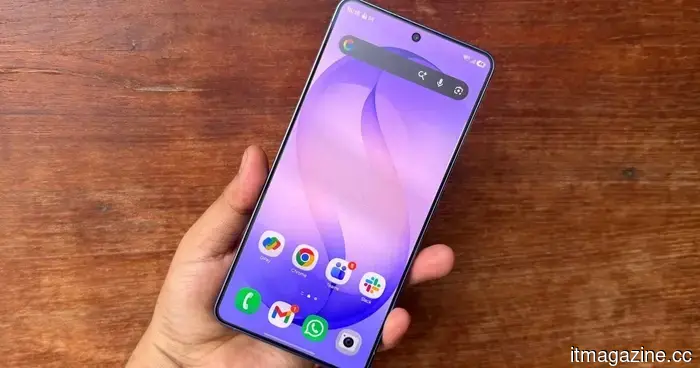 Samsung One UI 9 will turn off your fingerprint recognition every time you access the power menu.
One UI 9 Beta 2 automates the lockdown mode on Samsung Galaxy devices, eliminating the need for manual activation.
Samsung One UI 9 will turn off your fingerprint recognition every time you access the power menu.
One UI 9 Beta 2 automates the lockdown mode on Samsung Galaxy devices, eliminating the need for manual activation.
 Uber selects Munich for its upcoming robotaxi initiative, collaborating with Autobrains and Nvidia.
Uber and the Israeli company Autobrains are set to initiate a robotaxi program in Munich using Nvidia DRIVE Hyperion, subject to approval from German regulators.
Uber selects Munich for its upcoming robotaxi initiative, collaborating with Autobrains and Nvidia.
Uber and the Israeli company Autobrains are set to initiate a robotaxi program in Munich using Nvidia DRIVE Hyperion, subject to approval from German regulators.
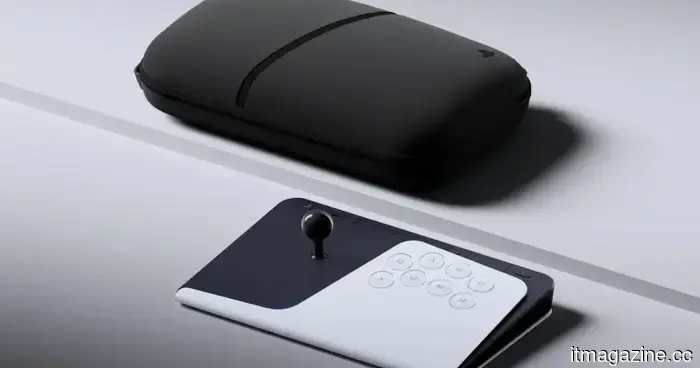 Sony's FlexStrike fight stick and gaming monitor featuring a charging hook will be available for purchase starting in June.
Sony's eagerly anticipated gaming accessories now have official launch dates. One is designed for fans of fighting games, while the other offers a unique perspective on desk configurations.
Sony's FlexStrike fight stick and gaming monitor featuring a charging hook will be available for purchase starting in June.
Sony's eagerly anticipated gaming accessories now have official launch dates. One is designed for fans of fighting games, while the other offers a unique perspective on desk configurations.
 SoftBank is said to be in preliminary discussions to support an $800 million funding round for Agile Robots.
According to Bloomberg, SoftBank is in preliminary discussions to invest over $300 million in a fundraising round of approximately $800 million for the Munich-based robotics company Agile Robots.
SoftBank is said to be in preliminary discussions to support an $800 million funding round for Agile Robots.
According to Bloomberg, SoftBank is in preliminary discussions to invest over $300 million in a fundraising round of approximately $800 million for the Munich-based robotics company Agile Robots.
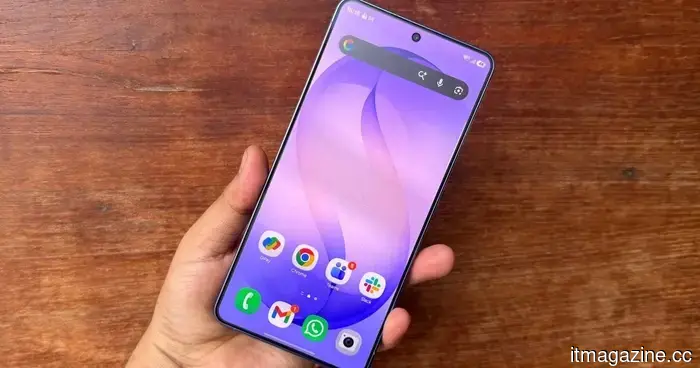 Samsung One UI 9 will deactivate your fingerprint every time you access the power menu.
One UI 9 Beta 2 automates the lockdown mode on Samsung Galaxy devices, eliminating the need for a manual activation step.
Samsung One UI 9 will deactivate your fingerprint every time you access the power menu.
One UI 9 Beta 2 automates the lockdown mode on Samsung Galaxy devices, eliminating the need for a manual activation step.
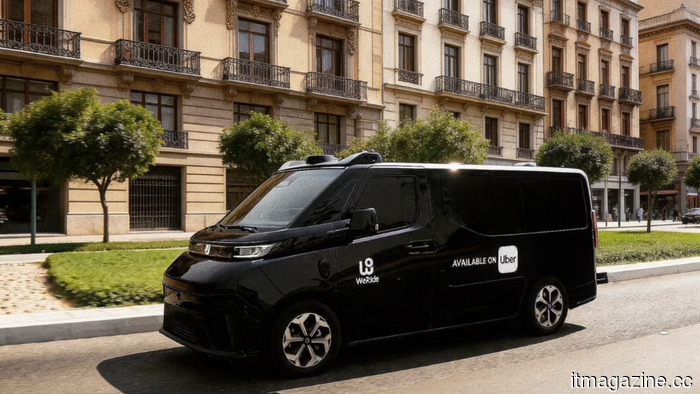 WeRide and Uber expand their robotaxi collaboration to Madrid.
WeRide, Uber, and fleet operator AVOMO are set to launch Madrid’s inaugural commercial robotaxi pilot later this year, initially featuring safety operators.
WeRide and Uber expand their robotaxi collaboration to Madrid.
WeRide, Uber, and fleet operator AVOMO are set to launch Madrid’s inaugural commercial robotaxi pilot later this year, initially featuring safety operators.
Jensen Huang states that employees should be compensated ‘as much as possible’ just days after Nvidia allocates 50% of its free cash to shareholders.
At Computex, Jensen Huang stated that employees ought to receive "as much as possible," while supporting the Samsung memory-bonus system. However, this comment comes just days after Nvidia announced an $80 billion commitment to buybacks and plans to allocate 50% of free cash flow to shareholder returns.