
SK Hynix enters the trillion-dollar club, fueled by orders for Nvidia's HBM4.
On Wednesday, a surge of over 10% in Seoul trading pushed SK Hynix's market valuation past $1 trillion, making it the third chipmaker to achieve this milestone, following Nvidia and TSMC. The Korean memory company’s market capitalisation surpassed $1 trillion during Wednesday morning trading, fueled by a single-session rally that briefly activated circuit breakers on South Korea's Kospi index.
This achievement makes SK Hynix the third chip manufacturer in history to cross the trillion-dollar threshold, becoming the first specialized memory company to do so. This milestone coincides with a period that, by any standard, has appeared structurally unlikely. Over the past 24 months, SK Hynix's share price has increased by about 900%. Just last month, the firm was approximately $50 billion short of the trillion-dollar mark; this closing distance illustrates the impact of the high-bandwidth memory (HBM) cycle on the company’s financials. Full-year 2026 HBM capacity is sold out, with shortages expected to continue through 2027.
The main support for SK Hynix is its role in Nvidia’s supply chain. UBS estimates the company accounts for nearly 70% of HBM4 orders for Nvidia's Vera Rubin platform, which Jensen Huang referred to in Taipei this week as “probably the largest product launch in the history of Taiwan.” Each Rubin unit requires 288GB of HBM4 across eight stacks, resulting in a system rated at 22 TB/s of bandwidth. The financial implications for SK Hynix are significant: HBM4 stacks fetch prices considerably higher than conventional DRAM, and Nvidia’s Rubin order book consists of hundreds of thousands of units.
The competitive landscape is also relatively favorable for SK Hynix. Samsung, the largest memory manufacturer globally, has been visibly lagging in HBM4 qualification and is facing an industrial relations dispute that has slowed its production ramp. Micron, the third key player in the global memory market, has garnered a smaller portion of the Rubin design contracts and a lesser share of the overall HBM market. Currently, SK Hynix is the sought-after supplier.
Achieving this market cap milestone coincides with SK Hynix’s serious consideration of a dual listing in the U.S., which could potentially raise approximately $14 billion based on current discussions. Reaching the trillion-dollar mark enhances the pricing power for that listing and provides Seoul’s capital markets authorities with a domestic flagship narrative that they are unlikely to weaken. The future direction of the dual-listing remains a key point to monitor.
A tougher question relates to the sustainability of this growth. The memory industry is known for its cyclical nature, and the current upswing seems to be priced as though it will be permanent. SK Hynix's capacity expansion, including the $13 billion P&T7 HBM packaging facility, is planned to cater to sustained demand through the latter half of the decade. If the projected demand for Nvidia's Rubin Ultra materializes, the trillion-dollar mark will be maintained. Conversely, if it does not, history suggests that memory stocks often relinquish substantial gains rapidly.
On Wednesday, SK Hynix shares ultimately closed up 9.8% after reaching an intraday rise of 15%.
Other articles
 Europe's efforts to ease Big Tech's control face internal divisions within the region.
The EU's Tech Sovereignty Package, set to be released on Wednesday, has been softened due to internal discussions between those advocating for European preferences and those supporting interoperability.
Europe's efforts to ease Big Tech's control face internal divisions within the region.
The EU's Tech Sovereignty Package, set to be released on Wednesday, has been softened due to internal discussions between those advocating for European preferences and those supporting interoperability.
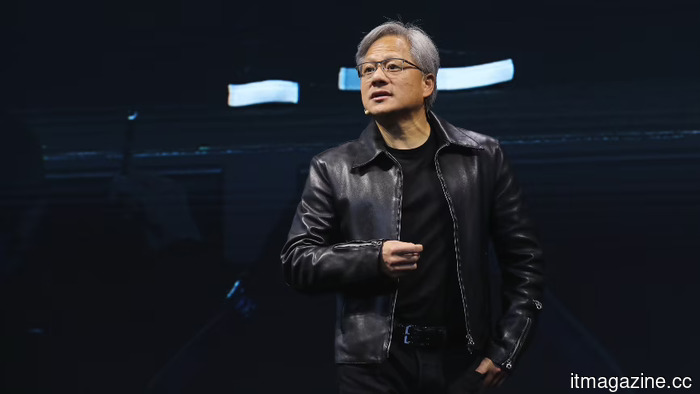 NVIDIA's Jensen Huang refers to Taiwan as the 'epicenter' of the AI revolution, with expenditures reaching $150 billion annually.
During Computex 2026, Jensen Huang announced that Nvidia's annual expenditure in Taiwan would amount to $150 billion, positioning Taiwan as the "epicenter" of the AI revolution.
Apple and Google are advocating for court supervision of Canada’s lawful-access legislation.
Apple and Google have requested that Parliament modify Canada’s lawful-access Bill C-22 to mandate a court review prior to allowing ministers to enforce changes to encryption.
NVIDIA's Jensen Huang refers to Taiwan as the 'epicenter' of the AI revolution, with expenditures reaching $150 billion annually.
During Computex 2026, Jensen Huang announced that Nvidia's annual expenditure in Taiwan would amount to $150 billion, positioning Taiwan as the "epicenter" of the AI revolution.
Apple and Google are advocating for court supervision of Canada’s lawful-access legislation.
Apple and Google have requested that Parliament modify Canada’s lawful-access Bill C-22 to mandate a court review prior to allowing ministers to enforce changes to encryption.
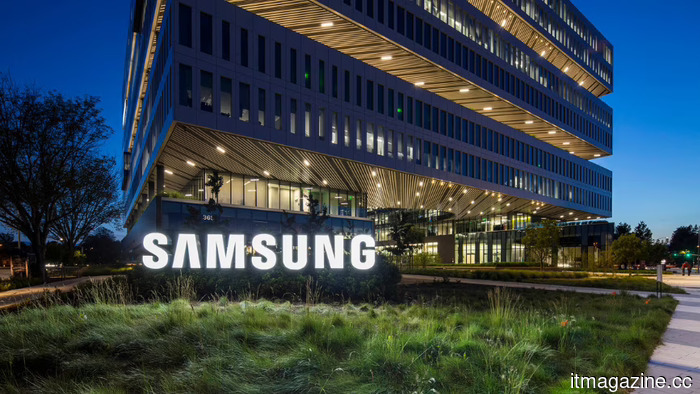 Samsung pledges $1.5 billion to establish a chip-testing facility in Vietnam, with an additional $2.5 billion available for future investments.
Samsung is allocating $1.5 billion for its inaugural specialized chip-testing facility in Vietnam, which is set to be operational by November 2027. A subsequent phase, potentially worth up to $2.5 billion, will depend on the completion of the first phase.
SpaceX secures a $2.29 billion contract from the Space Force for the Golden Dome infrastructure.
The US Space Force has granted SpaceX $2.29 billion to develop the Space Data Network Backbone on Starshield satellites, which will serve as the communications backbone for the Golden Dome missile defense system.
Samsung pledges $1.5 billion to establish a chip-testing facility in Vietnam, with an additional $2.5 billion available for future investments.
Samsung is allocating $1.5 billion for its inaugural specialized chip-testing facility in Vietnam, which is set to be operational by November 2027. A subsequent phase, potentially worth up to $2.5 billion, will depend on the completion of the first phase.
SpaceX secures a $2.29 billion contract from the Space Force for the Golden Dome infrastructure.
The US Space Force has granted SpaceX $2.29 billion to develop the Space Data Network Backbone on Starshield satellites, which will serve as the communications backbone for the Golden Dome missile defense system.
 PlayStation Plus subscribers can expect a month focused on co-op games in June following the increase in prices.
PlayStation Plus will offer a co-op-focused lineup for June following the price increase, featuring Grounded, Darktide, and Nickelodeon All-Star Brawl 2 as the highlights.
PlayStation Plus subscribers can expect a month focused on co-op games in June following the increase in prices.
PlayStation Plus will offer a co-op-focused lineup for June following the price increase, featuring Grounded, Darktide, and Nickelodeon All-Star Brawl 2 as the highlights.
SK Hynix enters the trillion-dollar club, fueled by orders for Nvidia's HBM4.
On Wednesday, SK Hynix's market capitalization exceeded $1 trillion in trading in Seoul, making the Korean memory company the third chip manufacturer, following Nvidia and TSMC, to reach this milestone.