
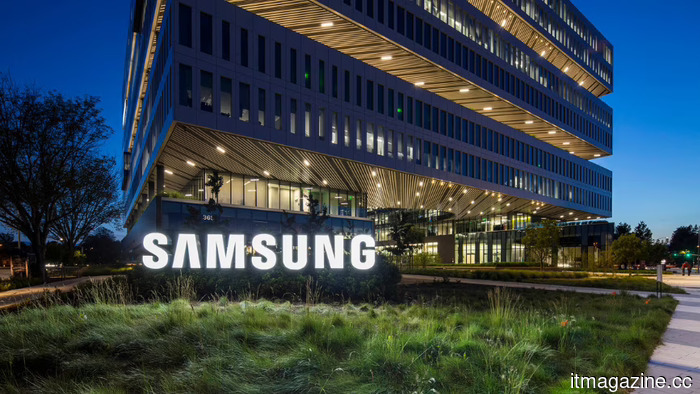
Samsung pledges $1.5 billion to establish a chip-testing facility in Vietnam, with an additional $2.5 billion available for future investments.
Samsung Electronics plans to invest 39 trillion dong, approximately $1.5 billion, in a semiconductor testing facility in Vietnam, as revealed in a document reviewed by Reuters on Wednesday. Construction has already commenced at an industrial park located 60 kilometers north of Hanoi, with operations anticipated to begin in November 2027. This facility will mark Samsung's first dedicated chip-testing site in Vietnam.
The project's financial figures exceed initial expectations. The facility is designed to produce 153.3 billion gigabits of DRAM annually and an additional 255.6 billion gigabits of NAND. Samsung has also expressed its intention to reinvest profits from this venture, "if any," of up to an additional $2.5 billion for a potential second plant, which would bring the total investment to around $4 billion. Vietnamese authorities approved the initial phase in March, while the future expansion is contingent on project performance.
In the semiconductor industry, testing occurs between wafer fabrication and final assembly. This step involves verifying every memory die produced upstream, sorting them by performance, and preparing them for packaging. Capacity in this segment has become a bottleneck across the industry throughout 2025 and 2026, as demand for AI-grade memory has significantly outpaced the available testing infrastructure. Samsung's plant in Vietnam directly addresses this limitation without the need for the higher capital investment required for a new wafer fabrication facility.
The choice of site also carries geopolitical implications. Vietnam has actively sought investments in the chip supply chain over the past three years as part of a strategy to establish itself as a semiconductor hub in Southeast Asia. Currently, Samsung stands as the largest single foreign investor in Vietnam, with total commitments exceeding $23 billion across consumer electronics manufacturing, R&D, and supplier operations. The new plant reinforces this footprint at a time when US tariff policies are encouraging chip supply chain decisions to shift away from mainland China.
For Samsung, this announcement comes during a challenging domestic period. The company has been addressing a labor dispute at home, where the bonus system in the memory division has caused internal tensions. A non-chip union filed for an injunction at the Suwon District Court on Tuesday to prevent a wider workforce vote on the bonus structure. The Vietnam announcement, conveyed through a filing rather than a press release, serves as a subtle indication that Samsung's investment plans in the chip sector are progressing regardless of the labor-related issues in Korea.
Currently, Vietnam is emerging as a surprisingly vital hub in the global diversification of the chip supply chain. TSMC has established a packaging facility in the country, Intel is expanding its assembly site in Ho Chi Minh City, and Amkor is operating its Bac Ninh plant at levels significantly above expectations. Samsung’s site, located 60 kilometers north of Hanoi, fits into this trend.
Over the next three to four years, the cumulative impact will likely result in the establishment of a credible Vietnamese back-end semiconductor cluster, enabling some Western buyers to source assembly, testing, and packaging completely outside mainland China for the first time since the late 1990s. Samsung has chosen not to comment on the Reuters document, while the Vietnamese government has confirmed approval of the project without addressing the contingencies for the second phase. Reports indicate that construction is proceeding as scheduled, with the installation of the first equipment expected in the second quarter of 2027.
Other articles
 Europe's efforts to ease Big Tech's control face internal divisions within the region.
The EU's Tech Sovereignty Package, set to be released on Wednesday, has been softened due to internal discussions between those advocating for European preferences and those supporting interoperability.
Europe's efforts to ease Big Tech's control face internal divisions within the region.
The EU's Tech Sovereignty Package, set to be released on Wednesday, has been softened due to internal discussions between those advocating for European preferences and those supporting interoperability.
 PlayStation Plus subscribers can expect a month focused on co-op games in June following the increase in prices.
PlayStation Plus will offer a co-op-focused lineup for June following the price increase, featuring Grounded, Darktide, and Nickelodeon All-Star Brawl 2 as the highlights.
PlayStation Plus subscribers can expect a month focused on co-op games in June following the increase in prices.
PlayStation Plus will offer a co-op-focused lineup for June following the price increase, featuring Grounded, Darktide, and Nickelodeon All-Star Brawl 2 as the highlights.
 My lawn used to be an endless weekend task until the LEBOSBO V3 came along.
Many homeowners aspire to have a well-maintained and polished outdoor area, but the effort involved in achieving that ideal lawn is frequently underestimated. From tiring weekend mowing to ongoing maintenance, the task can rapidly become daunting. The LEBOSBO V3 addresses this challenge with smart automation, wireless convenience, and a much more hands-off mowing process that demands minimal manual involvement.
SK Hynix enters the trillion-dollar club, boosted by orders for Nvidia's HBM4.
On Wednesday, SK Hynix's market capitalization exceeded $1 trillion during trading in Seoul, positioning the South Korean memory company as the third chip manufacturer to reach this milestone, following Nvidia and TSMC.
My lawn used to be an endless weekend task until the LEBOSBO V3 came along.
Many homeowners aspire to have a well-maintained and polished outdoor area, but the effort involved in achieving that ideal lawn is frequently underestimated. From tiring weekend mowing to ongoing maintenance, the task can rapidly become daunting. The LEBOSBO V3 addresses this challenge with smart automation, wireless convenience, and a much more hands-off mowing process that demands minimal manual involvement.
SK Hynix enters the trillion-dollar club, boosted by orders for Nvidia's HBM4.
On Wednesday, SK Hynix's market capitalization exceeded $1 trillion during trading in Seoul, positioning the South Korean memory company as the third chip manufacturer to reach this milestone, following Nvidia and TSMC.
 Introducing the speakers: Who will be presenting at the TNW, Oneflow & Flexas event in Amsterdam?
Four guests, one question: in a world where everyone has AI, what will distinguish a successful SaaS company? Introducing the panel for the gathering on June 3, 2026, in Amsterdam.
Introducing the speakers: Who will be presenting at the TNW, Oneflow & Flexas event in Amsterdam?
Four guests, one question: in a world where everyone has AI, what will distinguish a successful SaaS company? Introducing the panel for the gathering on June 3, 2026, in Amsterdam.
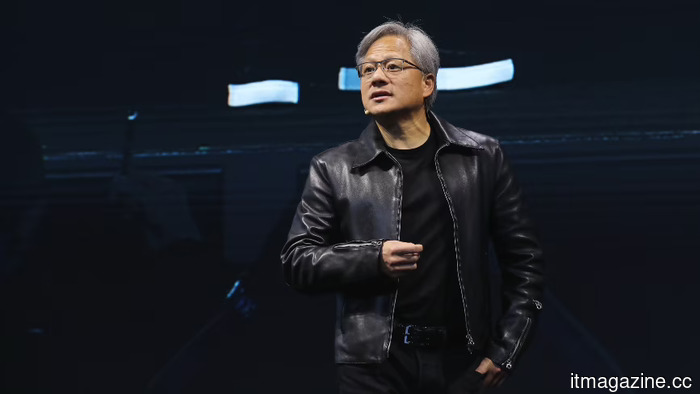 NVIDIA's Jensen Huang refers to Taiwan as the 'epicenter' of the AI revolution, noting that spending has reached $150 billion annually.
During Computex 2026, Jensen Huang announced that Nvidia's annual expenditure in Taiwan will hit $150 billion, positioning Taiwan as the "epicenter" of the AI revolution.
NVIDIA's Jensen Huang refers to Taiwan as the 'epicenter' of the AI revolution, noting that spending has reached $150 billion annually.
During Computex 2026, Jensen Huang announced that Nvidia's annual expenditure in Taiwan will hit $150 billion, positioning Taiwan as the "epicenter" of the AI revolution.
Samsung pledges $1.5 billion to establish a chip-testing facility in Vietnam, with an additional $2.5 billion available for future investments.
Samsung is allocating $1.5 billion for its inaugural specialized chip-testing facility in Vietnam, which is set to be operational by November 2027. A subsequent phase, potentially worth up to $2.5 billion, will depend on the completion of the first phase.