
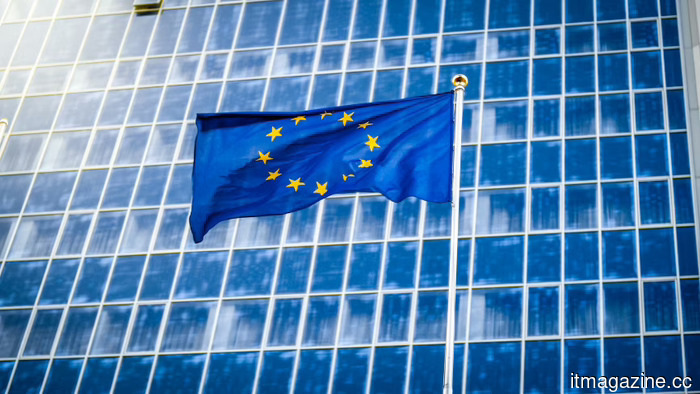
Europe's efforts to ease Big Tech's control face internal divisions within the region.
The Tech Sovereignty Package is set to be released on Wednesday, yet the EU continues to debate internally about what 'digital sovereignty' should actually entail. The European Commission is gearing up to unveil its Tech Sovereignty Package on Wednesday afternoon, marking a concentrated effort to lessen Europe’s dependence on American cloud, AI, and chip infrastructure. According to a Tuesday Reuters report, the package has been notably influenced by internal discussions regarding the aggressiveness of the bloc’s sovereignty stance.
The documents released are anticipated to contain the Cloud and AI Development Act, an update to the previous Chips Act, and the first formal EU-level definition of “digital sovereignty,” a term the bloc has used for years without a legal definition. The Cloud Act aims to prevent EU member states from utilizing US cloud providers to handle sensitive public-sector data in sectors like healthcare, finance, and judicial systems, while current drafts leave private-sector usage unaffected.
The internal discussion revolves around whether achieving sovereignty necessitates an exclusively European supply chain or if it can be accomplished through interoperability and managed dependency. EU digital commissioner Henna Virkkunen remarked to Euronews last week that “technological sovereignty is not about isolation,” portraying the initiative as enhancing European capabilities in critical sectors instead of withdrawing from US technology.
This perspective is making an impact; reports have indicated that the initial drafts of the Cloud Act were significantly more stringent regarding US vendors compared to the version that commissioners will review on Wednesday. Member states are divided, with France and Germany advocating for a stricter preference for European options, especially concerning data managed by large providers like Microsoft Azure and Google Cloud. Meanwhile, the Nordics and Ireland, where US cloud firms dominate operations and taxation, are pushing for a more lenient approach.
The Commission's compromise suggests implementing the strictest restrictions solely on sensitive data controlled by governments while leaving the broader private-sector market unaffected for the time being. The sovereignty package aligns with a series of related actions undertaken over the past month. The Commission is also planning substantial DMA fines against Google, has been engaged in stalled negotiations with Anthropic regarding access to its Mythos cybersecurity model, and is expected to allocate two-thirds of the 2 GHz mobile-satellite spectrum band for European operators this week.
Each of these actions has its own rationale, but the overarching trend is clear: a European policy framework that, by 2026, has concluded that the costs associated with dependence now outweigh the expenses of duplication.
The Tech Sovereignty Package will not compel European firms to move away from their current US providers, as evidenced by the political constraints that persist: every European government utilizes Microsoft 365 or Google Workspace, every European bank is reliant on US-built cloud infrastructure, and local alternatives are not yet positioned to handle that load.
The actual measures in the package primarily operate at the margins, imposing restrictions on new sensitive-data deployments, shifting public procurement, and financing European cloud and AI capabilities in the medium term. The more challenging question is whether these incentives will be sufficient to foster the emergence of European hyperscalers in the available timeframe. Previous efforts in European industrial policy—concerning lithium-ion batteries, telecom equipment, and cloud infrastructure under the Gaia-X initiative—have not succeeded.
The Tech Sovereignty Package represents a bet that the political resolve and public funding commitments supporting it in 2026 are fundamentally different from previous efforts. Whether this bet has been fully placed or partially hedged will be revealed in Wednesday’s announcement.
Other articles
 Introducing the speakers: Who will be on stage at the gathering organized by TNW, Oneflow, and Flexas in Amsterdam?
Four guests, one question: what will distinguish a SaaS company in a world where everyone has AI? Introducing the panel for the gathering on June 3, 2026, in Amsterdam.
Introducing the speakers: Who will be on stage at the gathering organized by TNW, Oneflow, and Flexas in Amsterdam?
Four guests, one question: what will distinguish a SaaS company in a world where everyone has AI? Introducing the panel for the gathering on June 3, 2026, in Amsterdam.
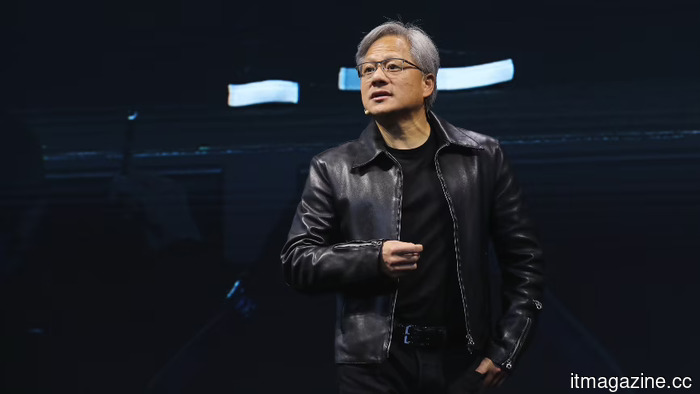 NVIDIA's Jensen Huang refers to Taiwan as the 'epicenter' of the AI revolution, with expenditures reaching $150 billion annually.
During Computex 2026, Jensen Huang announced that Nvidia's annual expenditure in Taiwan would amount to $150 billion, positioning Taiwan as the "epicenter" of the AI revolution.
NVIDIA's Jensen Huang refers to Taiwan as the 'epicenter' of the AI revolution, with expenditures reaching $150 billion annually.
During Computex 2026, Jensen Huang announced that Nvidia's annual expenditure in Taiwan would amount to $150 billion, positioning Taiwan as the "epicenter" of the AI revolution.
 Aurzen merges Roku TV with SGS-certified brightness for large-screen applications.
The D1R lineup from Aurzen features a built-in Roku TV, native 1080P resolution, and confirmed brightness ratings, offering a more practical approach to contemporary home projection.
Aurzen merges Roku TV with SGS-certified brightness for large-screen applications.
The D1R lineup from Aurzen features a built-in Roku TV, native 1080P resolution, and confirmed brightness ratings, offering a more practical approach to contemporary home projection.
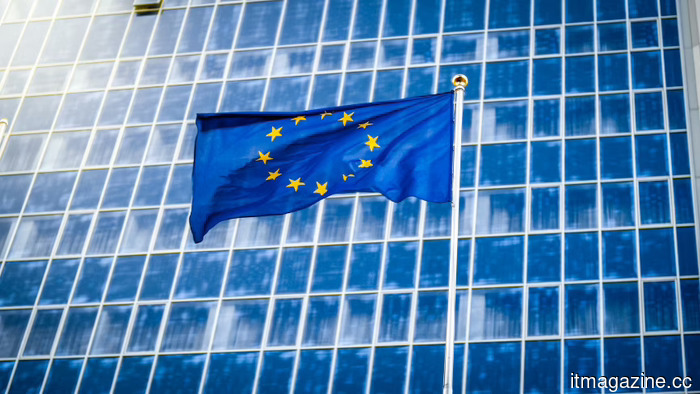 Europe's efforts to reduce the control of Big Tech face challenges from its own internal divisions.
The EU’s Tech Sovereignty Package, set to be released on Wednesday, has been moderated by internal discussions between advocates of European preferences and supporters of interoperability.
Europe's efforts to reduce the control of Big Tech face challenges from its own internal divisions.
The EU’s Tech Sovereignty Package, set to be released on Wednesday, has been moderated by internal discussions between advocates of European preferences and supporters of interoperability.
Europe's efforts to ease Big Tech's control face internal divisions within the region.
The EU's Tech Sovereignty Package, set to be released on Wednesday, has been softened due to internal discussions between those advocating for European preferences and those supporting interoperability.