
SpaceX secures a $2.29 billion contract from the Space Force for the Golden Dome infrastructure.
The Space Data Network Backbone, built on Starshield satellites, aims to connect missile-defense sensors and interceptors in near real-time. The US Space Force has granted SpaceX a $2.29 billion fixed-price contract to develop this secure, high-speed satellite communications layer, which is intended to support the Golden Dome missile-defense initiative established during the Trump administration. This contract was announced on Tuesday, with requirements for SpaceX to deliver a fully operational prototype by the end of 2027.
The system is based on Starshield, which is the government-centric version of SpaceX’s commercial Starlink constellation. While Starlink is tailored for broadband service to consumers, Starshield is fortified for defense applications, featuring encrypted communications, optical inter-satellite links, missile-warning sensors, and target-tracking payloads.
The Space Data Network will leverage Starshield satellites to deliver what the Space Force refers to as “high-capacity, low-latency data transport,” essential for merging sensor data from missile-warning satellites with interceptor systems in near real-time.
The politically significant aspect of the contract lies in the connection to the Golden Dome initiative, which was launched by President Trump in January 2025. This missile-defense program envisions a multi-layered system aimed at detecting and neutralizing ballistic, hypersonic, and cruise missiles before launch or during flight.
The system comprises a constellation of sensor satellites, a parallel group of interceptor satellites, and a communications backbone that connects them—SpaceX is responsible for the latter layer. Bids for the first two layers are coming from Lockheed Martin, RTX, and Northrop Grumman.
For SpaceX, while the contract represents a notable value, it is not game-changing; the company has already been securing larger commercial Starlink revenue from the Pentagon, including the contentious pricing for the Starlink services in the Iran-war drone program, as reported by Reuters on Tuesday.
What is particularly intriguing is the structural commitment forged by this contract. The Space Data Network serves as the architectural foundation for the Trump administration's key defense-technology initiative, with SpaceX now managing the prototype layer. The Space Force has indicated plans to seek additional contractors for satellite construction and other network components over the summer; however, the core framework is currently assigned to a single vendor.
The timing of the contract is also commercially advantageous. SpaceX is about two weeks away from starting its IPO roadshow on June 8, with the listing anticipated to have a market capitalization of approximately $1.75 trillion. A $2.29 billion defense revenue commitment, extending through 2027, aligns perfectly with the long-term contracted backlog narrative required for its S-1 filing.
Revenue from Starshield has received less attention in the company’s public financial discussions compared to Starlink; however, the Golden Dome backbone brings it into focus. The competitive landscape for the remaining components of the Golden Dome initiative is now under consideration. The Space Force has indicated it will not solely rely on one source for the broader architecture, implying that at least one of the sensor and interceptor contracts will be awarded to a vendor outside of SpaceX.
Amazon’s Project Kuiper, which has spent the last year positioning itself for defense communications contracts, stands out as a likely alternative source. Similarly, Sweden’s TERASi and other smaller, independent ventures are also contenders in this space.
Neither SpaceX nor the Space Force has provided any delivery milestones beyond the prototype deadline in late 2027.
Other articles
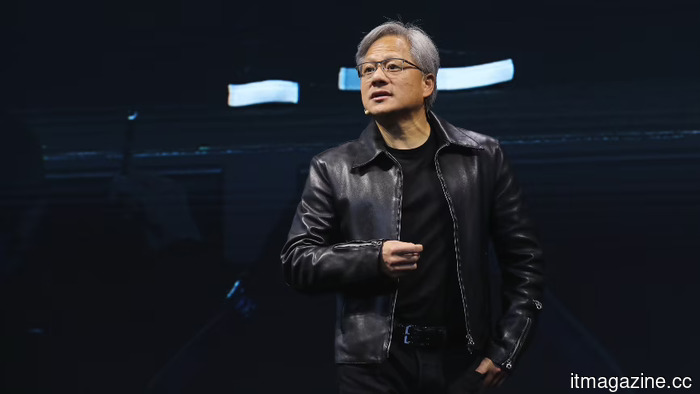 NVIDIA's Jensen Huang refers to Taiwan as the 'epicenter' of the AI revolution, with expenditures reaching $150 billion annually.
During Computex 2026, Jensen Huang announced that Nvidia's annual expenditure in Taiwan would amount to $150 billion, positioning Taiwan as the "epicenter" of the AI revolution.
SpaceX secures a $2.29 billion contract with the Space Force for the Golden Dome infrastructure.
The US Space Force has granted SpaceX $2.29 billion to develop the Space Data Network Backbone on Starshield satellites, which will serve as the communication framework for the Golden Dome missile defense system.
NVIDIA's Jensen Huang refers to Taiwan as the 'epicenter' of the AI revolution, with expenditures reaching $150 billion annually.
During Computex 2026, Jensen Huang announced that Nvidia's annual expenditure in Taiwan would amount to $150 billion, positioning Taiwan as the "epicenter" of the AI revolution.
SpaceX secures a $2.29 billion contract with the Space Force for the Golden Dome infrastructure.
The US Space Force has granted SpaceX $2.29 billion to develop the Space Data Network Backbone on Starshield satellites, which will serve as the communication framework for the Golden Dome missile defense system.
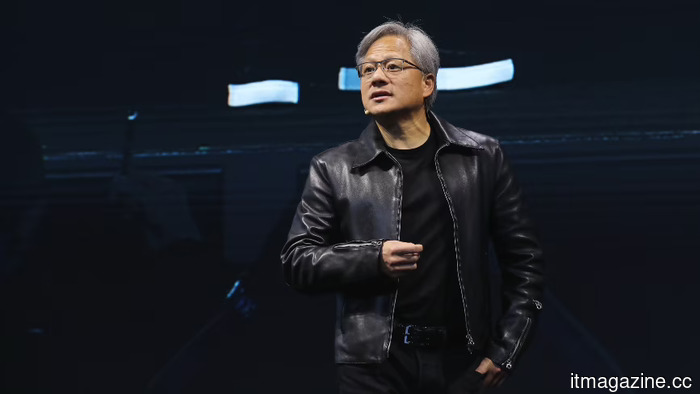 NVIDIA's Jensen Huang refers to Taiwan as the 'epicenter' of the AI revolution, noting that spending has reached $150 billion annually.
During Computex 2026, Jensen Huang announced that Nvidia's annual expenditure in Taiwan will hit $150 billion, positioning Taiwan as the "epicenter" of the AI revolution.
SK Hynix enters the trillion-dollar club, fueled by orders for Nvidia's HBM4.
On Wednesday, SK Hynix's market capitalization exceeded $1 trillion in trading in Seoul, making the Korean memory company the third chip manufacturer, following Nvidia and TSMC, to reach this milestone.
NVIDIA's Jensen Huang refers to Taiwan as the 'epicenter' of the AI revolution, noting that spending has reached $150 billion annually.
During Computex 2026, Jensen Huang announced that Nvidia's annual expenditure in Taiwan will hit $150 billion, positioning Taiwan as the "epicenter" of the AI revolution.
SK Hynix enters the trillion-dollar club, fueled by orders for Nvidia's HBM4.
On Wednesday, SK Hynix's market capitalization exceeded $1 trillion in trading in Seoul, making the Korean memory company the third chip manufacturer, following Nvidia and TSMC, to reach this milestone.
 My lawn used to be an endless weekend task until the LEBOSBO V3 came along.
Many homeowners aspire to have a well-maintained and polished outdoor area, but the effort involved in achieving that ideal lawn is frequently underestimated. From tiring weekend mowing to ongoing maintenance, the task can rapidly become daunting. The LEBOSBO V3 addresses this challenge with smart automation, wireless convenience, and a much more hands-off mowing process that demands minimal manual involvement.
My lawn used to be an endless weekend task until the LEBOSBO V3 came along.
Many homeowners aspire to have a well-maintained and polished outdoor area, but the effort involved in achieving that ideal lawn is frequently underestimated. From tiring weekend mowing to ongoing maintenance, the task can rapidly become daunting. The LEBOSBO V3 addresses this challenge with smart automation, wireless convenience, and a much more hands-off mowing process that demands minimal manual involvement.
SpaceX secures a $2.29 billion contract from the Space Force for the Golden Dome infrastructure.
The US Space Force has granted SpaceX $2.29 billion to develop the Space Data Network Backbone on Starshield satellites, which will serve as the communications backbone for the Golden Dome missile defense system.