
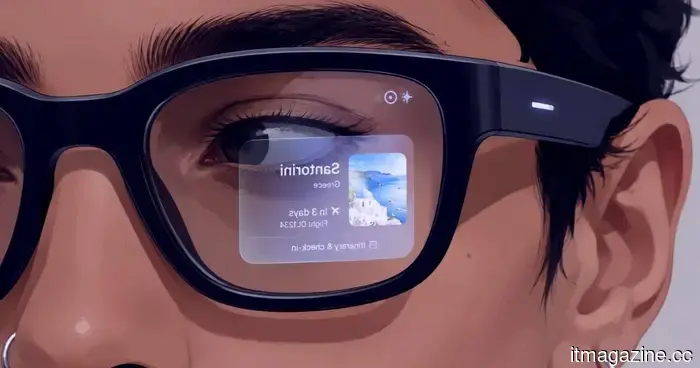
Smart glasses have returned, and this time they’re trying to mimic regular eyewear.
Over ten years ago, when I was an idealistic young tech reporter, I viewed the video for Google’s Project Glass and found myself on the verge of tears. The future seemed so pristine in that ad. Directions appeared right before your eyes. Capturing photos was as simple as a voice command. Life appeared seamless, interconnected, and just refined enough to make wearing a small computer on your face seem meaningful rather than absurd.
I thought to myself, yes, we have arrived in the future.
Then Google Glass became a reality, reaching early adopters in 2013, only for the future to be dubbed “glassholes.” Google had begun selling limited Explorer units to select individuals prior to the public release of Glass in the US in 2014.
A decade and a pandemic later, the category has made a comeback, surprisingly looking more subdued and stylish.
How face tech toned down its image
What frustrates me is that this generation genuinely does feel different.
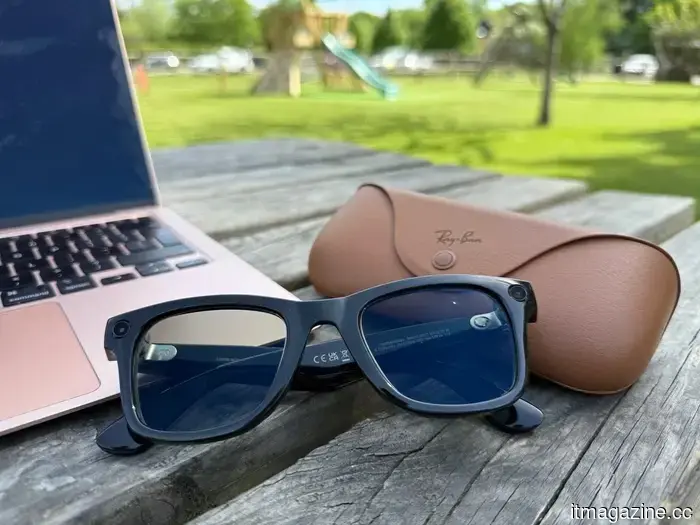
Google Glass debuted like a device that had escaped from a keynote presentation. The current pitch is softer. Meta has already done some of the social grooming with Ray-Ban Meta glasses, which resemble ordinary sunglasses enough for the technology to blend in. EssilorLuxottica reportedly stated that Ray-Ban Meta glasses achieved sales of 2 million units by early 2025, later announcing even stronger momentum in the smart glasses market.
Ray-Ban Meta Andy Boxall / Digital Trends
Google and Samsung are now following a similar path with Android XR eyewear, collaborating with Warby Parker and Gentle Monster. This shifts the atmosphere. It’s no longer a tech firm urging users to wear a prototype in public and act nonchalant. Instead, technology is embedded within brands that people already connect with style, identity, and “these frames make me look less fatigued.”
Google’s latest offering incorporates Gemini into the experience, providing directions, texts, photos, and other tasks typically associated with a phone directly into the glasses. Google mentions that frames from Gentle Monster and Warby Parker are part of this smart eyewear initiative. Samsung and Google are framing the category around fashion and AI rather than flashy gadgets.
Google
The sales pitch has been polished effectively. These are just regular glasses, it seems. They merely include cameras, microphones, speakers, and an AI assistant.
The oddness hasn’t disappeared; it has simply found better frames.
Why I still find it hard to accept
Even with all this, my immediate response remains: please stop trying to make smart glasses a reality.
Some tech concepts feel less like innovations and more like things that keep being resurrected. This is one of them. It continues to reemerge with a sleeker design, an improved assistant, and more stylish packaging, but the fundamental social dilemma remains: what occurs when a person's face transforms into a recording device?
That discomfort doesn’t vanish because the frames look luxurious. If anything, the disguise makes everything feel even more slippery. A phone camera announces its presence because someone must pull out their phone, point it, and act annoyingly in a typical manner. Glasses operate more discreetly. They blur the boundaries between looking, recording, asking an assistant, and turning others nearby into background data.
The versions without cameras almost clarify the issue. They’re obviously better for privacy, but without the lens, the concept starts to feel like earbuds that became ambitious and learned to house prescription lenses. You still get audio, assistant access, notifications, or translation, but the AI lacks the capability to see what you see.
Halliday AI smart glasses. Halliday
That trade-off likely explains why this category continues to orbit the same uneasy center. The most practical version is also the one that makes people look twice at your face. The safest version is more easily accepted but tends to be overlooked. Somewhere between these two versions lies the product that tech companies are trying to convince us we always wanted.
This predicament leaves the category burdened with an unattractive compromise. The camera provides the product with its strongest justifications for existing, yet it also makes the entire concept socially problematic.
This is where the category still appears underdeveloped. Tech companies can design the hardware, refine the assistant, and collaborate with the appropriate eyewear brands, but they can’t instantly establish the etiquette around wearing a tiny recording device in places like restaurants, classrooms, offices, or living rooms. Phones eventually became commonplace in public, but only after years of people being socially awkward with them.
Why I might be mistaken again
The issue is that I’ve been confidently incorrect in the past.
When COVID first began dominating headlines, I thought it was just another story being exaggerated beyond its natural size. I don’t share this as a sign of good judgment. Two years later, I had barely ventured outside and gained 30 pounds. To call my assessment incorrect is an understatement.
Smart glasses are not a pandemic. Let’s not disrespect pandemics or eyewear. My assertion is smaller and more irritating


Other articles
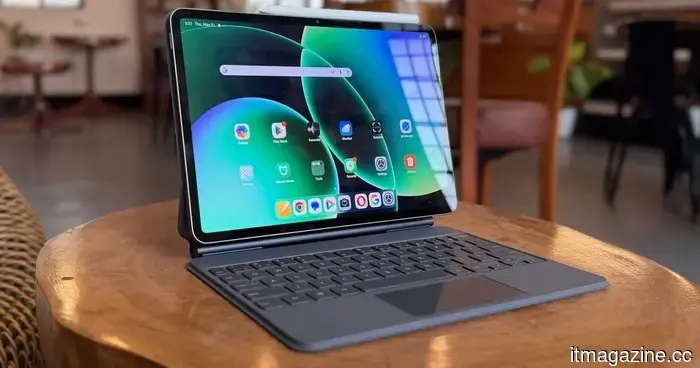 Xiaomi Pad 8 Pro review: I replaced my reliable iPad with this and didn't feel its absence whatsoever.
Xiaomi's Pad 8 Pro is an uncommon device that strikes a balance between design, performance, and valuable features, all without breaking the bank or leaving you regretting your decision not to choose an iPad.
Xiaomi Pad 8 Pro review: I replaced my reliable iPad with this and didn't feel its absence whatsoever.
Xiaomi's Pad 8 Pro is an uncommon device that strikes a balance between design, performance, and valuable features, all without breaking the bank or leaving you regretting your decision not to choose an iPad.
 Starlink Mini could potentially eliminate the need for a wired connection with its battery-operated dish.
References in the new Starlink firmware suggest the potential development of a battery-powered Starlink Mini, with code that includes details about battery charge statistics, charging status, and modes for USB-C, battery, and combined power.
Starlink Mini could potentially eliminate the need for a wired connection with its battery-operated dish.
References in the new Starlink firmware suggest the potential development of a battery-powered Starlink Mini, with code that includes details about battery charge statistics, charging status, and modes for USB-C, battery, and combined power.
 Netherlands prevents US company from acquiring DigiD cloud hosting provider.
The Netherlands has prohibited Kyndryl's acquisition of Solvinity for EUR 100 million, which is the DigiD cloud provider, due to concerns over public interest and potential issues related to the CLOUD Act, marking the first instance of a block on a US deal.
Netherlands prevents US company from acquiring DigiD cloud hosting provider.
The Netherlands has prohibited Kyndryl's acquisition of Solvinity for EUR 100 million, which is the DigiD cloud provider, due to concerns over public interest and potential issues related to the CLOUD Act, marking the first instance of a block on a US deal.
 Starlink Mini might eventually disconnect from the cord with a dish that operates on batteries.
Recent references in Starlink firmware suggest the potential development of a battery-powered Starlink Mini, with code indicating battery charge statistics, charging status, as well as USB-C, battery, and combined power modes.
Starlink Mini might eventually disconnect from the cord with a dish that operates on batteries.
Recent references in Starlink firmware suggest the potential development of a battery-powered Starlink Mini, with code indicating battery charge statistics, charging status, as well as USB-C, battery, and combined power modes.
 Have you ever been curious about what vintage computers were like? This virtual museum allows you to explore hundreds of them.
The Virtual OS Museum is an extensive archive of retro computing, featuring over 1,700 installations that are ready to run. It includes a wide range of systems, from the 1948 Manchester Baby to classic Mac OS, early Windows, Unix, PalmOS, and beyond.
Have you ever been curious about what vintage computers were like? This virtual museum allows you to explore hundreds of them.
The Virtual OS Museum is an extensive archive of retro computing, featuring over 1,700 installations that are ready to run. It includes a wide range of systems, from the 1948 Manchester Baby to classic Mac OS, early Windows, Unix, PalmOS, and beyond.
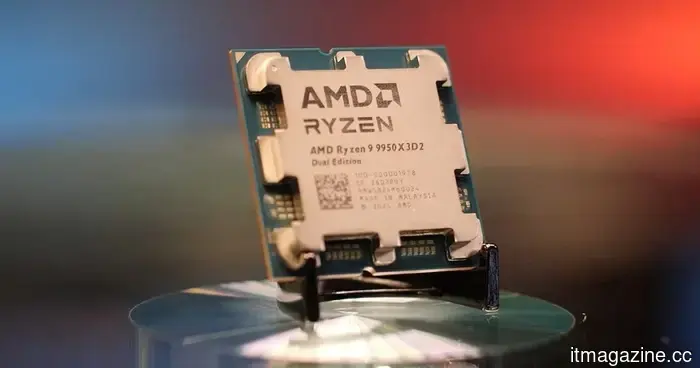 AMD is said to be preparing Zen 7 processors on the 14A node in order to compete with Intel in the market.
AMD's upcoming Zen 7 processors might utilize TSMC’s A14 node, creating a new competition with Intel’s 14A initiatives.
AMD is said to be preparing Zen 7 processors on the 14A node in order to compete with Intel in the market.
AMD's upcoming Zen 7 processors might utilize TSMC’s A14 node, creating a new competition with Intel’s 14A initiatives.
Smart glasses have returned, and this time they’re trying to mimic regular eyewear.
Smart glasses are making a comeback with improved designs, subtler branding, and AI integrated into a more conventional appearance. While this may enhance their wearability, it does not diminish the social awkwardness of having cameras mounted on the face.