

Have you ever been curious about what vintage computers were like? This virtual museum allows you to explore hundreds of them.
The Virtual OS Museum is a delightful journey into computing history.
If you think that all current operating systems appear overly polished, flat, and dull, a new museum will take you on a trip through vintage computing. The Virtual OS Museum, curated by Andrew Warkentin, offers an interactive experience featuring operating systems and standalone applications that run through emulation.
This isn’t simply a collection of static images of retro software. Instead, the museum functions as a Linux virtual machine for QEMU, VirtualBox, or UTM, equipped with a custom launcher and preconfigured installations designed to boot up without requiring users to navigate outdated setup files and emulator configurations manually.
Vintage OS Museum
An interactive archive of computing history
Currently, the Virtual OS Museum features over 1,700 installations, more than 250 platforms, and around 570 unique operating systems, ranging from the Manchester Baby in 1948 to more recent historical software. The collection includes early mainframe systems, CTSS, early Unix, Xerox Star Pilot/ViewPoint, classic MacOS, DOS, OS/2, BeOS, Windows from version 1.0 to early Longhorn betas, PalmOS, Newton OS, early Android, iOS where emulation is feasible, and numerous obscure systems that most people have never encountered.
This is more of a playable history lesson than a mere nostalgia trip, aimed at anyone curious about the evolution of modern computing.
It’s very user-friendly
Virtual OS Museum
The museum exists because running old software can often be a challenge. Some operating systems are compatible only with certain emulator versions, while others require patched emulators or can take days to rebuild from original media. Warkentin's goal is to make this history "accessible." Users can select an entry and run it with the software from that era already prepared, where possible.
There is, however, a small caveat. The Virtual OS Museum isn’t browser-based. The full version is a substantial 121GB zipped download, expanding to 174GB when extracted (still lighter than Black Ops 7). Fortunately, a lighter version is available, which is a 14GB zipped file that downloads images as needed.
Vikhyaat Vivek is a tech journalist and reviewer with seven years of experience focused on consumer hardware.
Logitech’s new office mouse and keyboard offer a small comfort improvement your wrists will appreciate.
Logitech has introduced three new devices in its Signature series, designed for those who spend long hours at a desk, transitioning between work, personal tasks, and various devices throughout the day. The focus is on minimizing repetitive friction from changing devices, reducing input noise, and enhancing comfort during extended desk sessions. The lineup features the Signature Comfort Plus M850 L mouse with palm support, the MK880 Signature Comfort Plus keyboard and mouse combo, and the M840 L mouse, which shares the same features as the M850 L but lacks the palm cushion.
In other news, the CEO of Barnes & Noble believes AI-generated books are acceptable. He’s mistaken.
Allowing AI-written books into our bookstores, even with proper labeling, is a decision we will ultimately regret.
Barnes & Noble CEO James Daunt recently spoke with NBC News and shared his thoughts on AI-written books. He stated, "Yes, I have no problem selling any book, provided it doesn't masquerade as something else, it has intrinsic quality, and the customer, the reader, desires it." While this seems reasonable at first glance, a deeper reflection raises significant questions that this perspective fails to address.
Reports indicate that AMD is gearing up to release Zen 7 processors on the 14A node to compete with Intel.
Zen 7 could represent a substantial upgrade in chiplets and cache for AMD.
Intel has been generating significant buzz regarding its upcoming 14A process, and for valid reasons. This development is anticipated to be a crucial test of whether the company can leverage its future chip lineup to gain an edge over AMD once more. New reports from Commercial Times suggest that AMD may already be preparing a response, with plans for its future Zen 7 processors centered around TSMC’s A14 node, which could enable it to challenge Intel’s 14A strategy directly.


Other articles
 Smart glasses have returned, and this time they’re trying to mimic regular eyewear.
Smart glasses are making a comeback with improved designs, subtler branding, and AI integrated into a more conventional appearance. While this may enhance their wearability, it does not diminish the social awkwardness of having cameras mounted on the face.
Smart glasses have returned, and this time they’re trying to mimic regular eyewear.
Smart glasses are making a comeback with improved designs, subtler branding, and AI integrated into a more conventional appearance. While this may enhance their wearability, it does not diminish the social awkwardness of having cameras mounted on the face.
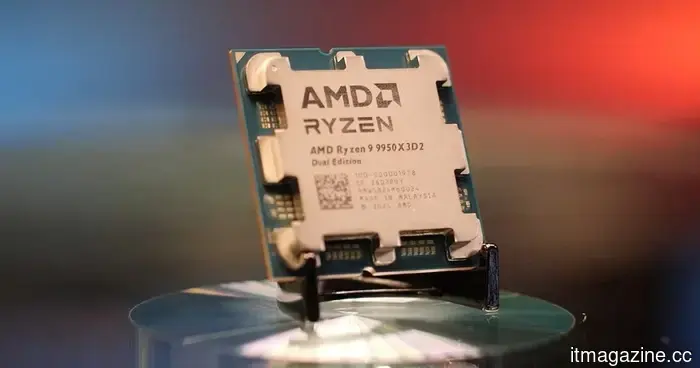 AMD is said to be preparing Zen 7 processors based on the 14A node to compete with Intel effectively.
AMD's upcoming Zen 7 processors may utilize TSMC's A14 node, creating a new competition with Intel's 14A strategy.
AMD is said to be preparing Zen 7 processors based on the 14A node to compete with Intel effectively.
AMD's upcoming Zen 7 processors may utilize TSMC's A14 node, creating a new competition with Intel's 14A strategy.
 Starlink Mini could potentially eliminate the need for a wired connection with its battery-operated dish.
References in the new Starlink firmware suggest the potential development of a battery-powered Starlink Mini, with code that includes details about battery charge statistics, charging status, and modes for USB-C, battery, and combined power.
Starlink Mini could potentially eliminate the need for a wired connection with its battery-operated dish.
References in the new Starlink firmware suggest the potential development of a battery-powered Starlink Mini, with code that includes details about battery charge statistics, charging status, and modes for USB-C, battery, and combined power.
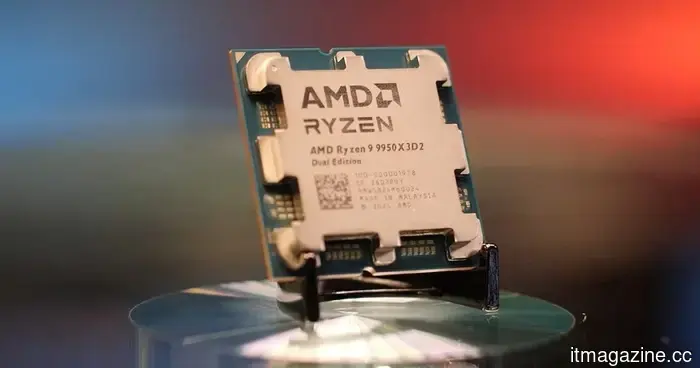 AMD is said to be preparing Zen 7 processors on the 14A node in order to compete with Intel in the market.
AMD's upcoming Zen 7 processors might utilize TSMC’s A14 node, creating a new competition with Intel’s 14A initiatives.
AMD is said to be preparing Zen 7 processors on the 14A node in order to compete with Intel in the market.
AMD's upcoming Zen 7 processors might utilize TSMC’s A14 node, creating a new competition with Intel’s 14A initiatives.
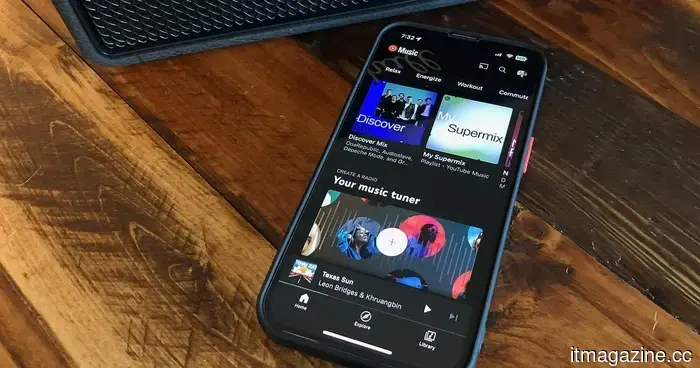 YouTube Music playlists are receiving new sorting features, and it's well overdue.
YouTube Music is at last introducing new options for sorting playlists, allowing users to have greater control over the organization of their libraries.
YouTube Music playlists are receiving new sorting features, and it's well overdue.
YouTube Music is at last introducing new options for sorting playlists, allowing users to have greater control over the organization of their libraries.
 Starlink Mini might eventually disconnect from the cord with a dish that operates on batteries.
Recent references in Starlink firmware suggest the potential development of a battery-powered Starlink Mini, with code indicating battery charge statistics, charging status, as well as USB-C, battery, and combined power modes.
Starlink Mini might eventually disconnect from the cord with a dish that operates on batteries.
Recent references in Starlink firmware suggest the potential development of a battery-powered Starlink Mini, with code indicating battery charge statistics, charging status, as well as USB-C, battery, and combined power modes.
Have you ever been curious about what vintage computers were like? This virtual museum allows you to explore hundreds of them.
The Virtual OS Museum is an extensive archive of retro computing, featuring over 1,700 installations that are ready to run. It includes a wide range of systems, from the 1948 Manchester Baby to classic Mac OS, early Windows, Unix, PalmOS, and beyond.