
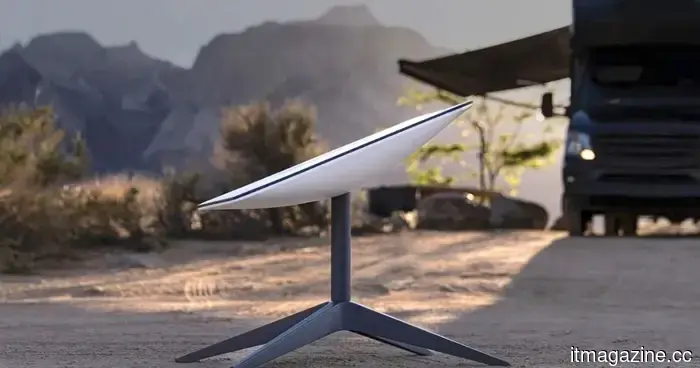
Starlink Mini might eventually disconnect from the cord with a dish that operates on batteries.
SpaceX is addressing the largest portability issue with Starlink
Starlink Mini, the portable internet dish created by SpaceX, is designed for users who need connectivity on the move, including travelers, campers, vanlifers, and people living off-grid. Recent firmware indicators suggest that SpaceX may be enhancing its portability by incorporating a battery directly into the dish.
A report from PCMag notes that university researcher Jinwei Zhao has uncovered new firmware strings hinting at a potential Starlink Mini model with an integrated battery. The notable clue is a reference to DishBatteryStats, which seems to be intended to provide specific battery information rather than simply indicate that the dish is connected to an external power source.
What was disclosed in the firmware?
The GitHub proto file referenced in the report displays a DishBatteryStats message, indicating that the device would be capable of monitoring its own battery status. This file also mentions three power-source states: USBC, BATTERY, and USBC_AND_BATTERY, implying that this unreleased model could operate on USB-C, an internal battery, or both simultaneously.
It's important to note that this does not confirm an upcoming new Starlink Mini from SpaceX, nor does it provide details on pricing, release date, battery capacity, or design. However, it aligns with the desires of Starlink Mini users for reduced cable clutter and less reliance on bulky external batteries.
Why is this significant?
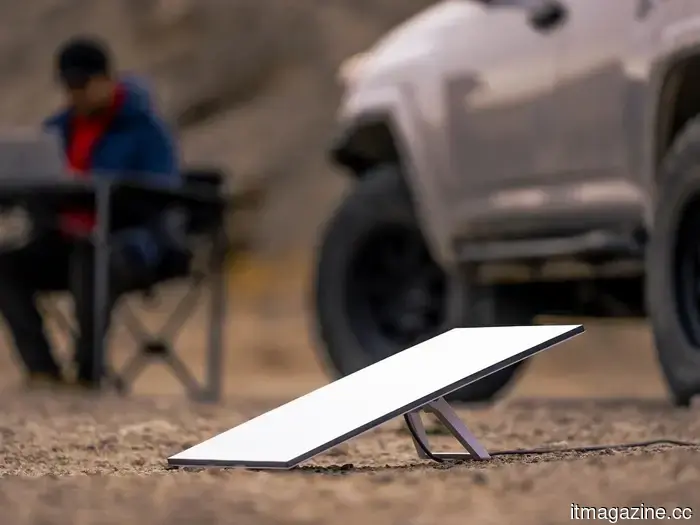
The existing Starlink Mini can already be powered by portable batteries, which is a major factor in its appeal. As it stands, the portable dish operates using a USB-C power bank, provided it is the right setup. However, users must find a compatible battery and suitable cable since the Mini needs a 100W USB-C Power Delivery and won't work with lower wattage supplies.
The current kit also includes an AC wall adapter and a lengthy cable with 5521 barrel connectors. This highlights why having a built-in battery would be a valuable upgrade. While third-party batteries are available, a model designed by SpaceX would likely integrate seamlessly with the Starlink app, including battery statistics, charging management, and warranty support.
Vikhyaat Vivek is a technology journalist and reviewer with seven years of experience in consumer hardware reporting.
China to assign a unique ID code to humanoid robots, similar to human citizen IDs
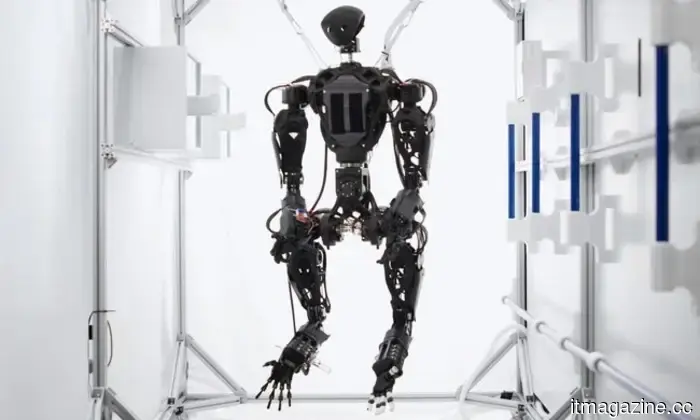
China is equating its humanoid robots to citizens by giving each one a distinct ID code from production to decommissioning.
The nation has introduced a national initiative that will allocate a unique digital identity code to every humanoid robot created within its borders, essentially functioning as a citizen ID for these bipedal machines (capable of maintaining balance and walking or running on two legs). This program, named the Humanoid Full Lifecycle Management Service Platform, was announced recently and is spearheaded by the Humanoid Robotics and Embodied Intelligence Standardization committee, operating under China’s Ministry of Industry and Information Technology (according to the South China Morning Post).
Romantic AI bots are causing real-life problems, with the latest incident being particularly alarming
A tale reminiscent of a Black Mirror episode—but entirely true.
For a long time, relationships with romantic AI appeared to exist only in the realm of science fiction, but reality has evolved far quicker than anticipated, and the outcomes are already quite unsettling. A recent report from the Wall Street Journal highlights how a 57-year-old man grew emotionally attached to a personalized ChatGPT companion named “AImee,” leading him into a spiral of obsession, delusions, financial troubles, hospitalization, and damaged relationships.
China’s DeepSeek slashes the price of its flagship AI model by 75%, signaling a potential market shift
Chinese AI startup DeepSeek has made a significant move in the artificial intelligence sector by permanently reducing the price of its flagship V4-Pro AI model by 75%, cutting costs dramatically compared to what developers were previously paying. AI companies globally are grappling with high infrastructure expenses and limited access to premium AI chips, so such an aggressive and lasting price reduction generally indicates that important changes are taking place behind the scenes.
DeepSeek states that the usage costs for the V4-Pro now range from 0.025 to 6 yuan per million tokens, depending on the type of workload, a steep decline from the previous range of 0.1 to 24 yuan per million tokens. For developers creating AI applications, agents, and services, this price drop could lead to significantly reduced operating costs.




Other articles
 Have you ever been curious about what vintage computers were like? This virtual museum allows you to explore hundreds of them.
The Virtual OS Museum is an extensive archive of retro computing, featuring over 1,700 installations that are ready to run. It includes a wide range of systems, from the 1948 Manchester Baby to classic Mac OS, early Windows, Unix, PalmOS, and beyond.
Have you ever been curious about what vintage computers were like? This virtual museum allows you to explore hundreds of them.
The Virtual OS Museum is an extensive archive of retro computing, featuring over 1,700 installations that are ready to run. It includes a wide range of systems, from the 1948 Manchester Baby to classic Mac OS, early Windows, Unix, PalmOS, and beyond.
 Smart glasses have made a comeback, and this time they’re attempting to appear ordinary.
Smart glasses are making a comeback with improved designs, subtler branding, and AI integrated into a form that appears nearly ordinary. While this may enhance their wearability, it does not lessen the social awkwardness of having cameras mounted on the face.
Smart glasses have made a comeback, and this time they’re attempting to appear ordinary.
Smart glasses are making a comeback with improved designs, subtler branding, and AI integrated into a form that appears nearly ordinary. While this may enhance their wearability, it does not lessen the social awkwardness of having cameras mounted on the face.
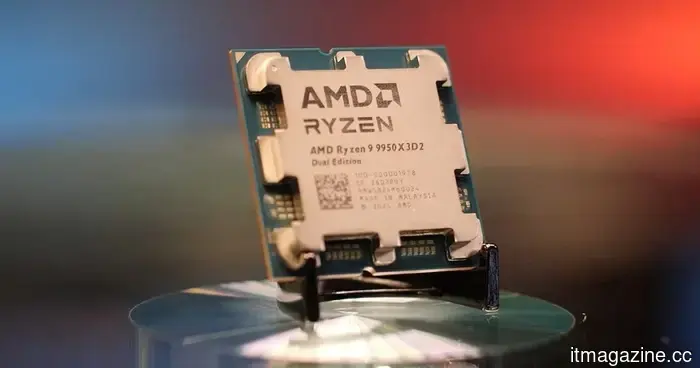 AMD is said to be preparing Zen 7 processors on the 14A node in order to compete with Intel in the market.
AMD's upcoming Zen 7 processors might utilize TSMC’s A14 node, creating a new competition with Intel’s 14A initiatives.
AMD is said to be preparing Zen 7 processors on the 14A node in order to compete with Intel in the market.
AMD's upcoming Zen 7 processors might utilize TSMC’s A14 node, creating a new competition with Intel’s 14A initiatives.
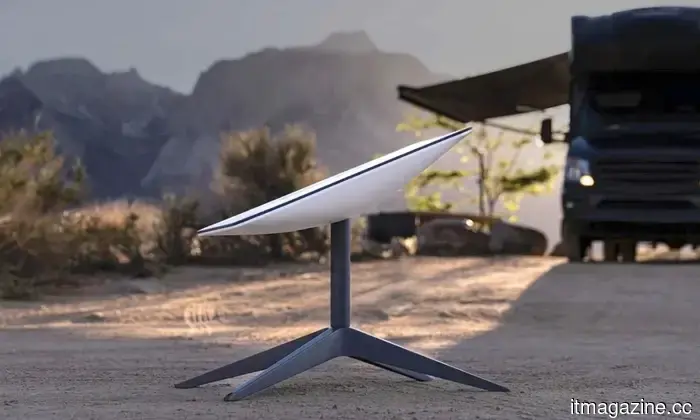
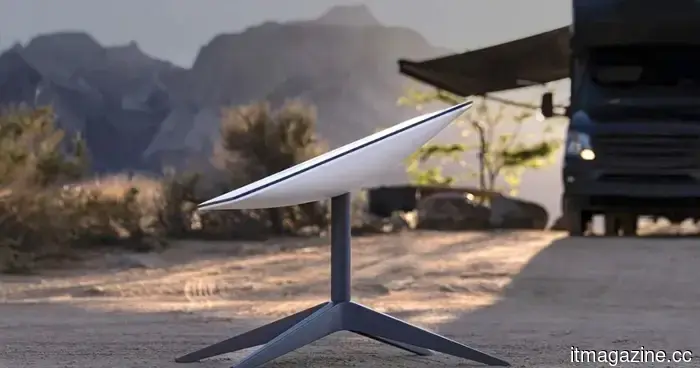 Starlink Mini could potentially eliminate the need for a wired connection with its battery-operated dish.
References in the new Starlink firmware suggest the potential development of a battery-powered Starlink Mini, with code that includes details about battery charge statistics, charging status, and modes for USB-C, battery, and combined power.
Starlink Mini could potentially eliminate the need for a wired connection with its battery-operated dish.
References in the new Starlink firmware suggest the potential development of a battery-powered Starlink Mini, with code that includes details about battery charge statistics, charging status, and modes for USB-C, battery, and combined power.
 Netherlands prevents US company from acquiring DigiD cloud hosting provider.
The Netherlands has prohibited Kyndryl's acquisition of Solvinity for EUR 100 million, which is the DigiD cloud provider, due to concerns over public interest and potential issues related to the CLOUD Act, marking the first instance of a block on a US deal.
Netherlands prevents US company from acquiring DigiD cloud hosting provider.
The Netherlands has prohibited Kyndryl's acquisition of Solvinity for EUR 100 million, which is the DigiD cloud provider, due to concerns over public interest and potential issues related to the CLOUD Act, marking the first instance of a block on a US deal.
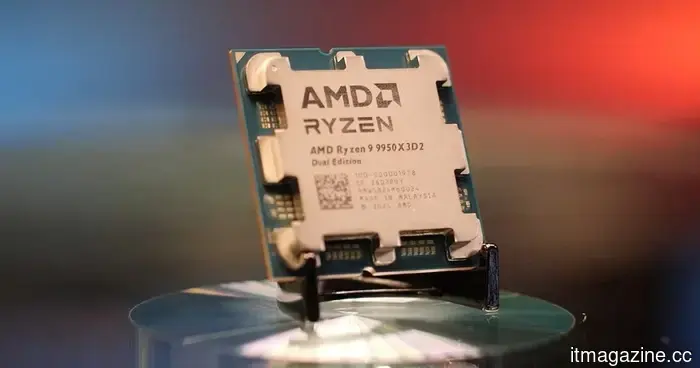 AMD is said to be preparing Zen 7 processors based on the 14A node to compete with Intel effectively.
AMD's upcoming Zen 7 processors may utilize TSMC's A14 node, creating a new competition with Intel's 14A strategy.
AMD is said to be preparing Zen 7 processors based on the 14A node to compete with Intel effectively.
AMD's upcoming Zen 7 processors may utilize TSMC's A14 node, creating a new competition with Intel's 14A strategy.
Starlink Mini might eventually disconnect from the cord with a dish that operates on batteries.
Recent references in Starlink firmware suggest the potential development of a battery-powered Starlink Mini, with code indicating battery charge statistics, charging status, as well as USB-C, battery, and combined power modes.