
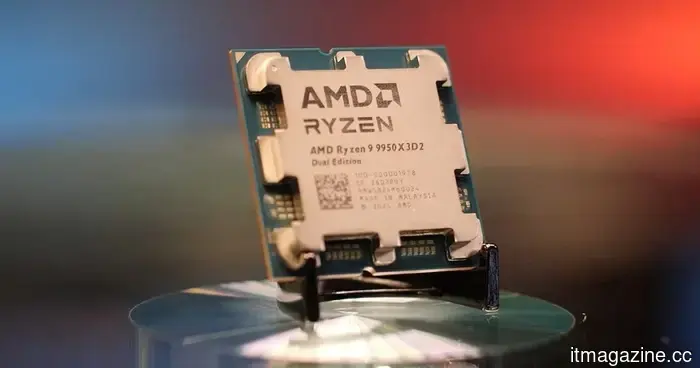
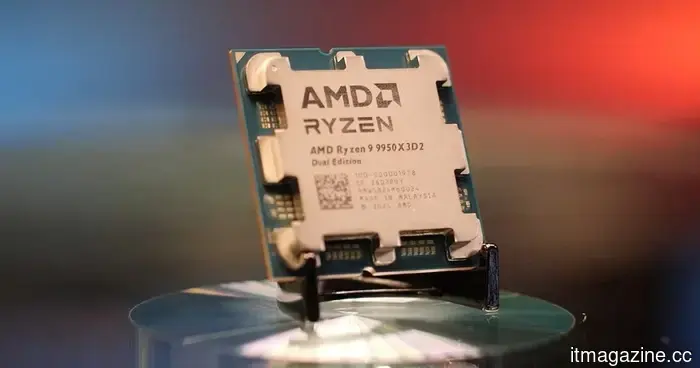
AMD is said to be preparing Zen 7 processors on the 14A node in order to compete with Intel in the market.
Zen 7 may represent a significant enhancement in chiplet and cache technology for AMD.
Intel has been making significant announcements regarding its impending 14A process, justifiably so, as it could serve as a crucial test for the company to leverage its future chip strategy to regain an edge over AMD.
Recent information from Commercial Times indicates that AMD might already be strategizing its response. The forthcoming Zen 7 processors are reportedly set to be developed using TSMC’s A14 node, positioning AMD to compete directly with Intel’s 14A initiative.
What is AMD’s strategy for Zen 7?
This discussion does not pertain to the existing Ryzen series. AMD's current Zen 5 CPUs utilize TSMC’s 4nm process, while a significant upgrade is anticipated with Zen 6 on TSMC’s N2 node. Zen 7 will follow that development, implying that it remains a few years off, and is not an immediate upgrade option for anyone currently seeking a CPU.
Nonetheless, these initial insights offer a glimpse into what future Ryzen advancements might entail. TSMC has stated that its A14-class process targets volume production by 2028, and this report associates AMD's Zen 7 plans with that timeframe. It also mentions that AMD is looking into Powertech’s fan-out panel-level packaging (FOPLP), an advanced packaging technique that could accommodate more intricate chiplet designs in a more compact and potentially cost-effective manner.
Additionally, the rumored Zen 7 CCD might scale up to 16 cores for the flagship model, with potential future 3D V-Cache variants achieving as much as 224 MB of L3 cache per CCD. This could mark Zen 7 as a significant upgrade in chiplet and cache technology, assuming these early indications prove accurate.
How does Intel’s roadmap add to the intrigue?
The potential implications of AMD’s A14 move become even more compelling when considered alongside Intel’s future roadmap. Currently, the Core Ultra Series 3 mobile CPUs utilize Intel 18A, and the anticipated Core Ultra 400 series is expected to follow the same process. Intel's next pivotal advancement will be with 14A.
Reports suggest that Intel has already initiated development of 10A and 7A process technologies. CEO Lip-Bu Tan stated that the design kit for the 14A process (version 0.9) is scheduled for external release in October. Intel forecasts risk production for 14A in 2028, with full-scale production by 2029.
AMD’s proposed Zen 7 strategy aligns well with this competitive landscape. If AMD transitions to TSMC’s A14 process, its future CPUs could compete against Intel’s 14A chips in a race for performance and efficiency. This is positive news for consumers; as AMD and Intel push each other, the advancements in the next generation of PCs usually improve.
I have around four years of experience focused mainly on gaming, PC hardware, and smartphones. In my leisure time, I enjoy...
Logitech has introduced three new devices in its Signature series, aimed at individuals who work long hours at a desk, juggling work, personal activities, and multiple devices. These products are designed to reduce friction from switching devices, lower input noise, and enhance comfort during extended work sessions. The lineup features the Signature Comfort Plus M850 L mouse with palm cushion support, the MK880 Signature Comfort Plus keyboard and mouse bundle, and the M840 L mouse, which offers the same features as the M850 L without the palm cushion.
Barnes & Noble CEO James Daunt recently shared his thoughts on AI-generated books during an interview with NBC News, stating that he sees no issue with selling such books as long as they do not misrepresent themselves and possess substantial value that readers desire. While this viewpoint seems reasonable at first glance, deeper reflection reveals significant questions about the implications of this stance.
If you’re curious about vintage computers, there's a new virtual museum that offers an engaging experience with numerous classic systems. The Virtual OS Museum, curated by Andrew Warkentin, is an interactive exhibition featuring operating systems and standalone applications running through emulation. This museum does not just display vintage software in still images; it provides a Linux VM designed for QEMU, VirtualBox, or UTM, with a customized launcher and preconfigured installations that allow users to boot without the hassle of dealing with outdated setup files and emulator configurations.



Other articles
 AMD is said to be preparing Zen 7 processors based on the 14A node to compete with Intel effectively.
AMD's upcoming Zen 7 processors may utilize TSMC's A14 node, creating a new competition with Intel's 14A strategy.
AMD is said to be preparing Zen 7 processors based on the 14A node to compete with Intel effectively.
AMD's upcoming Zen 7 processors may utilize TSMC's A14 node, creating a new competition with Intel's 14A strategy.
 YouTube Music playlists are receiving updated sorting options, and it's long overdue.
YouTube Music is now introducing new options for sorting playlists, allowing users greater control over the organization of their libraries.
YouTube Music playlists are receiving updated sorting options, and it's long overdue.
YouTube Music is now introducing new options for sorting playlists, allowing users greater control over the organization of their libraries.
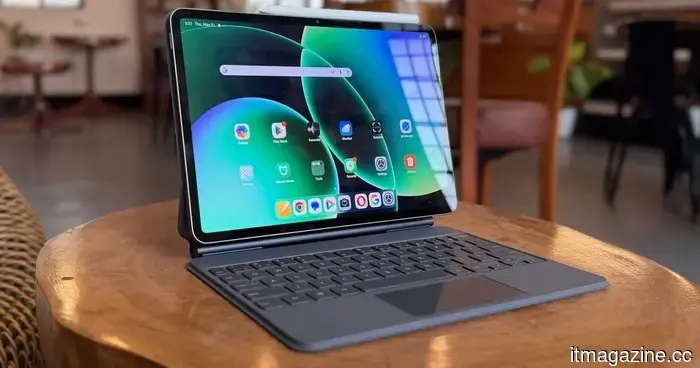 Xiaomi Pad 8 Pro review: I replaced my reliable iPad with this and didn't feel its absence whatsoever.
Xiaomi's Pad 8 Pro is an uncommon device that strikes a balance between design, performance, and valuable features, all without breaking the bank or leaving you regretting your decision not to choose an iPad.
Xiaomi Pad 8 Pro review: I replaced my reliable iPad with this and didn't feel its absence whatsoever.
Xiaomi's Pad 8 Pro is an uncommon device that strikes a balance between design, performance, and valuable features, all without breaking the bank or leaving you regretting your decision not to choose an iPad.
 Have you ever been curious about what vintage computers were like? This virtual museum allows you to explore hundreds of them.
The Virtual OS Museum is an extensive archive of retro computing, featuring over 1,700 installations that are ready to run. It includes a wide range of systems, from the 1948 Manchester Baby to classic Mac OS, early Windows, Unix, PalmOS, and beyond.
Have you ever been curious about what vintage computers were like? This virtual museum allows you to explore hundreds of them.
The Virtual OS Museum is an extensive archive of retro computing, featuring over 1,700 installations that are ready to run. It includes a wide range of systems, from the 1948 Manchester Baby to classic Mac OS, early Windows, Unix, PalmOS, and beyond.
 Smart glasses have made a comeback, and this time they’re attempting to appear ordinary.
Smart glasses are making a comeback with improved designs, subtler branding, and AI integrated into a form that appears nearly ordinary. While this may enhance their wearability, it does not lessen the social awkwardness of having cameras mounted on the face.
Smart glasses have made a comeback, and this time they’re attempting to appear ordinary.
Smart glasses are making a comeback with improved designs, subtler branding, and AI integrated into a form that appears nearly ordinary. While this may enhance their wearability, it does not lessen the social awkwardness of having cameras mounted on the face.
 Starlink Mini could potentially eliminate the need for a wired connection with its battery-operated dish.
References in the new Starlink firmware suggest the potential development of a battery-powered Starlink Mini, with code that includes details about battery charge statistics, charging status, and modes for USB-C, battery, and combined power.
Starlink Mini could potentially eliminate the need for a wired connection with its battery-operated dish.
References in the new Starlink firmware suggest the potential development of a battery-powered Starlink Mini, with code that includes details about battery charge statistics, charging status, and modes for USB-C, battery, and combined power.
AMD is said to be preparing Zen 7 processors on the 14A node in order to compete with Intel in the market.
AMD's upcoming Zen 7 processors might utilize TSMC’s A14 node, creating a new competition with Intel’s 14A initiatives.