
Xiaomi's CEO acknowledged that his SUV was not competitively priced to outdo Tesla. Subsequently, he introduced a more affordable model.
**TL;DR** Xiaomi's new YU7, priced at $34,300, is $4,350 less than the Model Y and offers 50 km more range. Monthly sales have fallen below 10,000 units.
Most CEOs would hesitate to acknowledge that their product is not competitively priced against a rival, but Lei Jun, Xiaomi's founder and CEO, did just that on Wednesday evening and introduced a model that addresses the issue.
During Xiaomi's "Human x Car x Home" launch event on May 21, Lei introduced the YU7 True Standard Edition, a new entry-level version of the company's electric SUV, priced at 233,500 yuan (around $34,300). This is 30,000 yuan ($4,350) less than the cheapest Tesla Model Y in China, which starts at 263,500 yuan. The previous base model, now called the Long Range edition, started at 253,500 yuan, just 10,000 yuan ($1,450) beneath Tesla's pricing. Lei pointed out that this price difference was not compelling enough.
Another notable aspect is the range. The new YU7 Standard Edition offers 643 kilometers on the CLTC cycle (about 399 miles), while the rear-wheel-drive Model Y provides 593 kilometers (368 miles). Xiaomi is offering longer range for significantly less money, with a vehicle that still features air suspension and LiDAR as standard, which are not available at any price for the Model Y.
The technical modifications aim at reducing costs without noticeable compromises. The new version is equipped with a smaller 73 kWh lithium iron phosphate battery from CATL, down from the 96.3 kWh battery in the Long Range edition. It has a single rear motor producing 235 kW. The vehicle's weight has decreased by 115 kilograms to 2,200 kg, which partially accounts for how a smaller battery can yield competitive range. The exterior dimensions of the SUV remain unchanged at five meters.
This pricing adjustment is a response to a steep decline in sales after an initial peak. The YU7, launched on June 18, 2025, garnered over 200,000 firm orders in just three minutes, creating a waitlist that lasted nearly a year. However, as of April 30, 2026, Xiaomi had delivered 232,000 YU7 units in ten months, but the backlog has since cleared. In April, the YU7 contributed only 9,876 of Xiaomi's 36,702 total vehicle deliveries, a significant drop from January, when the YU7 alone sold 37,869 units, briefly making it the top-selling model in China's market. Lei recognized the need for a new price point to stimulate demand.
Xiaomi has sold over 600,000 EVs in under two years, a pace unmatched by any new market entrant. The company delivered 410,000 vehicles in 2025 and aims for 550,000 in 2026. Its EV division became profitable in November 2025, approximately 18 months after the first SU7 sedan was delivered, achieving profitability faster than Tesla. The newly launched second-generation SU7 received 40,000 firm orders immediately. The automotive sector has transitioned from being a secondary focus for the smartphone company to a primary growth driver.
In addition to the Standard Edition, Xiaomi also introduced the YU7 GT, a performance variant starting at 389,900 yuan ($57,300) with a 990-horsepower dual-motor setup. The GT set a Nürburgring Nordschleife lap time of 7:22.755 on April 2, 2026, breaking the previous SUV record by 14 seconds. This model caters to a different market segment—premium buyers seeking a Chinese performance SUV that can rival European competitors on a prestigious racing circuit—while also elevating the perception of the $34,300 Standard Edition.
Tesla's competitive standing in China faces continuous pressure from various competitors. BYD surpassed Tesla as the leading global EV seller in 2025, with 2.26 million battery electric vehicles sold. While the Model Y remains the best-selling EV in China, its pricing power is diminishing as rivals match or exceed its specifications at lower prices. Tesla's Q1 2026 deliveries fell short of Wall Street predictions, and the company produced 50,000 more vehicles than it was able to sell, indicating a demand ceiling in its key markets.
Chinese EVs are now entering Canada thanks to a new trade agreement that reduced tariffs to 6.1% for annual imports of 49,000 vehicles, while the US is moving in the opposite direction with proposed bipartisan legislation intended to ban Chinese connected vehicles entirely. Xiaomi's CEO has stated there are no plans to enter the US market, but the YU7's compelling value proposition—offering more range, additional features, and a $4,350 price
Other articles
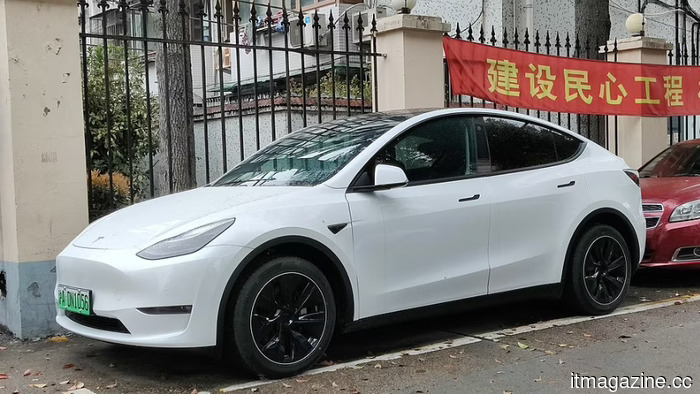 Tesla has finally introduced FSD in China, while its competitors have been offering self-driving cars in the market for several years.
Tesla's FSD (Supervised) has now been introduced in China, just a week after Musk's visit to Beijing with Trump. Competing Chinese companies are already providing Level 3 autonomy.
Tesla has finally introduced FSD in China, while its competitors have been offering self-driving cars in the market for several years.
Tesla's FSD (Supervised) has now been introduced in China, just a week after Musk's visit to Beijing with Trump. Competing Chinese companies are already providing Level 3 autonomy.
 SpaceX's IPO documentation uncovers a contradiction in Musk's clean energy stance, as xAI consumes gas while Tesla markets solar energy.
xAI invested $2.8 billion in gas turbines, whereas Tesla markets solar panels. SpaceX's S-1 proposes space-based solar as a solution, but the calculations don’t seem to align just yet.
SpaceX's IPO documentation uncovers a contradiction in Musk's clean energy stance, as xAI consumes gas while Tesla markets solar energy.
xAI invested $2.8 billion in gas turbines, whereas Tesla markets solar panels. SpaceX's S-1 proposes space-based solar as a solution, but the calculations don’t seem to align just yet.
 The CEO of Xiaomi acknowledged that his SUV was not priced competitively enough to surpass Tesla, so he introduced a new model that is.
The new YU7 Standard Edition is priced at $4,350 less than the Model Y and has a range that exceeds it by 50km. Xiaomi has delivered 600,000 electric vehicles in less than two years.
The CEO of Xiaomi acknowledged that his SUV was not priced competitively enough to surpass Tesla, so he introduced a new model that is.
The new YU7 Standard Edition is priced at $4,350 less than the Model Y and has a range that exceeds it by 50km. Xiaomi has delivered 600,000 electric vehicles in less than two years.
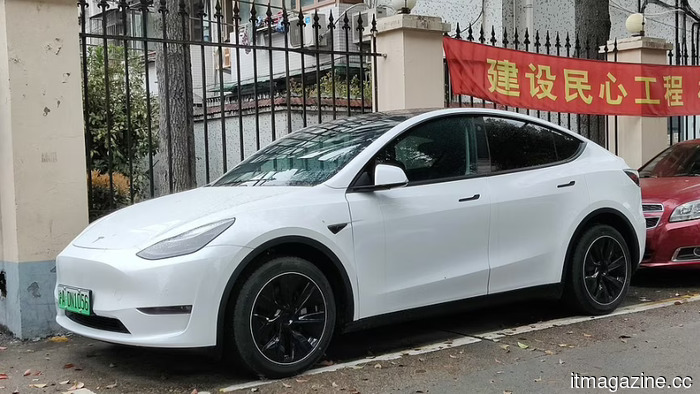 Tesla has finally introduced FSD in China, while its competitors have been offering self-driving vehicles in the country for several years.
Tesla's Full Self-Driving (Supervised) is now available in China, following Musk's visit with Trump to Beijing last week. Meanwhile, Chinese competitors are already providing Level 3 autonomy.
Tesla has finally introduced FSD in China, while its competitors have been offering self-driving vehicles in the country for several years.
Tesla's Full Self-Driving (Supervised) is now available in China, following Musk's visit with Trump to Beijing last week. Meanwhile, Chinese competitors are already providing Level 3 autonomy.
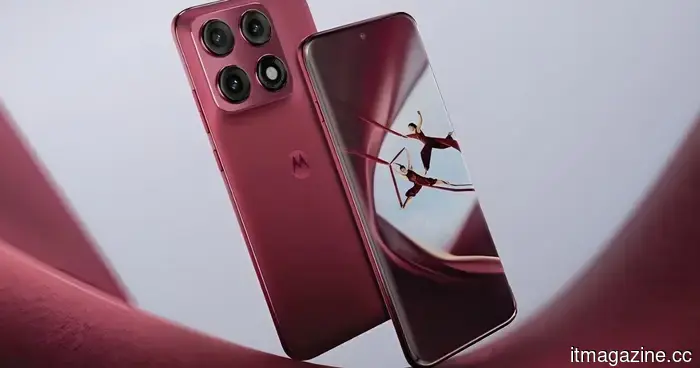 The Moto Edge 70 Pro+ will feature the camera configuration that Motorola previously overlooked.
Although the Moto Edge 70 Pro+ isn't completely fresh, its camera configuration might be the enhancement that Edge 70 Pro purchasers were seeking from the beginning.
Waymo's robotaxis continue to enter floodwaters. The software update was ineffective. Five cities are currently on lockdown.
A recall that occurred two weeks ago was intended to address the issue. However, an unmanned Waymo became stranded in a flood in Atlanta on Wednesday. A lasting solution is not available yet.
The Moto Edge 70 Pro+ will feature the camera configuration that Motorola previously overlooked.
Although the Moto Edge 70 Pro+ isn't completely fresh, its camera configuration might be the enhancement that Edge 70 Pro purchasers were seeking from the beginning.
Waymo's robotaxis continue to enter floodwaters. The software update was ineffective. Five cities are currently on lockdown.
A recall that occurred two weeks ago was intended to address the issue. However, an unmanned Waymo became stranded in a flood in Atlanta on Wednesday. A lasting solution is not available yet.
Xiaomi's CEO acknowledged that his SUV was not competitively priced to outdo Tesla. Subsequently, he introduced a more affordable model.
The new YU7 Standard Edition is $4,350 cheaper than the Model Y and offers an additional range of 50km. Xiaomi has delivered 600,000 electric vehicles in less than two years.