
Waymo's robotaxis continue to enter floodwaters. The software update was ineffective. Five cities are currently on lockdown.
Waymo has halted its robotaxi service in five US cities after a software update failed to prevent vehicles from driving into flooded areas. The suspension, which occurred on May 21, affects operations in Atlanta, Austin, Dallas, Houston, and San Antonio, the last of which had already been offline since late April. This decision follows an incident where an empty Waymo robotaxi got stuck in floodwaters in Midtown Atlanta during severe storms. The issue mirrored a previous incident that led to a recall on May 8 and a service shutdown in San Antonio a month prior.
Currently, Waymo has also suspended all freeway rides in San Francisco, Los Angeles, Phoenix, and Miami as it addresses performance improvements for its vehicles in construction zones. Although the company anticipates resuming these routes soon, no specific timeline has been provided.
The root of the problem lies in the software architecture. A letter posted by the National Highway Traffic Safety Administration indicates that the software flaw could result in vehicles slowing down but still driving into standing water on high-speed roads. In the San Antonio incident on April 20, an unoccupied Waymo robotaxi encountered a flooded section of a road, detected the water, slowed down, but continued into it due to a lack of hard-stop conditions in its decision-making system. This mishap led to the vehicle being swept away into a creek. A voluntary recall was issued for 3,791 robotaxis using the fifth and sixth-generation automated driving systems, along with an interim software update aimed at restricting operations during times of elevated flood risk, though this did not prevent the Atlanta incident.
Waymo has acknowledged that there is currently no permanent solution. When the recall was announced, the company admitted that a definitive remedy for avoiding flooded areas had yet to be developed. The flooding in Atlanta occurred before the National Weather Service issued any alerts, meaning Waymo's weather-monitoring system had no indications to respond to. The company emphasized its commitment to safety and stated it was monitoring weather forecasts and conditions closely.
This flood issue marks Waymo’s third recall since February 2024. The first recall involved 444 vehicles after two robotaxis in Phoenix collided with the same improperly towed vehicle. The second recall, filed in May 2025, encompassed 1,212 vehicles that were involved in low-speed crashes with stationary objects like parking gates and telephone poles. There are also two ongoing NHTSA investigations into different failure modes, including one concerning a January incident where a Waymo robotaxi struck a child.
The suspension of freeway service stemmed from a related concern. A passenger reported on May 19 that a Waymo robotaxi accelerated to highway speeds while navigating through construction trucks on a closed part of the freeway, leading to a police chase. While Waymo did not comment on this specific event, it stated that it was assessing its vehicles' freeway performance in construction zones.
These service disruptions come at a time of significant expansion for Waymo, which has a deal with Uber potentially worth up to $1.25 billion for 50,000 autonomous Rivian R2 robotaxis. Currently, Waymo is providing over 500,000 paid rides weekly across several US cities, with plans to extend its services to San Diego, Las Vegas, and Detroit in 2026, aiming for one million paid rides per week by year’s end. The company also intends to launch a robotaxi service in London later this year.
Wayve, a London-based autonomous driving startup backed by Uber, recently raised $1.5 billion with an $8.6 billion valuation and is planning robotaxi pilots in London and Tokyo for 2026. Unlike Waymo’s sensor-heavy, rules-based approach, Wayve employs an AI-first methodology that learns from driving data instead of relying solely on detailed maps and coded rules. The flooding incidents highlight the limitations of Waymo’s method, which cannot account for every scenario, as evidenced by the inability to handle water on mapped roads.
Over the past year, driverless car services have experienced a series of failures that, while seeming minor individually, collectively erode public trust. In December 2025, a power outage in San Francisco caused Waymo vehicles to stall across the city, creating significant disruption. In April, a major failure of the Apollo Go robotaxi service in Wuhan, China, left over a hundred self-driving cars stranded in traffic. These incidents illustrate that autonomous vehicles tend to function well in designed conditions but fail dramatically in unforeseen situations.
The autonomous vehicle industry is pouring billions into the belief that technology will eventually be capable of handling every situation a human driver can manage. Waymo is further along than any other commercial operator, boasting a solid safety record over hundreds of millions of miles. However, floods are not uncommon occurrences, and a robotaxi service unable to operate during heavy rains in cities like Atlanta and San Antonio—where such weather is frequent—lacks the trust necessary for its expansion ambitions. When a lasting solution is developed, it will need
Other articles
 Moz Pro now monitors your brand within ChatGPT and Gemini | TNW Deals
The new AI Visibility feature from Moz Pro monitors your brand's presence in ChatGPT and Gemini responses, as well as your standing against competitors. Experience it for free.
Moz Pro now monitors your brand within ChatGPT and Gemini | TNW Deals
The new AI Visibility feature from Moz Pro monitors your brand's presence in ChatGPT and Gemini responses, as well as your standing against competitors. Experience it for free.
 Moz Pro now monitors your brand within ChatGPT and Gemini | TNW Deals
The new AI Visibility tool from Moz Pro monitors your brand's presence in ChatGPT and Gemini responses, as well as your standing against competitors. Test it out for free.
Moz Pro now monitors your brand within ChatGPT and Gemini | TNW Deals
The new AI Visibility tool from Moz Pro monitors your brand's presence in ChatGPT and Gemini responses, as well as your standing against competitors. Test it out for free.
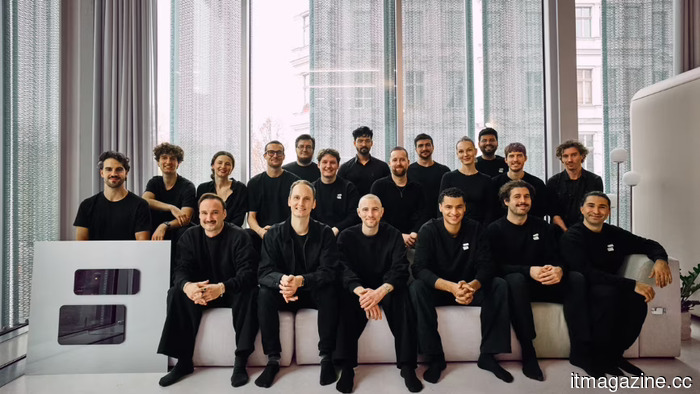 Berlin's Peec AI saw its revenue increase more than twofold to $10 million ARR within six months. Its solution assists brands in appearing in ChatGPT.
The GEO startup secured its Series A funding at a $4M ARR six months back. It is now monitoring $10M, with billboards placed outside competitor offices throughout Berlin.
Berlin's Peec AI saw its revenue increase more than twofold to $10 million ARR within six months. Its solution assists brands in appearing in ChatGPT.
The GEO startup secured its Series A funding at a $4M ARR six months back. It is now monitoring $10M, with billboards placed outside competitor offices throughout Berlin.
 Corsair is now incorporating Chinese DRAM in its DDR5 memory kits. This could potentially lead to a decrease in memory prices.
CXMT chips have been noticed in Corsair Vengeance DDR5 modules, as Samsung, SK Hynix, and Micron focus more on AI memory rather than on consumer PCs.
Corsair is now incorporating Chinese DRAM in its DDR5 memory kits. This could potentially lead to a decrease in memory prices.
CXMT chips have been noticed in Corsair Vengeance DDR5 modules, as Samsung, SK Hynix, and Micron focus more on AI memory rather than on consumer PCs.
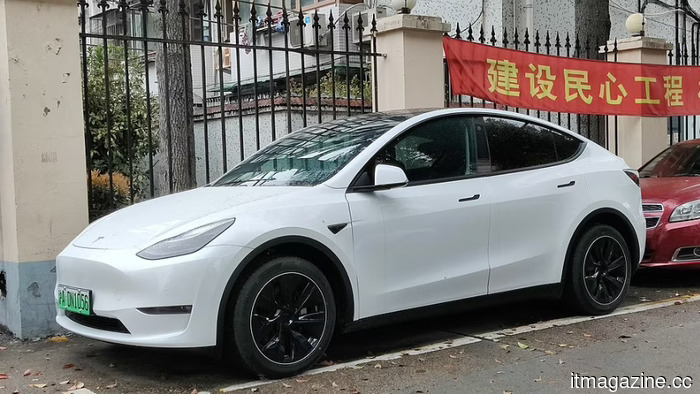 Tesla has finally introduced FSD in China, while its competitors have been offering self-driving cars in the market for several years.
Tesla's FSD (Supervised) has now been introduced in China, just a week after Musk's visit to Beijing with Trump. Competing Chinese companies are already providing Level 3 autonomy.
Tesla has finally introduced FSD in China, while its competitors have been offering self-driving cars in the market for several years.
Tesla's FSD (Supervised) has now been introduced in China, just a week after Musk's visit to Beijing with Trump. Competing Chinese companies are already providing Level 3 autonomy.
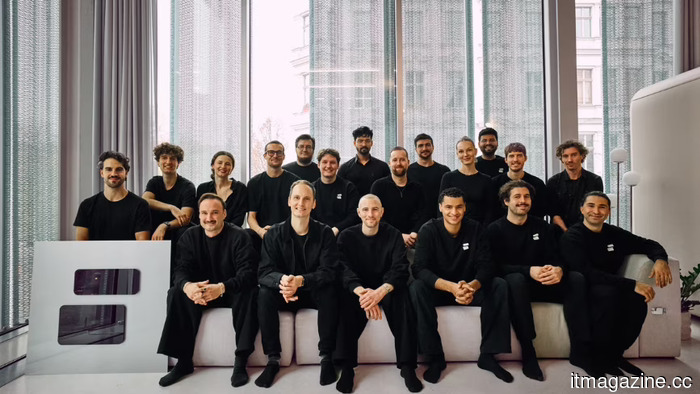 Berlin's Peec AI increased its revenue by more than twofold to reach $10 million in annual recurring revenue (ARR) over the course of six months. The company's product assists brands in appearing in ChatGPT.
The GEO startup secured its Series A funding with a $4M ARR six months prior. It now reports a $10M ARR, having placed billboards near competing offices throughout Berlin.
Berlin's Peec AI increased its revenue by more than twofold to reach $10 million in annual recurring revenue (ARR) over the course of six months. The company's product assists brands in appearing in ChatGPT.
The GEO startup secured its Series A funding with a $4M ARR six months prior. It now reports a $10M ARR, having placed billboards near competing offices throughout Berlin.
Waymo's robotaxis continue to enter floodwaters. The software update was ineffective. Five cities are currently on lockdown.
A recall that occurred two weeks ago was intended to address the issue. However, an unmanned Waymo became stranded in a flood in Atlanta on Wednesday. A lasting solution is not available yet.