
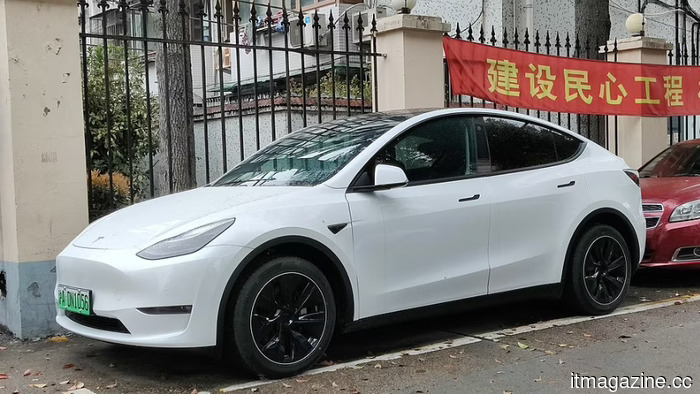
Tesla has finally introduced FSD in China, while its competitors have been offering self-driving cars in the market for several years.
Tesla has confirmed the availability of its Full Self-Driving (Supervised) system in China after several delays. This marks the first time the company has announced FSD access in the world's largest electric vehicle market, including it in a list of 10 countries where the technology is accessible. The announcement came shortly after Elon Musk participated in a U.S. business delegation for a summit between President Trump and Chinese leader Xi Jinping in Beijing.
The timing of the announcement raises unanswered questions regarding mainstream Chinese consumer access to FSD and whether this indicates regulatory approval that hasn't been officially confirmed yet. According to Tesla’s China website, “intelligent assisted driving” for the Model 3 is available for a one-time payment of 64,000 yuan (about $9,400), along with a Mandarin disclaimer stating that features will be updated soon. The Chinese embassy did not provide comments regarding any regulatory approvals.
Despite its name, Tesla's FSD (Supervised) still necessitates active driver supervision and is categorized as a Level 2 system, requiring the driver to maintain control at all times. A fully autonomous, unsupervised version is being tested only on a specific fleet as part of Tesla's robotaxi service in Austin, Texas, creating a discrepancy between the promotional name and the actual capabilities of the technology.
The delays have been substantial. Musk first announced intentions to introduce FSD in China in 2024, expressing expectations of achieving regulatory approval by the year's end. However, it wasn't until April 2026 that Tesla's CFO Vaibhav Taneja mentioned that they were still waiting for approval. Bloomberg reported that Tesla has recently ramped up hiring for autonomous driving positions in China, implying that the regulatory hurdles may have finally been cleared.
In Tesla's absence, Chinese competitors have made significant advancements. China’s Ministry of Industry and Information Technology granted its first Level 3 autonomous driving certifications in December 2025 to passenger cars produced by Changan Auto and BAIC Motor. Level 3 allows for hands-free driving under certain conditions, which Tesla's FSD (Supervised) does not provide. In 2025, Xiaomi delivered over 410,000 vehicles equipped with its advanced driver-assistance systems, while Xpeng has offered vehicles capable of highway and urban autonomous navigation in China since 2023. Huawei’s ADS 3.0 system, which is licensed to various Chinese automakers, operates without high-definition maps across more than 400 cities.
Chinese robotaxi companies are also ahead in the market. Pony.ai and Baidu’s Apollo Go are providing fully driverless ride-hailing services in several cities. An incident in April in Wuhan, where over a hundred Apollo Go robotaxis stopped in traffic, highlighted their large-scale deployment rather than a failure of the system. In contrast, Tesla's robotaxi service is restricted to a geofenced area in Austin.
Tesla's position in China has been facing ongoing challenges. As of April, Tesla ranked fourth in EV sales in China, behind BYD, Geely, and Chery, according to data from the China Passenger Car Association. Xiaomi recently launched the YU7 Standard Edition at $34,300, which undercuts the Model Y by $4,350 and offers an additional 50 kilometers of range. The FSD launch aims to regain a competitive edge, but the technology Tesla is providing in China is two levels below that which has already been certified for domestic manufacturers.
A key strategic question is whether FSD (Supervised), a Level 2 system demanding constant driver attention, meaningfully differentiates Tesla in a market where competitors already have Level 3 autonomy, proprietary mapping, and LiDAR-equipped vehicles at more competitive prices. Tesla's camera-only approach, which Musk advocates as better because it resembles human driving, has yet to receive the same regulatory recognition in China that competitors utilizing sensor fusion have achieved.
Chinese automakers are now expanding into Canada and across Europe, the Middle East, and Southeast Asia, offering autonomous driving features developed while Tesla awaited Chinese regulatory decisions. The rollout of FSD, whenever it fully reaches mainstream Chinese consumers, enters a market that has moved forward. Tesla's narrative in China regarding self-driving is no longer about being first, but whether being late still holds significance.
Other articles
 The CEO of Xiaomi acknowledged that his SUV was not priced competitively enough to surpass Tesla, so he introduced a new model that is.
The new YU7 Standard Edition is priced at $4,350 less than the Model Y and has a range that exceeds it by 50km. Xiaomi has delivered 600,000 electric vehicles in less than two years.
The CEO of Xiaomi acknowledged that his SUV was not priced competitively enough to surpass Tesla, so he introduced a new model that is.
The new YU7 Standard Edition is priced at $4,350 less than the Model Y and has a range that exceeds it by 50km. Xiaomi has delivered 600,000 electric vehicles in less than two years.
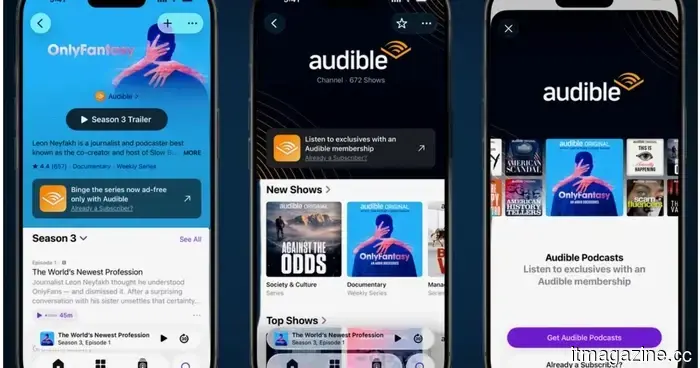 You can now listen to Audible's top podcasts directly on Apple Podcasts.
Audible members can now access nearly 700 premium podcast titles on Apple Podcasts, with the subscription available in 135 countries and more titles expected to be added soon.
You can now listen to Audible's top podcasts directly on Apple Podcasts.
Audible members can now access nearly 700 premium podcast titles on Apple Podcasts, with the subscription available in 135 countries and more titles expected to be added soon.
 South Korea's deputy prime minister stated that the wealth generated by AI should serve the public good, highlighting this point through the recent Samsung strike.
Deputy PM Bae cautioned that labor disputes fueled by AI will continue to arise with the emergence of "super-large companies" and urged for the establishment of an "AI-inclusive society."
South Korea's deputy prime minister stated that the wealth generated by AI should serve the public good, highlighting this point through the recent Samsung strike.
Deputy PM Bae cautioned that labor disputes fueled by AI will continue to arise with the emergence of "super-large companies" and urged for the establishment of an "AI-inclusive society."
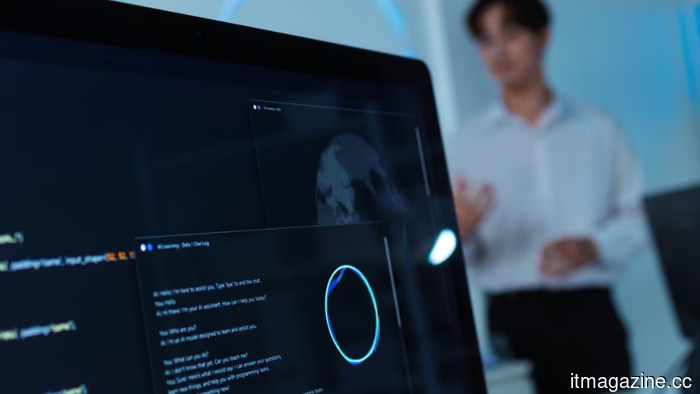 The deputy Prime Minister of South Korea stated that the wealth generated by AI should be advantageous to the public, highlighting the issues raised by the Samsung strike.
Deputy PM Bae cautioned that labor disputes driven by AI will continue to occur as "super-large companies" develop, emphasizing the need for an "AI-inclusive society."
The deputy Prime Minister of South Korea stated that the wealth generated by AI should be advantageous to the public, highlighting the issues raised by the Samsung strike.
Deputy PM Bae cautioned that labor disputes driven by AI will continue to occur as "super-large companies" develop, emphasizing the need for an "AI-inclusive society."
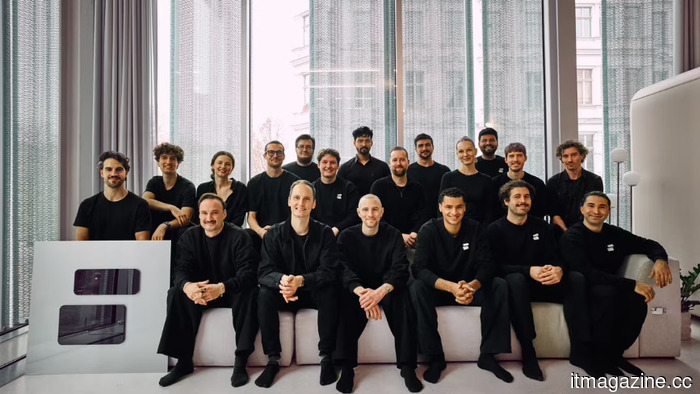 Berlin's Peec AI increased its revenue to $10 million in annual recurring revenue (ARR) in just six months. The company's product assists brands in appearing in ChatGPT.
The GEO startup secured its Series A funding at a $4M ARR six months ago. It currently monitors $10M, with billboards placed near competing offices throughout Berlin.
Berlin's Peec AI increased its revenue to $10 million in annual recurring revenue (ARR) in just six months. The company's product assists brands in appearing in ChatGPT.
The GEO startup secured its Series A funding at a $4M ARR six months ago. It currently monitors $10M, with billboards placed near competing offices throughout Berlin.
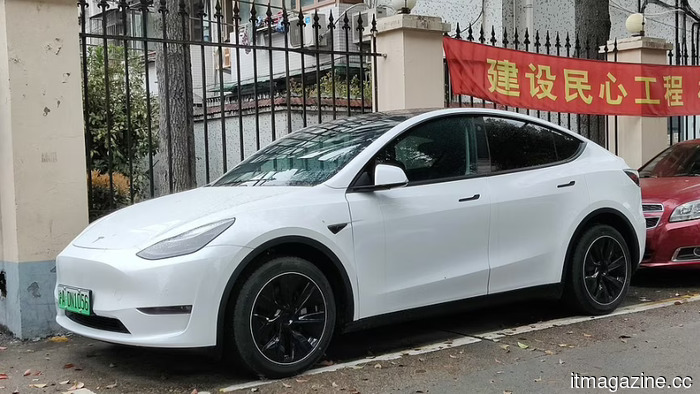 Tesla has finally introduced FSD in China, while its competitors have been offering self-driving vehicles in the country for several years.
Tesla's Full Self-Driving (Supervised) is now available in China, following Musk's visit with Trump to Beijing last week. Meanwhile, Chinese competitors are already providing Level 3 autonomy.
Tesla has finally introduced FSD in China, while its competitors have been offering self-driving vehicles in the country for several years.
Tesla's Full Self-Driving (Supervised) is now available in China, following Musk's visit with Trump to Beijing last week. Meanwhile, Chinese competitors are already providing Level 3 autonomy.
Tesla has finally introduced FSD in China, while its competitors have been offering self-driving cars in the market for several years.
Tesla's FSD (Supervised) has now been introduced in China, just a week after Musk's visit to Beijing with Trump. Competing Chinese companies are already providing Level 3 autonomy.