
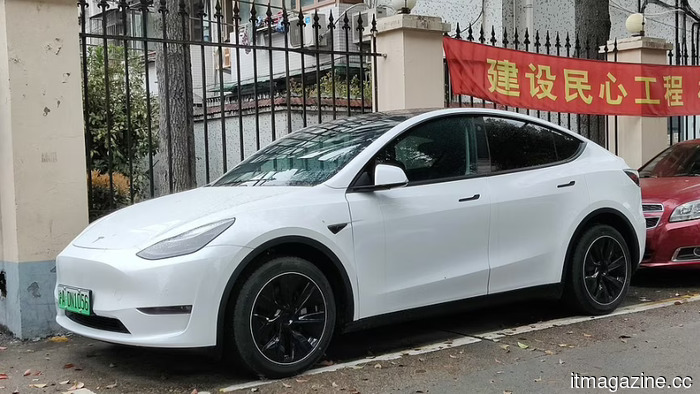
Tesla has finally introduced FSD in China, while its competitors have been offering self-driving vehicles in the country for several years.
TL;DR: Tesla has confirmed the availability of its Full Self-Driving (FSD) system in China after multiple delays. Meanwhile, Chinese competitors have already achieved Level 3 certifications and are operating robotaxi services.
On Thursday, Tesla announced that its Full Self-Driving (Supervised) system is now accessible in China, including it among the ten markets where the technology is available. This marks the first time Tesla has officially recognized FSD availability in the largest EV market globally. The announcement came shortly after Elon Musk participated in a US business delegation during President Trump’s summit with Chinese leader Xi Jinping in Beijing.
The announcement raises questions that remain unaddressed. It is not clear if regular Chinese consumers can activate FSD yet or if the announcement indicates regulatory approval that has not been publicly verified. Tesla's China website lists “intelligent assisted driving” for the Model 3 at a one-time cost of 64,000 yuan (roughly $9,400), accompanied by a Mandarin disclaimer stating that features will be updated “shortly.” The Chinese embassy did not reply to inquiries regarding whether regulatory approval had been secured.
Despite its name, Tesla's FSD (Supervised) necessitates active driver supervision and is categorized as a Level 2 system, meaning the driver must maintain control at all times. A fully autonomous, unsupervised variant is currently being tested solely on Tesla vehicles as part of the company’s robotaxi service in Austin, Texas. The discrepancy between the marketing label and the technology's actual abilities has been a continuous source of regulatory and consumer misunderstanding.
The delays have been substantial. Musk initially proposed expanding FSD to China in 2024, and by July, he expressed optimism for regulatory approval before the end of that year. In September 2024, he mentioned “pending regulatory approval.” As recently as April 2026, Tesla's CFO Vaibhav Taneja stated during the Q1 earnings call that the company was still waiting for approval. Reports from Bloomberg on Wednesday indicated that Tesla had begun a focused recruitment effort for autonomous driving positions in China, including autopilot test engineers, suggesting that the regulatory process had finally progressed.
While Tesla delayed, its Chinese competitors advanced. The Chinese Ministry of Industry and Information Technology granted its first Level 3 autonomous driving certifications in December 2025, approving vehicles from Changan Auto and BAIC Motor. Level 3 permits hands-off driving under specific circumstances, which Tesla’s FSD (Supervised) does not provide. Xiaomi sold over 410,000 vehicles in 2025 equipped with its own advanced driver-assistance systems. Xpeng has offered vehicles with highway and urban autonomous navigation in China since 2023. Huawei's ADS 3.0 system, licensed to various Chinese automakers, functions in over 400 cities without relying on high-definition maps.
Chinese robotaxi businesses are even more advanced. Pony.ai and Baidu’s Apollo Go have been providing fully driverless ride-hailing services in several cities across China. Apollo Go faced a widespread incident in Wuhan in April when over a hundred robotaxis halted mid-traffic, though this incident highlighted their deployment scale rather than a lack of it. In contrast, Tesla's robotaxi service is restricted to a geofenced area in Austin.
Tesla's competitive standing in China has faced ongoing challenges. In April, Tesla China ranked fourth in EV sales in the country, trailing behind BYD, Geely, and Chery according to data from the China Passenger Car Association. Xiaomi also unveiled a $34,300 YU7 Standard Edition this week, which is $4,350 cheaper than the Model Y while offering 50 kilometers more range. The FSD launch aims to regain competitive ground, but the technology Tesla is introducing in China is two levels below what Chinese regulators have already certified for local manufacturers.
The strategic issue is whether FSD (Supervised), a Level 2 system that requires continuous driver attention, can serve as a significant differentiator in a market where competitors already provide Level 3 autonomy, proprietary mapping systems, and LiDAR-equipped vehicles at lower costs. Tesla’s camera-only strategy, which Musk asserts is superior since it replicates human driving behavior, has yet to receive the regulatory acknowledgment in China that competitors using sensor fusion have achieved.
Chinese automakers are now entering the Canadian market and expanding throughout Europe, the Middle East, and Southeast Asia with autonomous driving capabilities that were developed during the years Tesla waited for Chinese regulatory approvals. Whenever the FSD launch fully reaches mainstream Chinese consumers, it arrives in a market that has already progressed. Tesla’s self-driving narrative in China is no longer about pioneering; it now revolves around the question of whether being late still matters.
Other articles
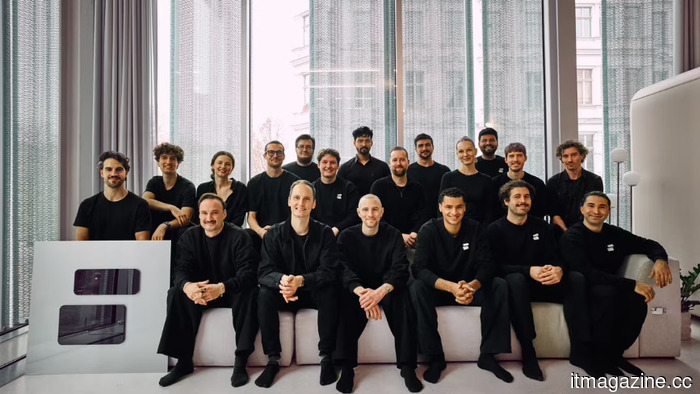 Berlin's Peec AI increased its revenue to $10 million in annual recurring revenue (ARR) in just six months. The company's product assists brands in appearing in ChatGPT.
The GEO startup secured its Series A funding at a $4M ARR six months ago. It currently monitors $10M, with billboards placed near competing offices throughout Berlin.
SpaceX's IPO submission highlights a contradiction in Musk's clean energy approach, as xAI consumes gas while Tesla offers solar solutions.
xAI invested $2.8 billion in gas turbines, while Tesla offers solar panels. SpaceX's S-1 promotes space-based solar energy as the solution, but the calculations are still not conclusive.
Berlin's Peec AI increased its revenue to $10 million in annual recurring revenue (ARR) in just six months. The company's product assists brands in appearing in ChatGPT.
The GEO startup secured its Series A funding at a $4M ARR six months ago. It currently monitors $10M, with billboards placed near competing offices throughout Berlin.
SpaceX's IPO submission highlights a contradiction in Musk's clean energy approach, as xAI consumes gas while Tesla offers solar solutions.
xAI invested $2.8 billion in gas turbines, while Tesla offers solar panels. SpaceX's S-1 promotes space-based solar energy as the solution, but the calculations are still not conclusive.
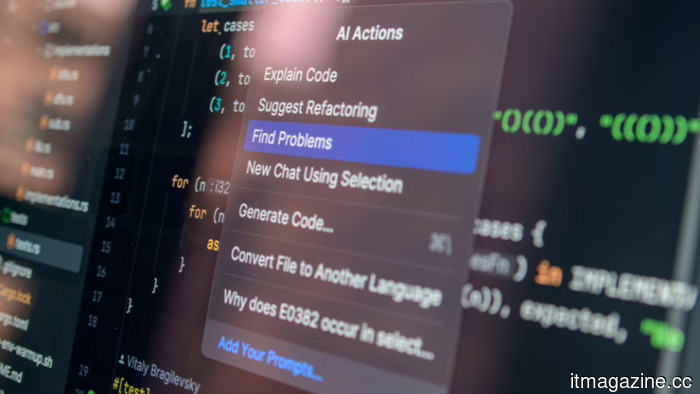 Anthropic's Claude Mythos identified 10,000 critical vulnerabilities within a single month. The patches are unable to keep pace.
The partners of Project Glasswing utilized Claude Mythos to identify 1,094 verified high-severity vulnerabilities in over 1,000 open-source projects. Only 97 of these have been resolved.
Anthropic's Claude Mythos identified 10,000 critical vulnerabilities within a single month. The patches are unable to keep pace.
The partners of Project Glasswing utilized Claude Mythos to identify 1,094 verified high-severity vulnerabilities in over 1,000 open-source projects. Only 97 of these have been resolved.
 The CEO of Xiaomi acknowledged that his SUV was not priced competitively enough to surpass Tesla, so he introduced a new model that is.
The new YU7 Standard Edition is priced at $4,350 less than the Model Y and has a range that exceeds it by 50km. Xiaomi has delivered 600,000 electric vehicles in less than two years.
The CEO of Xiaomi acknowledged that his SUV was not priced competitively enough to surpass Tesla, so he introduced a new model that is.
The new YU7 Standard Edition is priced at $4,350 less than the Model Y and has a range that exceeds it by 50km. Xiaomi has delivered 600,000 electric vehicles in less than two years.
 South Korea's deputy prime minister indicates that the wealth generated by AI should be advantageous to the public, citing the recent Samsung strike as an example.
Deputy Prime Minister Bae cautioned that conflicts in the workforce driven by AI will continue to arise with the emergence of "super-large companies" and emphasized the need for an "AI-inclusive society."
South Korea's deputy prime minister indicates that the wealth generated by AI should be advantageous to the public, citing the recent Samsung strike as an example.
Deputy Prime Minister Bae cautioned that conflicts in the workforce driven by AI will continue to arise with the emergence of "super-large companies" and emphasized the need for an "AI-inclusive society."
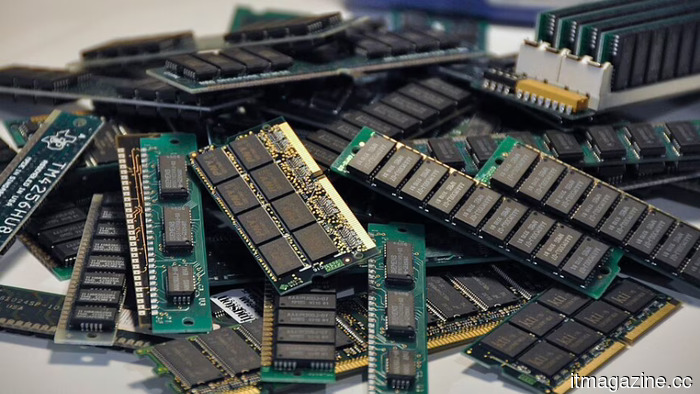 Corsair is now incorporating Chinese DRAM in its DDR5 memory kits. This could potentially lead to a decrease in memory prices.
CXMT chips have been noticed in Corsair Vengeance DDR5 modules, as Samsung, SK Hynix, and Micron focus more on AI memory rather than on consumer PCs.
Corsair is now incorporating Chinese DRAM in its DDR5 memory kits. This could potentially lead to a decrease in memory prices.
CXMT chips have been noticed in Corsair Vengeance DDR5 modules, as Samsung, SK Hynix, and Micron focus more on AI memory rather than on consumer PCs.
Tesla has finally introduced FSD in China, while its competitors have been offering self-driving vehicles in the country for several years.
Tesla's Full Self-Driving (Supervised) is now available in China, following Musk's visit with Trump to Beijing last week. Meanwhile, Chinese competitors are already providing Level 3 autonomy.