
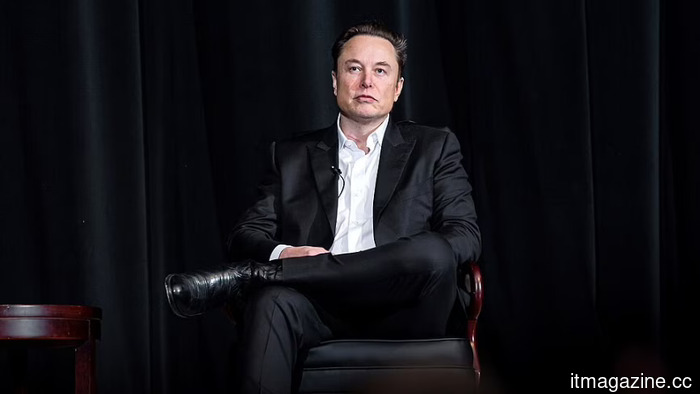
SpaceX's IPO documentation uncovers a contradiction in Musk's clean energy stance, as xAI consumes gas while Tesla markets solar energy.
In short, xAI operates its data centres using unregulated gas turbines, while SpaceX’s IPO promotes the concept of solar energy from space. Tesla's solar business is largely overlooked. The prospectus for SpaceX's IPO, filed on Wednesday, outlines a vision for large-scale space-based solar power. It indirectly highlights that Elon Musk’s AI venture, xAI, is relying on unregulated natural gas turbines for its data centres, with intentions to invest an additional $2.8 billion. Tesla, the company Musk established to eradicate fossil fuels, appears minimally relevant as a power source, a contradiction now documented by the SEC.
Over the years, Tesla has published four Master Plans, all centered on the electrification of the economy. Musk articulated in 2006 that Tesla’s primary mission was to aid the transition from a fossil fuel-dependent economy to a solar-powered one. Just three years ago, Tesla’s Master Plan Part 3 laid out a comprehensive strategy to completely phase out fossil fuels, discussing in detail the importance of solar energy, battery storage, and electric transportation in reducing global carbon emissions.
Then, xAI emerged. This AI company, which merged with SpaceX in February with a combined valuation of $1.25 trillion, has adopted the fossil fuel economy that Tesla was created to challenge. xAI’s data centres in Memphis, Tennessee, are fueled by numerous unregulated natural gas turbines. The additional $2.8 billion for gas turbines mentioned in the filing represents a long-term investment in fossil fuel infrastructure for xAI.
Musk's companies have a history of mutual transactions. SpaceX purchased 1,279 Cybertrucks for $131 million, and xAI has invested $697 million in Tesla Megapacks, the large-scale battery systems for managing energy demands in its data centres. However, xAI has not made significant purchases of solar panels from Tesla Energy, the division meant to advance the solar technology Musk once touted as foundational for the future economy.
While the SpaceX filing references solar energy, it does so solely in the context of space, arguing that space-based solar panels can generate over five times more energy than those on Earth due to constant sunlight. As terrestrial AI data centres face challenges from neighbors, regulators, and grid operators, Musk and other executives have begun considering the idea of running server farms in orbit, fueled by continuous solar power. SpaceX’s Starship program, which has cost over $15 billion so far, is seen as the launch vehicle capable of making this concept financially feasible.
However, as noted by TechCrunch’s Tim De Chant, the economic realities are difficult. Energy costs for Starlink satellites are already significantly higher than those for terrestrial data centres. Additionally, protecting AI chips in orbit from radiation and other hazards adds further costs absent on the ground. It remains uncertain if AI training processes can effectively operate across multiple satellites, which could mean that much of the intensive computing work would still need to be done on Earth, regardless of the advancements in launch technology. Transporting solar panels via truck is far less energy-intensive than sending them into space.
The filing also contains a telling assertion: SpaceX claims that “third-party estimates on data centre demand are limited by the practical supply constraints existing in a terrestrial context, and the energy shortage may be much larger than research indicates.” The company sees an annual AI compute growth rate at a terawatt scale, which would necessitate a significant increase in global energy consumption. Currently, humanity's energy use stands at about 4 terawatts continuously, while all data centres combined consume around 40 gigawatts. Musk anticipates that AI alone will require terawatt-scale increases annually.
The upcoming SpaceX IPO aims to generate $75 billion and is partly based on this ambitious vision. Investors are being solicited to believe in a future where existing energy infrastructure is inadequate to meet AI demands, with SpaceX positioned as the solution via space-based resources. This narrative is compelling but conveniently overlooks that, for now, Musk’s AI venture is utilizing natural gas instead of utilizing the solar technology produced by Tesla.
The energy needs of AI data centres are pressing. OpenAI halted its Stargate UK project due to industrial electricity costs exceeding four times those in the U.S. Global energy consumption by data centres is projected to reach 150 GW by 2030. The real question is whether the solution lies in expanding terrestrial solar—whose costs have dropped by 90% over the last decade and can be deployed at a large scale now—or in waiting for a technology that necessitates launching equipment into space using rockets that still struggle with reliable booster landings.
In Q1 2026 alone, Tesla’s solar and energy storage division generated $2.8 billion in revenue. The Megapack factory in Lathrop, California, supplies grid-scale batteries to utilities and industrial clients globally. By any metric, Tesla Energy is one of the leading clean energy companies worldwide. Yet, Musk’s latest company opted for gas turbines
Other articles
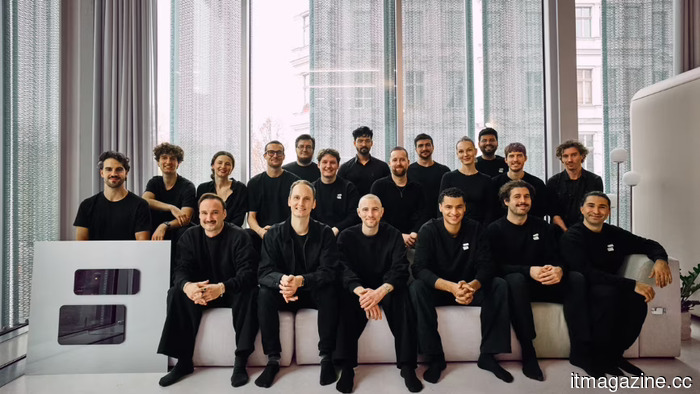 Berlin's Peec AI saw its revenue increase more than twofold to $10 million ARR within six months. Its solution assists brands in appearing in ChatGPT.
The GEO startup secured its Series A funding at a $4M ARR six months back. It is now monitoring $10M, with billboards placed outside competitor offices throughout Berlin.
Berlin's Peec AI saw its revenue increase more than twofold to $10 million ARR within six months. Its solution assists brands in appearing in ChatGPT.
The GEO startup secured its Series A funding at a $4M ARR six months back. It is now monitoring $10M, with billboards placed outside competitor offices throughout Berlin.
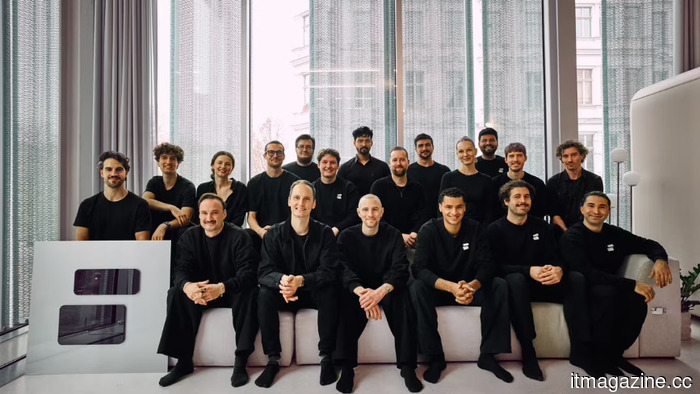 Berlin's Peec AI increased its revenue to $10 million in annual recurring revenue (ARR) in just six months. The company's product assists brands in appearing in ChatGPT.
The GEO startup secured its Series A funding at a $4M ARR six months ago. It currently monitors $10M, with billboards placed near competing offices throughout Berlin.
Berlin's Peec AI increased its revenue to $10 million in annual recurring revenue (ARR) in just six months. The company's product assists brands in appearing in ChatGPT.
The GEO startup secured its Series A funding at a $4M ARR six months ago. It currently monitors $10M, with billboards placed near competing offices throughout Berlin.
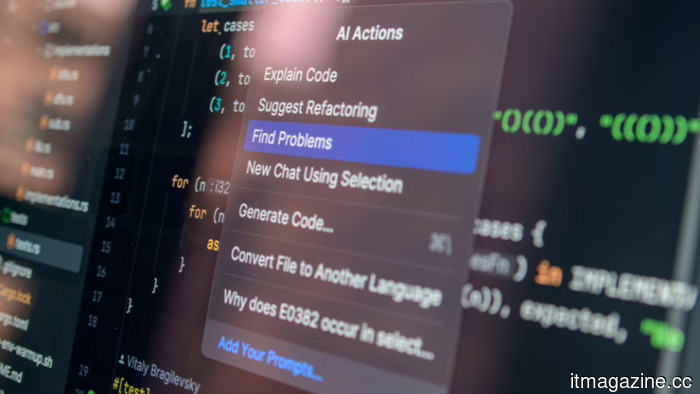 Anthropic's Claude Mythos identified 10,000 critical vulnerabilities within a single month. The patches are unable to keep pace.
The partners of Project Glasswing utilized Claude Mythos to identify 1,094 verified high-severity vulnerabilities in over 1,000 open-source projects. Only 97 of these have been resolved.
Anthropic's Claude Mythos identified 10,000 critical vulnerabilities within a single month. The patches are unable to keep pace.
The partners of Project Glasswing utilized Claude Mythos to identify 1,094 verified high-severity vulnerabilities in over 1,000 open-source projects. Only 97 of these have been resolved.
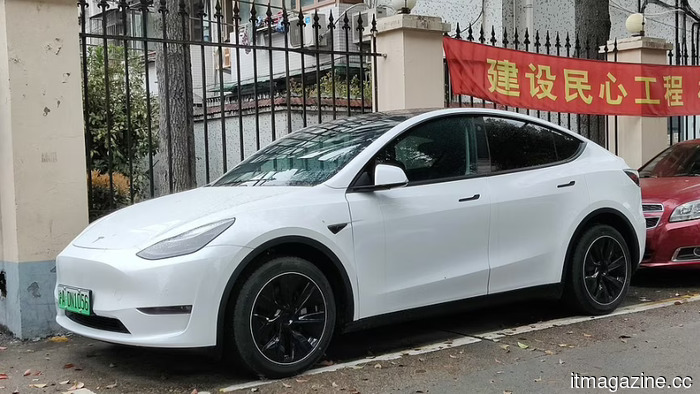 Tesla has finally introduced FSD in China, while its competitors have been offering self-driving vehicles in the country for several years.
Tesla's Full Self-Driving (Supervised) is now available in China, following Musk's visit with Trump to Beijing last week. Meanwhile, Chinese competitors are already providing Level 3 autonomy.
Tesla has finally introduced FSD in China, while its competitors have been offering self-driving vehicles in the country for several years.
Tesla's Full Self-Driving (Supervised) is now available in China, following Musk's visit with Trump to Beijing last week. Meanwhile, Chinese competitors are already providing Level 3 autonomy.
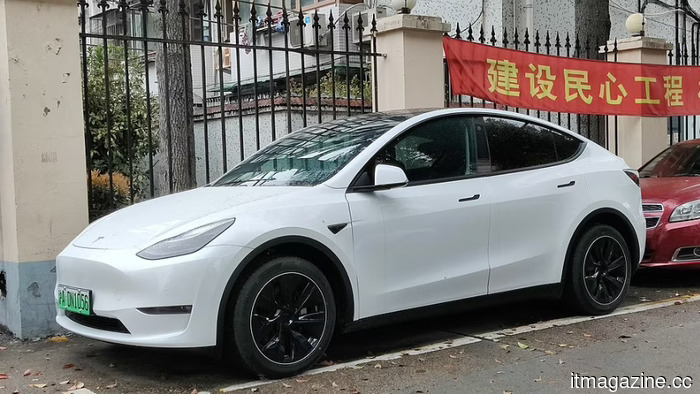 Tesla has finally introduced FSD in China, while its competitors have been offering self-driving cars in the market for several years.
Tesla's FSD (Supervised) has now been introduced in China, just a week after Musk's visit to Beijing with Trump. Competing Chinese companies are already providing Level 3 autonomy.
Corsair has begun to include Chinese DRAM in its DDR5 memory kits. This might lead to a decrease in memory prices.
CXMT chips have been identified within Corsair Vengeance DDR5 modules, as Samsung, SK Hynix, and Micron focus on AI memory instead of consumer PCs.
Tesla has finally introduced FSD in China, while its competitors have been offering self-driving cars in the market for several years.
Tesla's FSD (Supervised) has now been introduced in China, just a week after Musk's visit to Beijing with Trump. Competing Chinese companies are already providing Level 3 autonomy.
Corsair has begun to include Chinese DRAM in its DDR5 memory kits. This might lead to a decrease in memory prices.
CXMT chips have been identified within Corsair Vengeance DDR5 modules, as Samsung, SK Hynix, and Micron focus on AI memory instead of consumer PCs.
SpaceX's IPO documentation uncovers a contradiction in Musk's clean energy stance, as xAI consumes gas while Tesla markets solar energy.
xAI invested $2.8 billion in gas turbines, whereas Tesla markets solar panels. SpaceX's S-1 proposes space-based solar as a solution, but the calculations don’t seem to align just yet.