
According to Sing Tao, Uber has purchased its competitor Fly Taxi in Hong Kong.
Uber has acquired the primary remaining alternative taxi-hailing app in Hong Kong. This acquisition, taking place five months prior to the anticipated implementation of the city's new ride-hailing licenses, solidifies Uber's dominant position before competitors like Didi, Tada, and Amap can leverage the licensing change as an opportunity.
According to a report from Sing Tao Daily referenced by Bloomberg on May 1, Uber is buying Fly Taxi, the main alternative taxi-hailing app in Hong Kong. However, the details of the transaction have not been confirmed independently by either Uber or Fly Taxi, nor by other Western news outlets, and the financial specifics remain undisclosed in the current reports.
Should the deal proceed as outlined by Sing Tao, Uber will strengthen its presence in Hong Kong's taxi-hailing sector ahead of the new licensing framework. Fly Taxi, locally known as "Fly Taxi 的士," emerged as the main alternative to Uber after Uber's acquisition of HKTaxi in 2021. HKTaxi, which had more than 70,000 registered drivers and was the most popular cab-hailing app, was fully integrated into Uber and ceased operations in February 2025, with users redirected to Uber and offered incentives to make the switch.
Fly Taxi gained a significant user base from those commuters who preferred not to transition to Uber, and travel guides have continued to endorse it as the leading alternative.
This acquisition is strategically timed with Hong Kong's impending regulatory changes. The Road Traffic Amendment Bill, which was approved by the Legislative Council on October 15, 2025, introduced the city’s first formal licensing framework for ride-hailing services. Under the new regulations, platform operators will need to secure a license; drivers must possess both personal and vehicle permits; vehicles cannot be older than 12 years; drivers must be at least 21 years old, have held a driving license for a minimum of one year, have no serious traffic violations in the last five years, and pass a specified test. Operating an unlicensed ride-hailing platform post-enforcement will incur penalties, including fines of up to HK$1 million and potentially a year in jail.
Uber’s acquisition of HKTaxi in 2021 was intended as a market consolidation in the metered-taxi space rather than the broader ride-hailing market. The taxi-hailing market in Hong Kong operates distinctly from the private vehicle ride-hailing market, both legally and culturally. The city features around 18,000 metered red taxis and over 70,000 registered taxi drivers, with a strong tradition of street-hailing and dispatch booking that ride-hailing apps have supplemented rather than replaced.
The Fly Taxi acquisition aligns with Uber's broader strategy of securing market position around regulatory shifts. In February 2026, Uber revealed its first cross-border ride-hailing service linking Hong Kong and Macao and reintroduced in-app taxi hailing in Macao after previously withdrawing due to regulatory challenges.
In the same week, Uber announced an expansion of its robotaxi services into Hong Kong, Madrid, Houston, and Zurich, making Hong Kong its first market for robotaxis in Asia. These new services, along with the Macao return and robotaxi expansion, all rely on a regulatory landscape that differs significantly from the one Uber has navigated since 2014.
Additionally, this trend is evident in Uber's international dealings. In Turkey, Uber finalized an agreement in early 2026 to acquire Getir’s delivery services, strengthening its position alongside Trendyol Go in a market where it had previously faced multiple competitors. Uber's transactions, such as the $1.25 billion deal with Rivian for robotaxis, a $300 million commitment to Wayve, and a pilot project involving Wayve and Nissan in Tokyo, illustrate a strategy of securing market positioning ahead of the shift to autonomy rather than waiting for that transition. The Fly Taxi acquisition represents a similar approach in response to regulatory rather than technological changes.
Neither Uber nor Fly Taxi has publicly confirmed the acquisition as of yet. Details regarding the financial terms, integration timeline, and whether Fly Taxi will continue as an independent brand or be integrated into Uber, following the HKTaxi model, have not been disclosed. If the deal goes through as reported by Sing Tao, the landscape of Hong Kong’s taxi-hailing market in October 2026, when the new licensing regulations are set to take effect, will be significantly altered from what analysts had previously anticipated.
Other articles
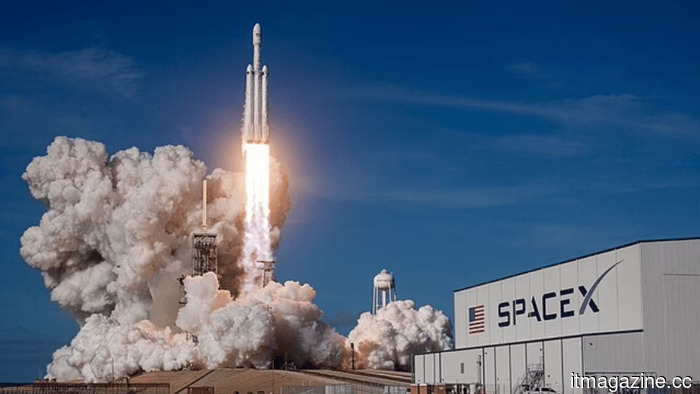 SpaceX has invested over $15 billion in Starship.
SpaceX has invested over $15 billion in the development of Starship and is aiming for a launch frequency similar to that of airlines.
SpaceX has invested over $15 billion in Starship.
SpaceX has invested over $15 billion in the development of Starship and is aiming for a launch frequency similar to that of airlines.
 The 6,000 mAh battery in the Razr Fold could be a cause for concern for Samsung and Google: here’s the reason.
Samsung and Google have dominated the U.S. foldable market for years, while subtly overlooking its most significant flaw. Now, Motorola has entered the scene and made that flaw difficult to overlook.
The 6,000 mAh battery in the Razr Fold could be a cause for concern for Samsung and Google: here’s the reason.
Samsung and Google have dominated the U.S. foldable market for years, while subtly overlooking its most significant flaw. Now, Motorola has entered the scene and made that flaw difficult to overlook.
 Reddit's Q1 revenue increases by 69% to reach $663 million, while its shares rise by 9%.
Reddit announced a revenue of $663 million for the first quarter of 2026, representing a 69% increase year-over-year. The results exceeded expectations in all categories and the company raised its guidance for the second quarter above consensus estimates.
Reddit's Q1 revenue increases by 69% to reach $663 million, while its shares rise by 9%.
Reddit announced a revenue of $663 million for the first quarter of 2026, representing a 69% increase year-over-year. The results exceeded expectations in all categories and the company raised its guidance for the second quarter above consensus estimates.
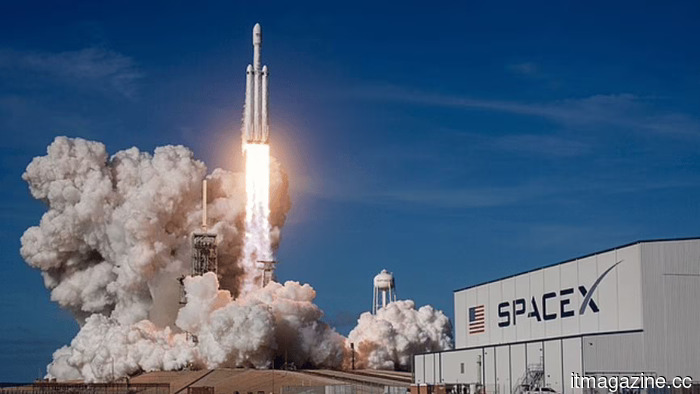 SpaceX has invested over $15 billion in the Starship project.
SpaceX has invested over $15 billion in the development of Starship and is aiming for a launch frequency similar to that of airlines.
SpaceX has invested over $15 billion in the Starship project.
SpaceX has invested over $15 billion in the development of Starship and is aiming for a launch frequency similar to that of airlines.
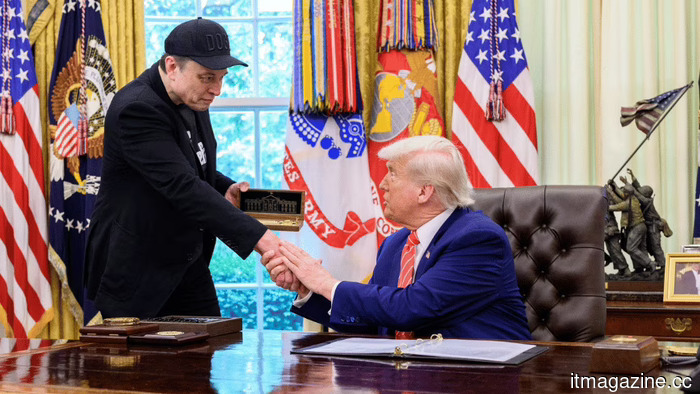 US debt surpasses 100% of GDP as Big Tech's $690 billion investment in AI vies for the same capital markets.
US debt reaches 100% of GDP for the first time since World War II, with interest payments exceeding $1 trillion. Big Tech's capital expenditure on AI surpasses $690 billion. Both are funded from the same debt source.
US debt surpasses 100% of GDP as Big Tech's $690 billion investment in AI vies for the same capital markets.
US debt reaches 100% of GDP for the first time since World War II, with interest payments exceeding $1 trillion. Big Tech's capital expenditure on AI surpasses $690 billion. Both are funded from the same debt source.
 McKinsey's latest AI report contends that the benefits to productivity are genuine but depend on certain conditions.
McKinsey's recent report suggests that many companies are speeding up their current activities instead of rethinking their workflows to integrate AI.
McKinsey's latest AI report contends that the benefits to productivity are genuine but depend on certain conditions.
McKinsey's recent report suggests that many companies are speeding up their current activities instead of rethinking their workflows to integrate AI.
According to Sing Tao, Uber has purchased its competitor Fly Taxi in Hong Kong.
Sing Tao Daily reports that Uber has purchased Fly Taxi in Hong Kong. If the deal is verified, it eliminates the primary competitor for metered-taxi-hailing apps from the market.