
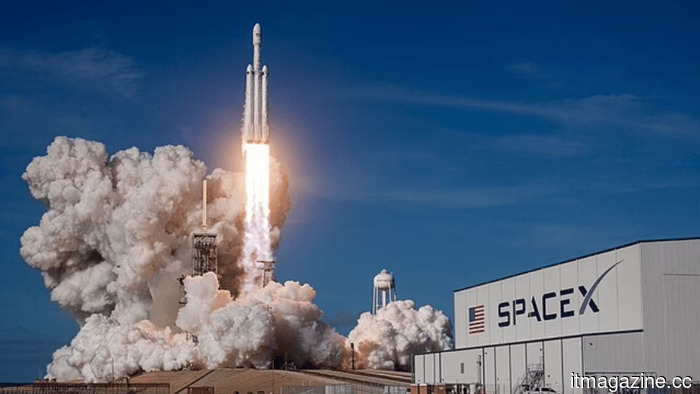
SpaceX has invested over $15 billion in Starship.
SpaceX has allocated over $15 billion to develop its Starship megarocket and aims for a launch frequency that mimics an airline schedule, rather than a governmental approach, according to a Reuters report on Friday, which cites the company’s confidential pre-IPO prospectus.
This expenditure is the first quantification of the comprehensive costs associated with the development program, which forms the speculative two-thirds of SpaceX's $1.75 trillion IPO valuation target.
The prospectus, the subject of Reuters’ coverage over the past week prior to the public S-1 filing, reveals that SpaceX’s capital expenditures increased nearly fivefold, rising from $5.6 billion in 2024 to $20.7 billion in 2025.
Of the 2025 capital expenditures, $12.7 billion was allocated to AI projects, surpassing investment in the company’s core space and satellite operations. This spending shift resulted in a change from a net profit of $791 million in 2024 to a net loss of $4.94 billion in 2025, primarily driven not by Starship, which has consistently been a multi-billion-dollar burden for years, but by the acquisition of xAI in February 2026 and the expansion of AI infrastructure connected to Starlink that the combined entity now operates.
Starlink continues to be the financial powerhouse, generating $11.4 billion in revenue and $4.4 billion in operating profit in 2025. Total revenue for SpaceX in 2025 is estimated to be around $15–$16 billion.
By the end of 2025, Starlink had 9 million subscribers, with Quilty Space projecting growth to 16.8 million by the close of 2026. In 2026, total SpaceX revenue is anticipated to approach $20 billion, with EBITDA of $14 billion.
The concept of ‘airline-like rocketry’ represents Musk’s enduring vision for Starship: launching on a daily or hourly basis, with quick turnarounds between flights, vehicles being reused dozens or hundreds of times, and launch costs per kilogram decreasing drastically rather than marginally.
Currently, sending a kilogram to orbit via Falcon 9 costs commercial clients between $2,700 and $3,000, which is the lowest market price by a significant margin. Starship aims for a target cost of $10–$100 per kilogram, representing a potential 30- to 300-fold reduction.
Achieving that target relies on one key assumption: that a Starship vehicle, which costs about $90 million to build, can fly 100 times, thereby distributing the construction cost across all missions.
The feasibility of this flight frequency will be evaluated through Flight 12, the first launch of Starship Version 3. On April 14, SpaceX successfully executed the first full static fire of Booster 19, with all 33 Raptor 3 engines igniting simultaneously, producing approximately 9,240 tonnes of thrust, more than any launch vehicle in history.
The inaugural flight of Version 3 is planned for early to mid-May 2026, right before the IPO roadshow commencing the week of June 8. The Federal Aviation Administration has permitted SpaceX to ramp up its launch frequency at Starbase from 5 to a maximum of 25 launches per year starting in May 2025. A separate authorization in February 2026 allows for up to 44 Starship-Super Heavy launches per annum at Pad LC-39A in Florida.
SpaceX’s track record with launch frequency promises has been mixed. In 2025, the company conducted 5 Starship test flights against a goal of 25, mirroring the proportional shortfall experienced by Falcon Heavy in 2013.
Conversely, operational programs have performed more closely to expectations, with 170 Falcon launches in 2025 aligning closely with the company’s public goals, and Starlink subscriber growth remaining within about 10% of projections since 2022. Falcon 9 achieved 32 flights with a single booster.
The track record for New Market Pitch’s milestone achievements is consistent: SpaceX typically delivers on hardware engineering goals, albeit two to five years later than anticipated, while operational initiatives track within roughly 10% of targets once a vehicle reaches serial production. Currently, Starship fits the former category.
The Starship spending revelation is part of a Reuters series about the SpaceX prospectus, which serves as a public version of an investor roadshow document that has not yet officially been distributed by the company.
The now-public S-1 also confirms that Musk owns about 42% of SpaceX equity but wields approximately 79% of the voting power through a dual-class share structure. The IPO seeks a $1.75 trillion valuation and aims to raise up to $75 billion, more than 2.5 times Saudi Aramco’s record
Other articles
 McKinsey's latest AI report claims that the productivity benefits are genuine but contingent.
McKinsey's latest report contends that the majority of companies are speeding up their current tasks instead of rethinking their workflows in relation to AI.
McKinsey's latest AI report claims that the productivity benefits are genuine but contingent.
McKinsey's latest report contends that the majority of companies are speeding up their current tasks instead of rethinking their workflows in relation to AI.
 McKinsey's latest AI report claims that the productivity benefits are genuine but dependent on certain conditions.
McKinsey's latest report suggests that the majority of companies are speeding up their current efforts instead of rethinking their workflows to incorporate AI.
According to Sing Tao, Uber has purchased its competitor Fly Taxi in Hong Kong.
Sing Tao Daily reports that Uber has purchased Fly Taxi in Hong Kong. If the deal is verified, it eliminates the primary competitor for metered-taxi-hailing apps from the market.
McKinsey's latest AI report claims that the productivity benefits are genuine but dependent on certain conditions.
McKinsey's latest report suggests that the majority of companies are speeding up their current efforts instead of rethinking their workflows to incorporate AI.
According to Sing Tao, Uber has purchased its competitor Fly Taxi in Hong Kong.
Sing Tao Daily reports that Uber has purchased Fly Taxi in Hong Kong. If the deal is verified, it eliminates the primary competitor for metered-taxi-hailing apps from the market.
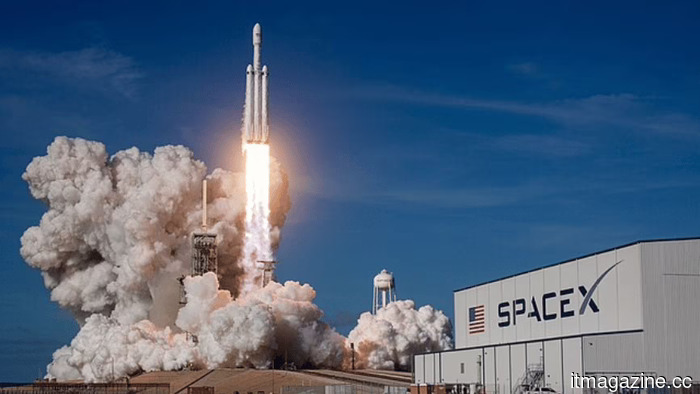 SpaceX has invested over $15 billion in the Starship program.
SpaceX has invested over $15 billion in the development of Starship and aims for a launch frequency similar to that of airlines.
SpaceX has invested over $15 billion in the Starship program.
SpaceX has invested over $15 billion in the development of Starship and aims for a launch frequency similar to that of airlines.
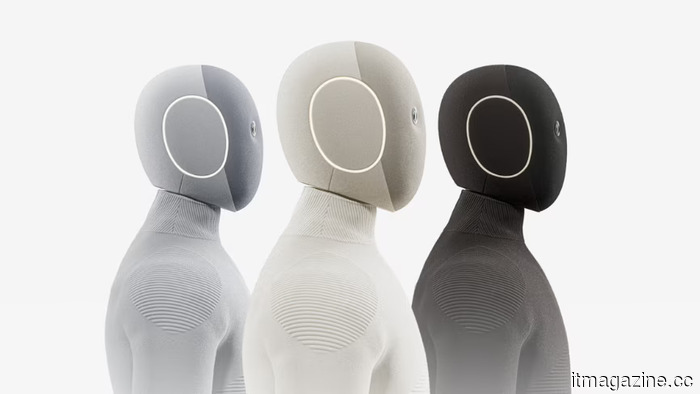 1X has begun delivering NEO humanoid robots to households in the US.
Backed by OpenAI, 1X has launched a factory in Hayward, California, with plans to manufacture 10,000 NEO home humanoid robots in the first year, increasing production to over 100,000 by the close of 2027.
1X has begun delivering NEO humanoid robots to households in the US.
Backed by OpenAI, 1X has launched a factory in Hayward, California, with plans to manufacture 10,000 NEO home humanoid robots in the first year, increasing production to over 100,000 by the close of 2027.
 McKinsey's latest AI report contends that the benefits to productivity are genuine but depend on certain conditions.
McKinsey's recent report suggests that many companies are speeding up their current activities instead of rethinking their workflows to integrate AI.
McKinsey's latest AI report contends that the benefits to productivity are genuine but depend on certain conditions.
McKinsey's recent report suggests that many companies are speeding up their current activities instead of rethinking their workflows to integrate AI.
SpaceX has invested over $15 billion in Starship.
SpaceX has invested over $15 billion in the development of Starship and is aiming for a launch frequency similar to that of airlines.