
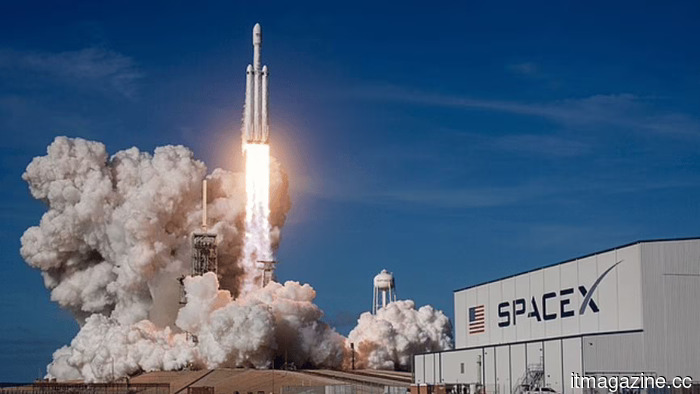
SpaceX has invested over $15 billion in the Starship project.
SpaceX has invested over $15 billion in the development of its Starship megarocket and is aiming for a launch frequency that aligns more with an airline service than a government program, according to a report from Reuters on Friday, which references the company’s confidential pre-IPO prospectus. This figure provides a first-time estimate of the total cost for the development program that forms the basis for the more speculative two-thirds of SpaceX’s projected $1.75 trillion IPO valuation.
The prospectus, which Reuters has been covering in the lead-up to the public S-1 filing, reveals that SpaceX's capital expenditures skyrocketed nearly five times from $5.6 billion in 2024 to $20.7 billion in 2025. Out of the 2025 budget, $12.7 billion was allocated to AI projects, surpassing spending on the company’s primary space and satellite operations. Consequently, there was a shift from a net profit of $791 million in 2024 to a net loss of $4.94 billion in 2025, a change primarily influenced not by Starship itself— which has consistently incurred multi-billion-dollar costs— but due to the acquisition of xAI in February 2026 and the establishment of AI infrastructure related to Starlink that the merged entity now relies on.
Starlink continues to be the financial driver for SpaceX, generating $11.4 billion in revenue and $4.4 billion in operating profit in 2025. The total revenue for SpaceX that year is reported to be around $15–$16 billion. By the end of 2025, Starlink had amassed 9 million subscribers, with Quilty Space forecasting growth to 16.8 million by the close of 2026, alongside projected total SpaceX revenue in 2026 nearing $20 billion with $14 billion in EBITDA.
Musk's vision for 'airline-like rocketry' embodies his ambition for Starship to enable launches on a daily or hourly basis, featuring quick turnarounds, extensive vehicle reuse measured in dozens or hundreds of cycles, and dramatically lower launch costs per kilogram. Currently, the cost to send one kilogram into orbit using a Falcon 9 is between $2,700 and $3,000, already making it the lowest on the market. Starship aims for a target of $10–$100 per kilogram, representing a 30- to 300-fold decrease.
Achieving this goal hinges on a key assumption: that a Starship vehicle costing around $90 million can fly 100 times, thereby distributing the construction cost across all 100 missions. The viability of this flight rate will be addressed by Flight 12, the first launch of Starship Version 3. SpaceX performed its first complete static fire of Booster 19 with all 33 Raptor 3 engines firing together on April 14, producing about 9,240 tonnes of thrust—more than any historical launch vehicle. The inaugural V3 flight is scheduled for early to mid-May 2026, just ahead of the IPO roadshow set for the week of June 8. The Federal Aviation Administration granted SpaceX permission to ramp up its launch frequency at Starbase from 5 to as many as 25 launches annually starting in May 2025, alongside another authorization in February 2026 allowing for up to 44 Starship-Super Heavy launches per year at Florida’s Pad LC-39A.
While SpaceX has a mixed history regarding its launch cadence promises, it succeeded in attaining 170 Falcon launches in 2025 against publicly stated objectives. Starlink subscriber growth has remained within about 10% of projections since 2022, and the Falcon 9 has achieved 32 flights on a single booster. The established pattern indicates that while SpaceX typically meets hardware engineering goals, they're often delivered two to five years belatedly, and operational programs, once a vehicle is in serial production, usually align within roughly 10% of targets. Currently, Starship falls into the former category.
The context surrounding the IPO emphasizes the significance of the disclosed Starship expenditures within a Reuters series focused on the SpaceX prospectus, effectively serving as the public version of a document for potential investors not yet formally distributed by SpaceX. The public S-1 clarifies that Musk owns about 42% of SpaceX equity yet commands roughly 79% of voting rights due to a dual-class share structure. The IPO seeks a valuation of $1.75 trillion and aims to raise as much as $75 billion, eclipsing Saudi Aramco's record of $29.4 billion from 2019 by more than 2.5 times. Twenty-one banks are managing the offering, internally referred to as Project Apex, with a target Nasdaq listing in June and an atypical 30% allocation for retail investors compared to the standard 5–10%.
The $15 billion figure is crucial in solidifying the
Other articles
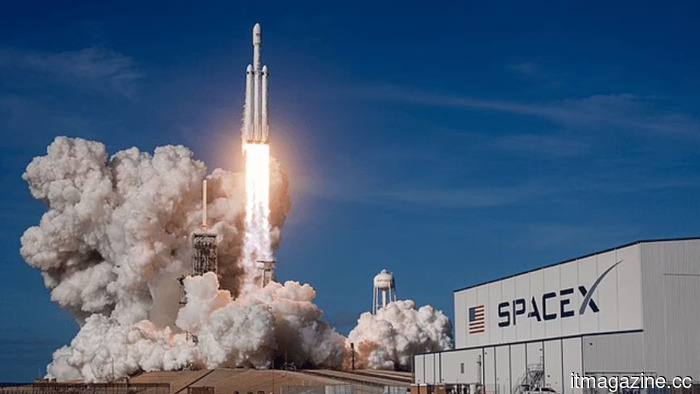 SpaceX has invested over $15 billion in the Starship program.
SpaceX has invested over $15 billion in the development of Starship and is aiming for a launch frequency similar to that of airlines.
SpaceX has invested over $15 billion in the Starship program.
SpaceX has invested over $15 billion in the development of Starship and is aiming for a launch frequency similar to that of airlines.
 McKinsey's latest AI report contends that the benefits to productivity are genuine but depend on certain conditions.
McKinsey's recent report suggests that many companies are speeding up their current activities instead of rethinking their workflows to integrate AI.
McKinsey's latest AI report contends that the benefits to productivity are genuine but depend on certain conditions.
McKinsey's recent report suggests that many companies are speeding up their current activities instead of rethinking their workflows to integrate AI.
 The 6,000 mAh battery in the Razr Fold should be a concern for Samsung and Google: Here’s the reason.
Samsung and Google have dominated the U.S. foldable market for years, but have subtly overlooked its most significant drawback. Motorola has now entered the scene and made that flaw difficult to overlook.
The 6,000 mAh battery in the Razr Fold should be a concern for Samsung and Google: Here’s the reason.
Samsung and Google have dominated the U.S. foldable market for years, but have subtly overlooked its most significant drawback. Motorola has now entered the scene and made that flaw difficult to overlook.
 Zuckerberg informs Meta employees that the layoffs are related to capital expenditures, rather than AI efficiency.
Mark Zuckerberg informed Meta employees on Thursday that the layoffs on May 20 are motivated by investments in AI rather than increased productivity from AI.
Zuckerberg informs Meta employees that the layoffs are related to capital expenditures, rather than AI efficiency.
Mark Zuckerberg informed Meta employees on Thursday that the layoffs on May 20 are motivated by investments in AI rather than increased productivity from AI.
 McKinsey's latest AI report claims that the benefits of productivity are genuine but dependent on specific factors.
McKinsey's latest report suggests that the majority of companies are speeding up their current processes instead of restructuring workflows to incorporate AI.
McKinsey's latest AI report claims that the benefits of productivity are genuine but dependent on specific factors.
McKinsey's latest report suggests that the majority of companies are speeding up their current processes instead of restructuring workflows to incorporate AI.
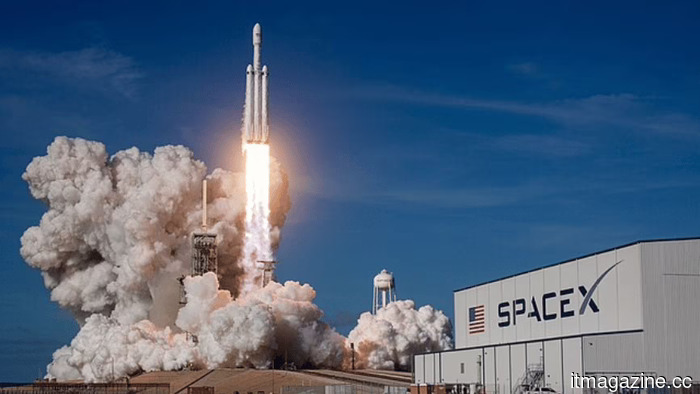 SpaceX has invested over $15 billion in the Starship program.
SpaceX has invested over $15 billion in the development of Starship and aims for a launch frequency similar to that of airlines.
SpaceX has invested over $15 billion in the Starship program.
SpaceX has invested over $15 billion in the development of Starship and aims for a launch frequency similar to that of airlines.
SpaceX has invested over $15 billion in the Starship project.
SpaceX has invested over $15 billion in the development of Starship and is aiming for a launch frequency similar to that of airlines.