

US debt surpasses 100% of GDP as Big Tech's $690 billion investment in AI vies for the same capital markets.
**Summary**
U.S. public debt has now surpassed 100% of GDP for the first time since World War II, reaching 100.2% at the end of March. The annual interest payment of $1 trillion has exceeded defense spending. This milestone coincides with Big Tech planning to invest $660 to $690 billion in AI capital expenditures for 2026, funded through the same debt markets that are absorbing trillions in new Treasury issuance. This raises concerns about how long global capital markets can support both government deficits and the infrastructure demands of the technology sector.
As of the end of March, the U.S. government’s debt held by the public stood at $31.27 trillion, while the nominal GDP for the preceding year was $31.22 trillion, resulting in a ratio of 100.2%, the highest since the post-World War II period. The wartime debt peak was 106% in 1946, during which the country demobilized millions of soldiers and initiated the interstate highway system. Maya MacGuineas, president of the Committee for a Responsible Federal Budget, highlighted that the debt from 1946 arose from a significant global conflict, whereas today's debt is a consequence of a bipartisan failure to make difficult decisions. The total gross national debt exceeds $39 trillion, representing about $114,000 per American or $289,000 per household. However, what is more pressing is the interest payments: the federal government is expected to spend around $1 trillion on net interest in fiscal 2026, surpassing the entire defense budget.
The Congressional Budget Office (CBO) warned in February that if current trends continue, public debt will reach 108% of GDP by 2030 and rise to 120% by 2036. The projected deficit for fiscal 2026 is $1.9 trillion, or 5.8% of GDP, with expectations that it will grow to $3.1 trillion by 2036. The government currently spends $1.33 for every dollar it earns. Net interest payments have grown from $375 billion in fiscal 2019 to $971 billion in fiscal 2025, with predictions that they will soar to $2.1 trillion annually by 2036. Interest has already surpassed national defense and Medicare as the second-largest federal expenditure, trailing only Social Security. These forecasts are based on current laws remaining unchanged.
The One Big Beautiful Bill Act, passed by the House in April, is anticipated to worsen the situation before a viable solution improves it. The CBO estimates the legislation will add around $2.4 trillion to the deficit over the next decade before interest, and $3 trillion when it is included. This bill extends tax cuts from 2017, adds new deductions, and reduces Medicaid spending and other programs. While tariff revenue from trade policies is expected to balance approximately $3 trillion in tax revenue losses over the same timeframe, the CBO projects that these tariffs will also increase inflation from 2026 to 2029, which will raise the government's borrowing costs for the debt they were intended to alleviate. If the bill's temporary provisions become permanent and several tariffs are invalidated by the Supreme Court, the CRFB estimates that debt could reach 131% of GDP by 2034. Proponents of the bill argue it will spur economic growth sufficient to cover its costs, but the CBO disagrees.
The crossing of the 100% debt-to-GDP threshold coincides with a significant capital-intensive infrastructure expansion by the private sector, the likes of which hasn’t been seen since electrification. The five largest U.S. cloud and AI companies—Microsoft, Alphabet, Amazon, Meta, and Oracle—plan to invest between $660 billion and $690 billion in capital expenditures in 2026, primarily in data centers, GPUs, and AI networking. However, this investment is not entirely funded by cash flow. Oracle secured $16.3 billion for a single data center in Michigan after U.S. banks withdrew, requiring PIMCO, the world’s biggest bond fund, to back $10 billion of that debt. Meta has committed $35 billion to CoreWeave, an AI cloud provider, which has accumulated around $30 billion in debt, much of it at junk bond rates. CoreWeave tapped the U.S. high-yield market twice in one week in April, raising $1 billion in new notes at a 9.75% interest rate. This AI buildout is relying on debt markets that are also absorbing trillions in new Treasury securities, creating a real competition for capital. The International Monetary Fund warned in April that the spike in Treasury supply is compressing the “convenience yield,” which is the safety and liquidity premium historically associated with U.S. government bonds. Recently, this premium has turned negative for the first time.
For the technology sector, the implications are significant. AI infrastructure requires long-term financing: data centers take
Other articles
 McKinsey's latest AI report claims that the productivity benefits are genuine but contingent.
McKinsey's latest report contends that the majority of companies are speeding up their current tasks instead of rethinking their workflows in relation to AI.
McKinsey's latest AI report claims that the productivity benefits are genuine but contingent.
McKinsey's latest report contends that the majority of companies are speeding up their current tasks instead of rethinking their workflows in relation to AI.
 McKinsey's latest AI report contends that the benefits to productivity are genuine but depend on certain conditions.
McKinsey's recent report suggests that many companies are speeding up their current activities instead of rethinking their workflows to integrate AI.
McKinsey's latest AI report contends that the benefits to productivity are genuine but depend on certain conditions.
McKinsey's recent report suggests that many companies are speeding up their current activities instead of rethinking their workflows to integrate AI.
 The 6,000 mAh battery in the Razr Fold could be a cause for concern for Samsung and Google: here’s the reason.
Samsung and Google have dominated the U.S. foldable market for years, while subtly overlooking its most significant flaw. Now, Motorola has entered the scene and made that flaw difficult to overlook.
The 6,000 mAh battery in the Razr Fold could be a cause for concern for Samsung and Google: here’s the reason.
Samsung and Google have dominated the U.S. foldable market for years, while subtly overlooking its most significant flaw. Now, Motorola has entered the scene and made that flaw difficult to overlook.
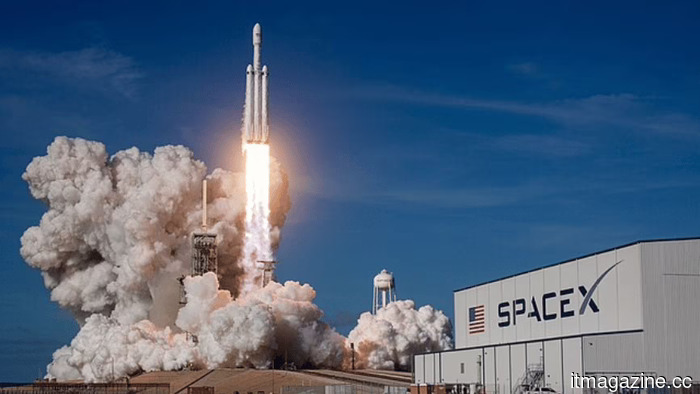 SpaceX has invested over $15 billion in the Starship program.
SpaceX has invested over $15 billion in the development of Starship and aims for a launch frequency similar to that of airlines.
SpaceX has invested over $15 billion in the Starship program.
SpaceX has invested over $15 billion in the development of Starship and aims for a launch frequency similar to that of airlines.
 Reddit's revenue for Q1 increases by 69% to $663 million, and its shares rise by 9%.
Reddit announced that its revenue for the first quarter of 2026 reached $663 million, reflecting a 69% year-over-year increase. The results exceeded expectations in all areas, and the company has elevated its guidance for the second quarter above consensus.
Reddit's revenue for Q1 increases by 69% to $663 million, and its shares rise by 9%.
Reddit announced that its revenue for the first quarter of 2026 reached $663 million, reflecting a 69% year-over-year increase. The results exceeded expectations in all areas, and the company has elevated its guidance for the second quarter above consensus.
 Meta terminates its contract with Sama following reports from Kenyan workers who encountered intimate videos recorded by users of Ray-Ban smart glasses.
After reporting to journalists that they witnessed users engaging in sexual acts and undressing in footage from Meta smart glasses, 1,108 Kenyan workers were terminated from their positions. This development prompted reactions from regulators and legal professionals.
Meta terminates its contract with Sama following reports from Kenyan workers who encountered intimate videos recorded by users of Ray-Ban smart glasses.
After reporting to journalists that they witnessed users engaging in sexual acts and undressing in footage from Meta smart glasses, 1,108 Kenyan workers were terminated from their positions. This development prompted reactions from regulators and legal professionals.
US debt surpasses 100% of GDP as Big Tech's $690 billion investment in AI vies for the same capital markets.
US debt reaches 100% of GDP for the first time since World War II, with interest payments exceeding $1 trillion. Big Tech's capital expenditure on AI surpasses $690 billion. Both are funded from the same debt source.