

McKinsey's latest AI report contends that the benefits to productivity are genuine but depend on certain conditions.
The firm’s latest report, ‘AI productivity gains and the performance paradox,’ concludes that most existing AI applications simply ‘enhance current work’ without altering workflows. This finding coincides with McKinsey's goal of achieving 1:1 parity between its 40,000 human consultants and 40,000 AI agents by the end of the year.
McKinsey's strategy practice published an analysis highlighting the corporate sector’s struggle with what they call an ‘AI paradox’: while the adoption of generative and agentic AI is on the rise and capital investments are increasing, ‘consistent improvements in performance remain elusive.’
The report asserts that most modern AI applications act as ‘tools that expedite existing tasks’ but ‘mostly retain the original workflows.’ It suggests that more significant productivity improvements will be realized only when organizations redesign their processes around AI instead of merely adding it to existing systems.
The report draws a historical comparison to the advent of electricity in factories. The authors state, “When electricity was first introduced, many companies merely substituted the steam engine with electric motors, gaining efficiency yet maintaining the same line-shaft configurations.” They note that real breakthroughs came later when smaller motors allowed managers to rearrange machines to optimize workflows, ultimately leading to entire factories being redesigned around electrical systems, thus creating new operating models.
According to McKinsey, general-purpose technologies “seldom generate value in a single wave.”
The analysis offers three recommendations for executives: evaluate how AI will transform industry profit margins; establish or enhance AI-driven competitive advantages; and convert speed into a structural benefit.
The report cites real-time AI fraud detection by JPMorgan Chase, BMW’s computer vision quality inspection, and Siemens’ AI-coordinated predictive maintenance as examples of applications that merely expedite existing work. These are contrasted with deeper process redesigns that advance companies past what McKinsey has referred to as the ‘gen AI paradox.’
The report comes at a time when the disparity between AI investments and tangible returns has become increasingly apparent. The Federal Reserve Bank of St. Louis reported a 1.9% excess cumulative productivity growth since the launch of ChatGPT in November 2022, a notable figure yet still below the levels needed to justify ongoing AI capital expenditures.
JPMorgan’s capex analysis warned that $650 billion in annual revenue would be required ‘indefinitely’ to achieve a 10% return on current AI infrastructure investments. This situation calls to mind the late-1990s telecom fiber buildout, where infrastructure was developed, but revenue did not grow quickly enough, leading to losses for investors.
Research from MIT Media Lab indicates that 95% of organizations see no measurable returns from adopting AI. Deloitte’s 2026 ‘State of AI in the Enterprise’ report, based on a survey of 3,235 leaders from the director to C-suite level, found that while 66% report productivity gains from AI, only 20% see revenue growth, and just 34% are utilizing AI to significantly transform products or processes.
PwC’s 2026 Global CEO Survey, which included 4,454 CEOs across 95 countries, revealed that 56% have experienced ‘no benefits’ from their AI investments, with only 12% reporting AI contributing to both revenue growth and cost reductions. Research from Workday in 2026 found that 37-40% of the time that AI is purportedly saving is spent on reviewing, correcting, and verifying AI-generated output.
Greg Brockman, president of OpenAI, stated that AI is now responsible for writing 80% of the code at OpenAI. This aligns with a February 2026 NBER study indicating that 80% of companies actively using AI report no productivity gains at all.
The overall landscape is complicated by a significant variance in expert projections large enough to make the question of ‘is AI working’ unanswerable based on public data alone. McKinsey had previously claimed that AI could add $4.4 trillion to the global economy, while Nobel laureate Daron Acemoglu anticipates a ‘modest 0.5% productivity gain over the next decade.’ The difference between these estimates—up to a hundredfold—is the gap that influences every decision regarding AI capital allocation in enterprises.
What makes McKinsey’s skeptical viewpoint particularly compelling is its own concurrent deployment of AI. CEO Bob Sternfels mentioned at CES 2026 that the firm operates 25,000 AI agents alongside its 40,000 human consultants, aiming to achieve 1:1 parity with 40,000 AI agents by year-end.
Last year, McKinsey saved 1.5 million hours in research and synthesis work, while back-office productivity increased by 10% with 25% fewer employees. Client-facing roles such as engagement managers, senior consultants, and strategic advisors grew by 25%, while roles like research analysts, data processors, and administrative support saw a reduction of the same
Other articles
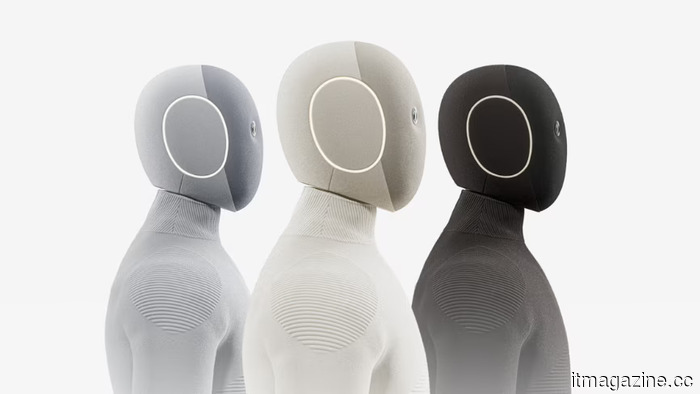 1X has begun delivering NEO humanoid robots to households in the US.
Backed by OpenAI, 1X has launched a factory in Hayward, California, with plans to manufacture 10,000 NEO home humanoid robots in the first year, increasing production to over 100,000 by the close of 2027.
1X has begun delivering NEO humanoid robots to households in the US.
Backed by OpenAI, 1X has launched a factory in Hayward, California, with plans to manufacture 10,000 NEO home humanoid robots in the first year, increasing production to over 100,000 by the close of 2027.
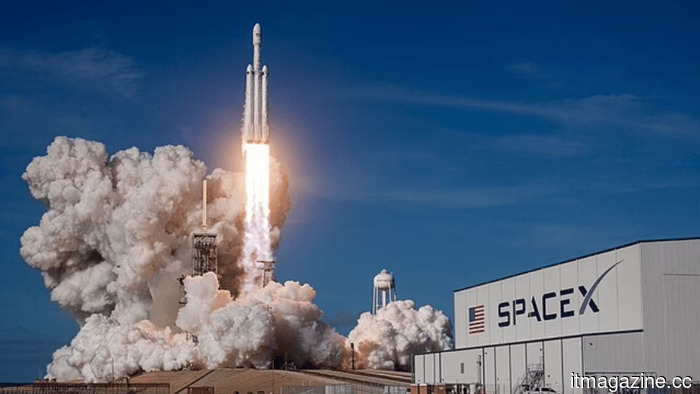 SpaceX has invested over $15 billion in Starship.
SpaceX has invested over $15 billion in the development of Starship and is aiming for a launch frequency similar to that of airlines.
SpaceX has invested over $15 billion in Starship.
SpaceX has invested over $15 billion in the development of Starship and is aiming for a launch frequency similar to that of airlines.
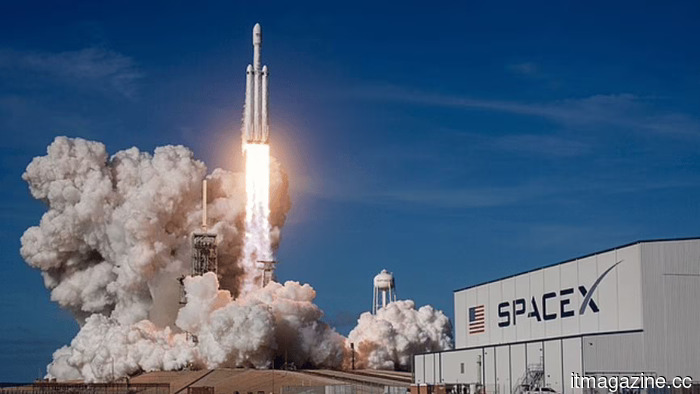 SpaceX has invested over $15 billion in the Starship project.
SpaceX has invested over $15 billion in the development of Starship and is aiming for a launch frequency similar to that of airlines.
SpaceX has invested over $15 billion in the Starship project.
SpaceX has invested over $15 billion in the development of Starship and is aiming for a launch frequency similar to that of airlines.
 Reddit's Q1 revenue increases by 69% to reach $663 million, while its shares rise by 9%.
Reddit announced a revenue of $663 million for the first quarter of 2026, representing a 69% increase year-over-year. The results exceeded expectations in all categories and the company raised its guidance for the second quarter above consensus estimates.
Reddit's Q1 revenue increases by 69% to reach $663 million, while its shares rise by 9%.
Reddit announced a revenue of $663 million for the first quarter of 2026, representing a 69% increase year-over-year. The results exceeded expectations in all categories and the company raised its guidance for the second quarter above consensus estimates.
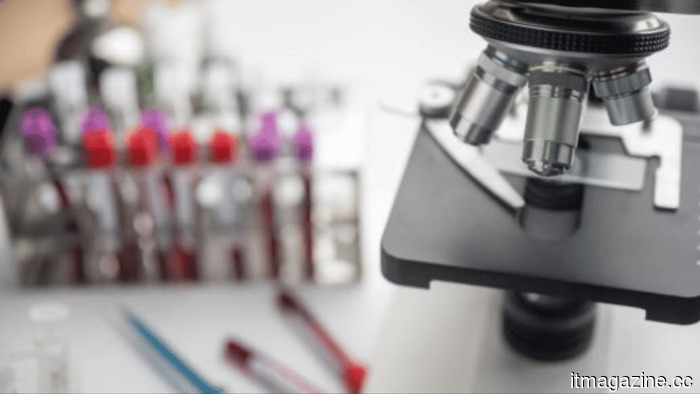 NYBCe and the Chan Zuckerberg Biohub are partnering to develop an iPSC platform derived from cord blood for the purposes of regenerative medicine.
NYBCe and CZ Biohub will generate iPSC lines from immune cells found in cord blood, establishing shared resources that are widely compatible for applications in cell therapy, disease modeling, and AI-based drug development.
NYBCe and the Chan Zuckerberg Biohub are partnering to develop an iPSC platform derived from cord blood for the purposes of regenerative medicine.
NYBCe and CZ Biohub will generate iPSC lines from immune cells found in cord blood, establishing shared resources that are widely compatible for applications in cell therapy, disease modeling, and AI-based drug development.
 NYBCe and Chan Zuckerberg Biohub have teamed up to develop an iPSC platform using cord blood for regenerative medicine.
NYBCe and CZ Biohub will obtain iPSC lines from the immune cells of cord blood, generating shared resources that are broadly compatible for cell therapy, disease modeling, and AI-assisted drug development.
NYBCe and Chan Zuckerberg Biohub have teamed up to develop an iPSC platform using cord blood for regenerative medicine.
NYBCe and CZ Biohub will obtain iPSC lines from the immune cells of cord blood, generating shared resources that are broadly compatible for cell therapy, disease modeling, and AI-assisted drug development.
McKinsey's latest AI report contends that the benefits to productivity are genuine but depend on certain conditions.
McKinsey's recent report suggests that many companies are speeding up their current activities instead of rethinking their workflows to integrate AI.