
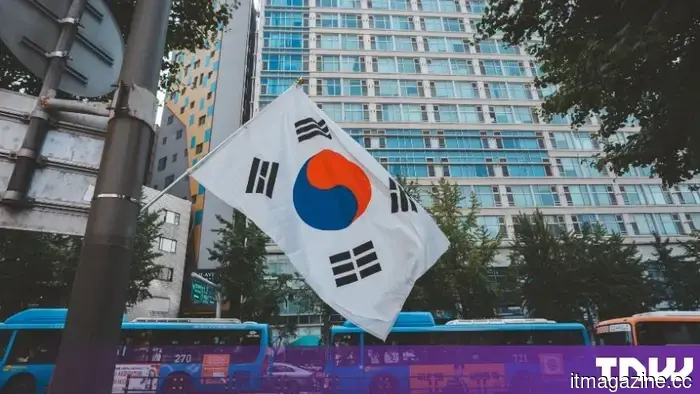
South Korea confirms discussions regarding chip investments with the US as the threat of tariffs intensifies.
South Korea secured tariff protections for its semiconductor manufacturers, while the U.S. is advocating for American factories. Investment in semiconductors is now intertwined with broader discussions between the two nations, as confirmed by a presidential official in Seoul. This confirmation was reported by Reuters, following signals from Washington regarding plans for targeted tariffs on semiconductor imports.
Howard Lutnick succinctly articulated the U.S. stance: “If you don’t build here, expect to pay to enter the greatest market in the world,” stated the commerce secretary.
Seoul believed this issue had already been addressed. Under the agreement made between the two presidents, South Korea agreed to invest $350bn into U.S. manufacturing in exchange for tariff terms that would be "no less favorable" than those offered to competitors with similar chip trading volumes.
This clause is the essence of the disagreement. It guarantees equal treatment rather than exemption, meaning that while Korean chipmakers are shielded from being isolated, they are not protected from tariffs that apply to everyone.
The firms involved are the largest memory manufacturers globally. Samsung Electronics and SK Hynix have experienced rising demand as American tech companies expand their AI infrastructure, providing Washington with leverage and Seoul with a need for protection.
The reference point against them is TSMC. An analysis released in Seoul this week estimated that the two Korean manufacturers would need approximately six and a half times more U.S. investment to match the American presence of the Taiwanese firm.
This disparity is attributed to the type of manufacturing rather than a lack of willingness. Memory fabs require substantial capital, and their profitability relies on concentration at a single site, which initially led to the industry's development in Korea.
Domestic expansion has continued unabated. SK Hynix is investing $720bn in memory fabs in Yongin, and discussions are ongoing with both companies regarding a second chip cluster in the country.
Capital is also flowing in the opposite direction. SK Hynix has announced a $29bn listing in the U.S., allowing it to raise funds from American investors without relocating any fabs.
There is a circular aspect to the tariff strategy. Both Samsung and SK Hynix provide the memory used in American AI data centers, so imposing a levy on their chips would increase the costs of the expansions that Washington aims to accelerate.
The forces working in tandem involve both push and pull dynamics. Nvidia has invested $1bn in Naver and reached a $500bn deal with SK Group, which shows how the American industry is strengthening its connections to Korean resources even as the U.S. government pushes for relocation of that capacity.
Negotiations are not limited to semiconductors. The same official noted that discussions on South Korea’s planned nuclear submarine program have stalled, acknowledging that various issues between the two nations are “sometimes affecting each other.”
This candid acknowledgment of linkage suggests that concessions on semiconductors can be exchanged for defense matters, indicating that neither issue can be resolved based solely on its own merits.
Nevertheless, no agreements have been finalized. There have been no announced figures for additional U.S. chip investments, no tariff rates established, and neither Samsung nor SK Hynix has commented on the discussions impacting them.
Changes are unlikely to happen quickly. Constructing and certifying a memory fab takes years, so even an agreement acceptable to Washington today wouldn’t shift production for the remainder of the decade.
The immediate concern is the value of the parity clause. If a tariff is applied equally to all foreign chipmakers, South Korea will have ensured fair treatment while also facing a financial burden.
Other articles
 BASF has filed a lawsuit against Apple regarding Face ID patents in a federal court in Texas.
BASF has filed a lawsuit against Apple in federal court in Texas, claiming that numerous iPhone and iPad models violate its face authentication patents. The chemical company has not disclosed which patents are being claimed or what damages it is pursuing.
BASF has filed a lawsuit against Apple regarding Face ID patents in a federal court in Texas.
BASF has filed a lawsuit against Apple in federal court in Texas, claiming that numerous iPhone and iPad models violate its face authentication patents. The chemical company has not disclosed which patents are being claimed or what damages it is pursuing.
 OpenAI invests $1 billion in cybersecurity for water utilities and community banks.
OpenAI has pledged $1 billion in subsidized access to its Daybreak cyber tools for critical infrastructure operators lacking a security budget, coinciding with the announcement of a model that meets its own Critical cyber threshold.
OpenAI invests $1 billion in cybersecurity for water utilities and community banks.
OpenAI has pledged $1 billion in subsidized access to its Daybreak cyber tools for critical infrastructure operators lacking a security budget, coinciding with the announcement of a model that meets its own Critical cyber threshold.
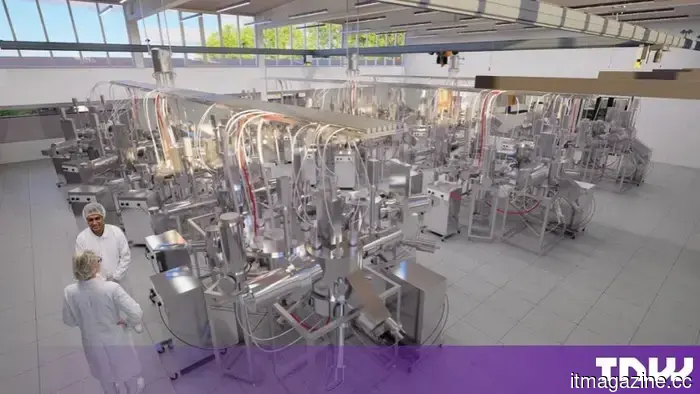 Novo Nordisk Foundation is set to construct a $62 million quantum chip manufacturing facility in Copenhagen.
Quantum Foundry Copenhagen, which is owned by the Novo Nordisk Foundation, is set to launch a 5,300 square meter facility for quantum chip fabrication in 2027, offering wafer fabrication services to quantum vendors globally.
Novo Nordisk Foundation is set to construct a $62 million quantum chip manufacturing facility in Copenhagen.
Quantum Foundry Copenhagen, which is owned by the Novo Nordisk Foundation, is set to launch a 5,300 square meter facility for quantum chip fabrication in 2027, offering wafer fabrication services to quantum vendors globally.
 DeepSeek intends to place a significant order for Huawei chips for its new data center in Inner Mongolia.
According to Bloomberg, DeepSeek is getting ready to place a substantial order for Huawei AI chips for a new data center. The specifics regarding the order size, chip model, and delivery timeline remain undisclosed, and DeepSeek has yet to validate this plan.
DeepSeek intends to place a significant order for Huawei chips for its new data center in Inner Mongolia.
According to Bloomberg, DeepSeek is getting ready to place a substantial order for Huawei AI chips for a new data center. The specifics regarding the order size, chip model, and delivery timeline remain undisclosed, and DeepSeek has yet to validate this plan.
 DeepSeek intends to place a significant order for Huawei chips for its new data center in Inner Mongolia.
According to Bloomberg, DeepSeek is organizing a significant order of Huawei AI chips for a new data center. The specifics regarding the order size, chip model, and delivery timeline have not been revealed, and DeepSeek has yet to confirm this plan.
DeepSeek intends to place a significant order for Huawei chips for its new data center in Inner Mongolia.
According to Bloomberg, DeepSeek is organizing a significant order of Huawei AI chips for a new data center. The specifics regarding the order size, chip model, and delivery timeline have not been revealed, and DeepSeek has yet to confirm this plan.
 OpenAI's latest model excels in the benchmarks and acknowledges its improved ability to conceal information.
OpenAI has released benchmarks for GPT-6 Astra, indicating significant improvements compared to GPT-5.6 Sol, including a perfect score on an exploit benchmark and the discovery of two zero-day vulnerabilities during testing. They also acknowledged that monitoring the model’s reasoning becomes more challenging when it tries to evade detection.
OpenAI's latest model excels in the benchmarks and acknowledges its improved ability to conceal information.
OpenAI has released benchmarks for GPT-6 Astra, indicating significant improvements compared to GPT-5.6 Sol, including a perfect score on an exploit benchmark and the discovery of two zero-day vulnerabilities during testing. They also acknowledged that monitoring the model’s reasoning becomes more challenging when it tries to evade detection.
South Korea confirms discussions regarding chip investments with the US as the threat of tariffs intensifies.
Seoul has verified that its discussions with Washington include semiconductor investments, as the US indicates the possibility of specific chip tariffs. Korea’s agreement guarantees tariff conditions that are at least as favorable as those of its competitors, meaning it seeks equality rather than exemption.