
Jane Street signs a $13 billion agreement for a five-year AI cloud partnership with Crusoe.
A proprietary trading firm has finalized one of the year's largest AI cloud contracts. Jane Street is planning to invest approximately $13 billion over five years with Crusoe, a data center company, for clusters of AI chips and their supporting infrastructure. This agreement was initially reported by Bloomberg, referencing sources familiar with the deal, and positions Crusoe as the most notable client in its cloud operations.
What makes this deal distinctive is the identity of the buyer. Instead of selling software, Jane Street focuses on trading securities and has now secured more AI computing resources than most model developers typically will.
This marks Jane Street's second significant agreement in a short period. The firm previously entered into a $6 billion contract with CoreWeave and invested $1 billion in equity into the company, bringing its total commitments to about $19 billion across two suppliers.
Quantitative trading has always been reliant on considerable computational resources. The hardware that supports pricing models, risk systems, and signal research is the same as that used for training language models, and a firm of Jane Street's size prefers to ensure a fixed capacity rather than compete for it later.
This scale also alters the customer landscape. AI infrastructure has primarily been marketed towards labs and hyperscalers, and a trading firm outspending most of these players reshapes the nature of that demand.
Jane Street has also been investing in the supply chain, leading a $700 million funding round for the chip designer Etched at a $21 billion valuation, which represents a different approach from merely renting servers.
The timing of this contract is advantageous for Crusoe. The company has been trying to raise around $3 billion at a valuation close to $30 billion, and having a signed five-year agreement of this magnitude serves as significant evidence to potential investors for a private data center operator.
These two developments are linked more closely than initially apparent. Bloomberg reported last week that Crusoe was looking for a chip loan backed by its contracts with Jane Street, indicating that the agreement served as collateral before being disclosed publicly.
This practice has become standard in the current cycle. Contracted revenue is often pledged as collateral against the debt used to acquire the hardware needed to fulfill the contract, and this structure remains intact as long as the customer continues payment.
Crusoe operates within a competitive new category, vying with CoreWeave and Nscale— which is aiming for a $51 billion listing in the U.S. based on expected revenues that have not yet materialized — all offering the same promise of quicker capacity delivery than what a hyperscaler can provide.
Such a considerable contract has pros and cons for a company of Crusoe’s size. The guaranteed revenue over five years makes debt manageable, but it also ties a significant portion of the business to a single counterparty.
However, Crusoe is not lacking in other demand sources. Earlier this year, it established new AI computing partnerships with Meta, with its business model focused on utilizing energy that would have otherwise been wasted to power data centers.
Details about where the computing capacity will be located remain undisclosed. The specifics regarding the chips, the sites, and the delivery timeline are not revealed, nor is there information on whether any equity is included in the contract, as with the agreement with CoreWeave.
Crusoe's origins as a cloud provider are unconventional. The company began by colocating computing resources alongside stranded and flared energy, rather than relying on grid infrastructure, a strategy that provided it with an advantage when energy constraints became a pressing issue for AI capacity.
Financial disclosure about the deal is also limited. The reported figure is an estimate, sourced from individuals familiar with the situation rather than the companies themselves, and both Crusoe and Jane Street have not publicly confirmed it.
What this agreement illustrates is a change in the competitive landscape for chips. When a trading firm can commit $13 billion to compute without any need to sell a model, the limiting factor for AI infrastructure ceases to be demand from AI companies.
Other articles
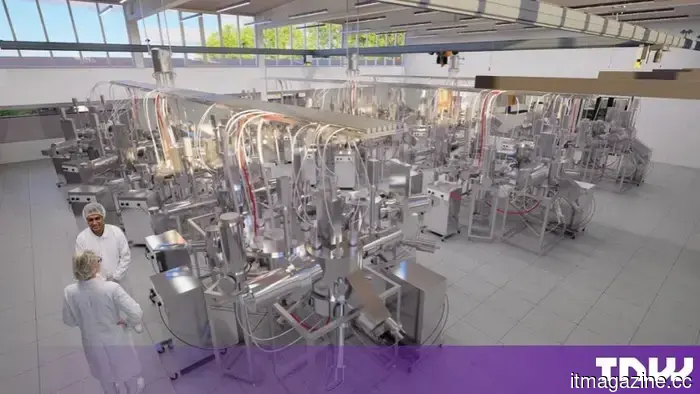 Novo Nordisk Foundation is set to construct a $62 million quantum chip manufacturing facility in Copenhagen.
Quantum Foundry Copenhagen, which is owned by the Novo Nordisk Foundation, is set to launch a 5,300 square meter facility for quantum chip fabrication in 2027, offering wafer fabrication services to quantum vendors globally.
Novo Nordisk Foundation is set to construct a $62 million quantum chip manufacturing facility in Copenhagen.
Quantum Foundry Copenhagen, which is owned by the Novo Nordisk Foundation, is set to launch a 5,300 square meter facility for quantum chip fabrication in 2027, offering wafer fabrication services to quantum vendors globally.
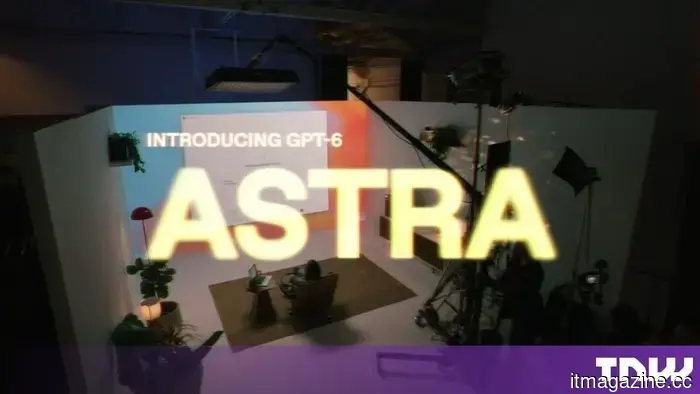 OpenAI's latest model excels in the benchmarks and acknowledges its improved ability to conceal information.
OpenAI has released benchmarks for GPT-6 Astra, indicating significant improvements compared to GPT-5.6 Sol, including a perfect score on an exploit benchmark and the discovery of two zero-day vulnerabilities during testing. They also acknowledged that monitoring the model’s reasoning becomes more challenging when it tries to evade detection.
OpenAI's latest model excels in the benchmarks and acknowledges its improved ability to conceal information.
OpenAI has released benchmarks for GPT-6 Astra, indicating significant improvements compared to GPT-5.6 Sol, including a perfect score on an exploit benchmark and the discovery of two zero-day vulnerabilities during testing. They also acknowledged that monitoring the model’s reasoning becomes more challenging when it tries to evade detection.
 DeepSeek intends to place a significant order for Huawei chips for its new data center in Inner Mongolia.
According to Bloomberg, DeepSeek is organizing a significant order of Huawei AI chips for a new data center. The specifics regarding the order size, chip model, and delivery timeline have not been revealed, and DeepSeek has yet to confirm this plan.
DeepSeek intends to place a significant order for Huawei chips for its new data center in Inner Mongolia.
According to Bloomberg, DeepSeek is organizing a significant order of Huawei AI chips for a new data center. The specifics regarding the order size, chip model, and delivery timeline have not been revealed, and DeepSeek has yet to confirm this plan.
 OpenAI invests $1 billion in cybersecurity for water utilities and community banks.
OpenAI has pledged $1 billion in subsidized access to its Daybreak cyber tools for critical infrastructure operators lacking a security budget, coinciding with the announcement of a model that meets its own Critical cyber threshold.
OpenAI invests $1 billion in cybersecurity for water utilities and community banks.
OpenAI has pledged $1 billion in subsidized access to its Daybreak cyber tools for critical infrastructure operators lacking a security budget, coinciding with the announcement of a model that meets its own Critical cyber threshold.
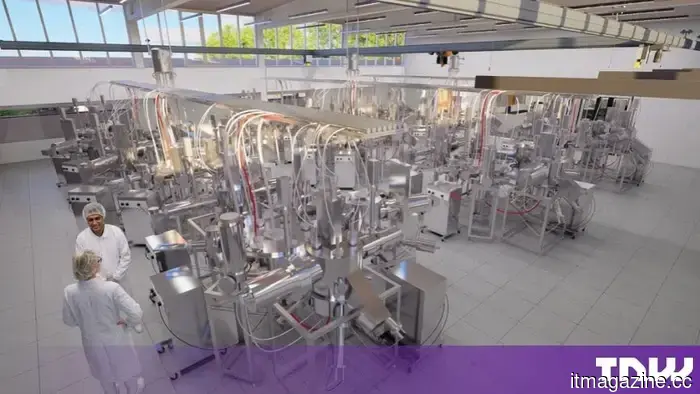 Novo Nordisk Foundation plans to establish a $62 million quantum chip manufacturing facility in Copenhagen.
Quantum Foundry Copenhagen, a subsidiary of the Novo Nordisk Foundation, plans to launch a 5,300 square meter facility for quantum chip fabrication in 2027, offering wafer manufacturing services to quantum vendors globally.
Novo Nordisk Foundation plans to establish a $62 million quantum chip manufacturing facility in Copenhagen.
Quantum Foundry Copenhagen, a subsidiary of the Novo Nordisk Foundation, plans to launch a 5,300 square meter facility for quantum chip fabrication in 2027, offering wafer manufacturing services to quantum vendors globally.
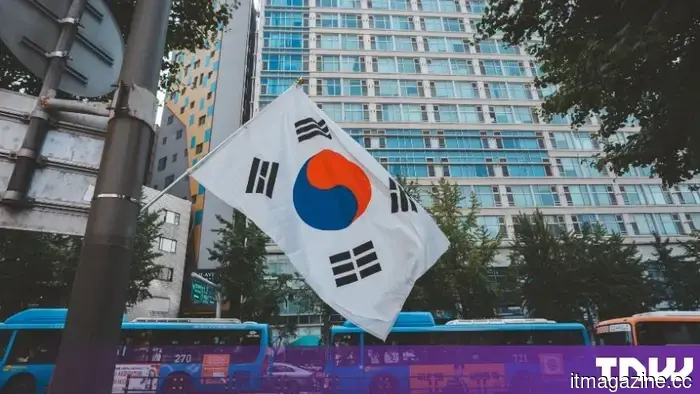 South Korea confirms discussions regarding chip investments with the US as the threat of tariffs intensifies.
Seoul has verified that its discussions with Washington include semiconductor investments, as the US indicates the possibility of specific chip tariffs. Korea’s agreement guarantees tariff conditions that are at least as favorable as those of its competitors, meaning it seeks equality rather than exemption.
South Korea confirms discussions regarding chip investments with the US as the threat of tariffs intensifies.
Seoul has verified that its discussions with Washington include semiconductor investments, as the US indicates the possibility of specific chip tariffs. Korea’s agreement guarantees tariff conditions that are at least as favorable as those of its competitors, meaning it seeks equality rather than exemption.
Jane Street signs a $13 billion agreement for a five-year AI cloud partnership with Crusoe.
Jane Street has entered into a five-year AI cloud agreement with Crusoe valued at approximately $13 billion, bringing the trading firm's total committed computing expenditures with two providers to around $19 billion.