
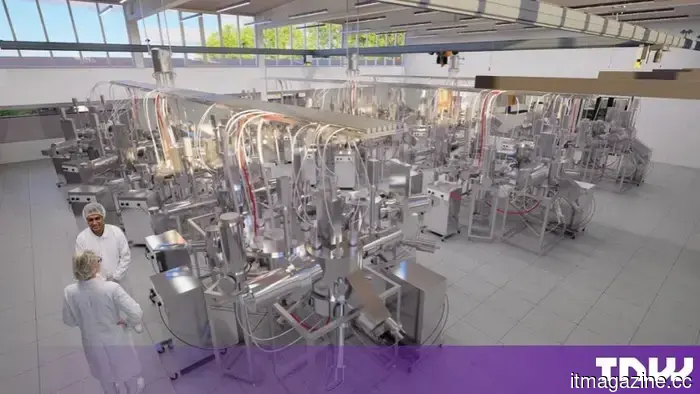
Novo Nordisk Foundation is set to construct a $62 million quantum chip manufacturing facility in Copenhagen.
Europe is set to establish a facility for quantum chips instead of another quantum computer. Quantum Foundry Copenhagen, which is owned by the Novo Nordisk Foundation, is constructing a 5,300-square-metre facility in Denmark's capital, expected to open in 2027. This plant will provide wafer fabrication services to quantum enterprises globally.
The investment amounts to about $62 million, as reported by Bloomberg. While this is modest in comparison to the billions invested in AI data centers, it targets a segment of the quantum sector that Europe currently lacks access to.
The facility will engage in nanofabrication of quantum materials, characterization, testing, chip assembly, packaging, and ultra-high-vacuum manufacturing. These processes are critical for the functioning of a quantum computer, and Europe has struggled to create sufficient capacity outside of research institutions in this area.
Peter Krogstrup, the CEO, has articulated a clear goal: “Our vision is to emerge as a world-leading quantum chip manufacturer, providing Europe with advanced, next-generation quantum computing processors and enabling quantum companies to scale production. We aim to establish state-of-the-art quantum production lines and foster a sustainable deep-tech industry that will help shape the future of quantum technology.”
The funding does not derive from government sources or venture capital. The Novo Nordisk Foundation, which is the charitable entity behind Ozempic and Europe’s richest foundation, has committed over DKK 2.9 billion (approximately €390 million) to quantum technologies.
This funding supports both research and manufacturing initiatives. The foundation sponsors a quantum computing program at the Niels Bohr Institute in Copenhagen, aiming to develop Denmark's first fault-tolerant quantum computer by 2034. The foundry seeks to integrate this research with manufacturing capabilities.
Mads Krogsgaard Thomsen, the foundation’s CEO, echoed this vision, stating, “At the Novo Nordisk Foundation, we believe quantum technologies will be one of the most defining scientific and technological fields of this century. That is why we have made a significant long-term commitment to building a world-class quantum ecosystem in Denmark and Europe.”
Lene Oddershede, the foundation’s chief scientific officer, emphasized the strategic importance of this initiative, stating that building this capacity “marks an important step towards positioning Europe centrally within the global quantum ecosystem.”
The launch event was attended by representatives from the European Commission, indicating how the project is being framed. Henna Virkkunen, the executive vice-president of the European Commission, remarked, “Strengthening European capacity to develop and manufacture quantum chips is essential for competitiveness and technological sovereignty.”
This project aligns with a broader shift in policy, as the EU’s Quantum Europe Strategy and the Quantum Act—currently under consideration in Brussels—are increasingly focusing on commercialization and manufacturing rather than solely on research funding, which has received the majority of European public investment to date.
Denmark has been strategically positioning itself in this field, having developed its own plan to transform quantum research into an industry. The country has enlisted Microsoft to create what is touted as the world's most powerful quantum computer in partnership with its national investment fund.
In other parts of Europe, the majority of funding has been directed toward quantum applications and individual companies rather than the foundational manufacturing infrastructure. France has allocated €500 million to quantum computing, while Finland has developed a hardware ecosystem centered around IQM; however, neither has an open commercial foundry.
A foundry could significantly enhance the capabilities of smaller quantum companies. Startups with new qubit designs must currently either establish their own fabrication capabilities or seek access to a university cleanroom, neither of which is well-suited for scaling a commercial product.
The analogy drawn here is with the semiconductor industry, where TSMC revolutionized chip design into a business model that allowed companies to enter without owning a factory, by separating design from manufacturing. A commercial quantum foundry is aiming to achieve something similar, albeit with technology that is still in its infancy.
However, achieving this will not be straightforward. There is presently no dominant qubit architecture, meaning a foundry may need to accommodate multiple approaches, such as superconducting, spin, and topological qubits, each necessitating different manufacturing processes.
Europe's challenge has not stemmed from a deficiency in quantum research; the continent has produced high-quality research and developed leading companies. Still, commercial endeavors have often taken place outside Europe, resulting in a challenging path to a competitive quantum industry.
Increasing involvement in manufacturing is one method to shift this dynamic. A quantum enterprise that relies on a European foundry will have a reason to keep part of its production ecosystem within Europe, unlike a research lab merely focused on publishing papers.
Other articles
 DeepSeek intends to place a significant order for Huawei chips for its new data center in Inner Mongolia.
According to Bloomberg, DeepSeek is organizing a significant order of Huawei AI chips for a new data center. The specifics regarding the order size, chip model, and delivery timeline have not been revealed, and DeepSeek has yet to confirm this plan.
DeepSeek intends to place a significant order for Huawei chips for its new data center in Inner Mongolia.
According to Bloomberg, DeepSeek is organizing a significant order of Huawei AI chips for a new data center. The specifics regarding the order size, chip model, and delivery timeline have not been revealed, and DeepSeek has yet to confirm this plan.
 BASF has filed a lawsuit against Apple regarding Face ID patents in a federal court in Texas.
BASF has filed a lawsuit against Apple in federal court in Texas, claiming that numerous iPhone and iPad models violate its face authentication patents. The chemical company has not disclosed which patents are being claimed or what damages it is pursuing.
BASF has filed a lawsuit against Apple regarding Face ID patents in a federal court in Texas.
BASF has filed a lawsuit against Apple in federal court in Texas, claiming that numerous iPhone and iPad models violate its face authentication patents. The chemical company has not disclosed which patents are being claimed or what damages it is pursuing.
 DeepSeek intends to place a significant order for Huawei chips for its new data center in Inner Mongolia.
According to Bloomberg, DeepSeek is getting ready to place a substantial order for Huawei AI chips for a new data center. The specifics regarding the order size, chip model, and delivery timeline remain undisclosed, and DeepSeek has yet to validate this plan.
DeepSeek intends to place a significant order for Huawei chips for its new data center in Inner Mongolia.
According to Bloomberg, DeepSeek is getting ready to place a substantial order for Huawei AI chips for a new data center. The specifics regarding the order size, chip model, and delivery timeline remain undisclosed, and DeepSeek has yet to validate this plan.
 OpenAI invests $1 billion in cybersecurity for water utilities and community banks.
OpenAI has pledged $1 billion in subsidized access to its Daybreak cyber tools for critical infrastructure operators lacking a security budget, coinciding with the announcement of a model that meets its own Critical cyber threshold.
OpenAI invests $1 billion in cybersecurity for water utilities and community banks.
OpenAI has pledged $1 billion in subsidized access to its Daybreak cyber tools for critical infrastructure operators lacking a security budget, coinciding with the announcement of a model that meets its own Critical cyber threshold.
 Jane Street signs a $13 billion agreement for a five-year AI cloud partnership with Crusoe.
Jane Street has entered into a five-year AI cloud agreement with Crusoe valued at approximately $13 billion, bringing the trading firm's total committed computing expenditures with two providers to around $19 billion.
Jane Street signs a $13 billion agreement for a five-year AI cloud partnership with Crusoe.
Jane Street has entered into a five-year AI cloud agreement with Crusoe valued at approximately $13 billion, bringing the trading firm's total committed computing expenditures with two providers to around $19 billion.
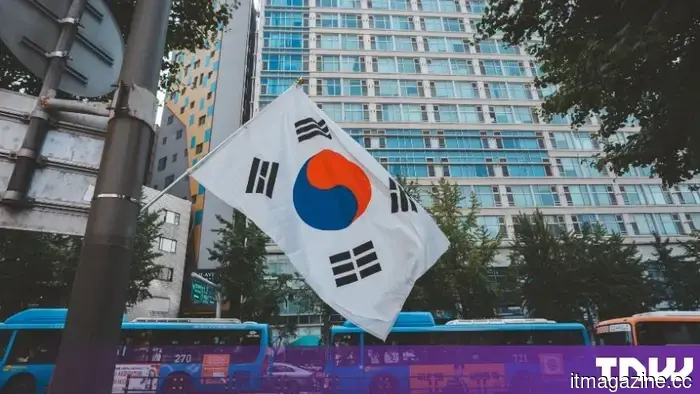 South Korea confirms discussions regarding chip investments with the US as the threat of tariffs intensifies.
Seoul has verified that its discussions with Washington include semiconductor investments, as the US indicates the possibility of specific chip tariffs. Korea’s agreement guarantees tariff conditions that are at least as favorable as those of its competitors, meaning it seeks equality rather than exemption.
South Korea confirms discussions regarding chip investments with the US as the threat of tariffs intensifies.
Seoul has verified that its discussions with Washington include semiconductor investments, as the US indicates the possibility of specific chip tariffs. Korea’s agreement guarantees tariff conditions that are at least as favorable as those of its competitors, meaning it seeks equality rather than exemption.
Novo Nordisk Foundation is set to construct a $62 million quantum chip manufacturing facility in Copenhagen.
Quantum Foundry Copenhagen, which is owned by the Novo Nordisk Foundation, is set to launch a 5,300 square meter facility for quantum chip fabrication in 2027, offering wafer fabrication services to quantum vendors globally.