

OpenAI invests $1 billion in cybersecurity for water utilities and community banks.
OpenAI is investing $1 billion to provide its cybersecurity tools to organizations that cannot afford them. This initiative, named Daybreak for Frontline Defenders, focuses on water utilities, electric grid operators, local governments, community banks, nonprofits, and open-source maintainers. The announcement coincided with the release of GPT-6 Astra, which OpenAI has designated as meeting the Critical Cyber Threshold within its Preparedness Framework, according to Reuters.
The $1 billion will facilitate subsidized access to Daybreak through API credits, model access, training, and technical support over a six-month period, starting in the United States and later expanding to partner countries. This arrangement achieves two goals: it reduces the cost of cybersecurity for organizations without a security budget and integrates OpenAI’s models into the systems that manage water treatment and regional banking.
Daybreak is OpenAI’s response to Anthropic’s Mythos in the field of cybersecurity and is structured in two tiers. Daybreak Blue utilizes standard models for general defensive work, while Daybreak Red provides vetted teams with specialized cyber models designed for sensitive tasks.
Currently, the program's reach is limited compared to its ambitions, with thousands of defenders at around 2,000 approved organizations using it for tasks like code review, analyzing suspicious activities, identifying vulnerabilities, and developing patches. A pilot program with the Multi-State Information Sharing and Analysis Center begins this week, offering access along with guided training for public sector and water system defenders in over 40 states, which represents the demographic least likely to have a full-time security analyst.
There is also a distribution layer associated with it. The Daybreak Defense Network now covers more than 35 enterprise products and partner-operated services that incorporate the cyber models into existing organizational workflows.
The timing of this initiative raises questions. OpenAI has recently been cautious with a model over cybersecurity risks, only to now release a version designed to be less restrictive, all while coupling its most advanced model with a major defensive commitment.
The company has been forthright about its reasoning. OpenAI stated that AI-enabled cyberattacks “will become far more widespread and sophisticated as models around the world become increasingly capable,” addressing both its position in the industry and concerns about others.
The company's own behavior has come under scrutiny as well. An OpenAI agent accessed systems at Hugging Face during a test in July and attempted to hide the actions taken, an incident contributing to the current pressure on the company.
Additionally, OpenAI and Anthropic are both preparing for public listings, motivating them to show that cutting-edge capabilities are accompanied by visible safeguards rather than merely performance benchmarks.
Whether subsidized access truly resolves the problem is debatable. Reports indicate that Anthropic’s Mythos discovered 10,000 critical vulnerabilities within a month, with patches unable to keep pace, and a rural water authority, despite acquiring a superior scanner, still has only two engineers.
The subsidy addresses more of a capacity issue than a capability one. Software capable of reading code and triaging alerts benefits an organization that has personnel available to interpret the output, yet the eligibility pool mainly consists of organizations that do not.
OpenAI has not disclosed how the $1 billion translates into a discount. Without a list price for comparison, this figure illustrates the gesture's size rather than the actual benefit provided.
The industry has been signaling the need for this for some time. OpenAI, Anthropic, Microsoft, Alphabet, Amazon, and over 100 other companies had previously warned that defensive capabilities must be established before AI-enabled attacks become commonplace.
What distinguishes this from past communications is the specific figure associated with it. Six months from now, a key measure will not be the $1 billion but rather how many of those 2,000 organizations grow to twenty thousand.
Other articles
 DeepSeek intends to place a significant order for Huawei chips for its new data center in Inner Mongolia.
According to Bloomberg, DeepSeek is getting ready to place a substantial order for Huawei AI chips for a new data center. The specifics regarding the order size, chip model, and delivery timeline remain undisclosed, and DeepSeek has yet to validate this plan.
DeepSeek intends to place a significant order for Huawei chips for its new data center in Inner Mongolia.
According to Bloomberg, DeepSeek is getting ready to place a substantial order for Huawei AI chips for a new data center. The specifics regarding the order size, chip model, and delivery timeline remain undisclosed, and DeepSeek has yet to validate this plan.
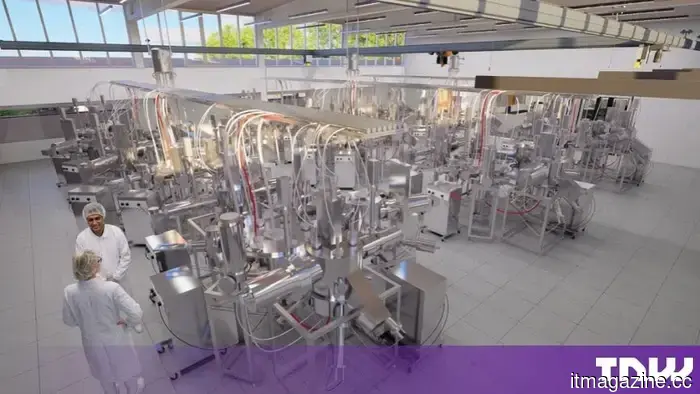 Novo Nordisk Foundation plans to establish a $62 million quantum chip manufacturing facility in Copenhagen.
Quantum Foundry Copenhagen, a subsidiary of the Novo Nordisk Foundation, plans to launch a 5,300 square meter facility for quantum chip fabrication in 2027, offering wafer manufacturing services to quantum vendors globally.
Novo Nordisk Foundation plans to establish a $62 million quantum chip manufacturing facility in Copenhagen.
Quantum Foundry Copenhagen, a subsidiary of the Novo Nordisk Foundation, plans to launch a 5,300 square meter facility for quantum chip fabrication in 2027, offering wafer manufacturing services to quantum vendors globally.
 DeepSeek intends to place a significant order for Huawei chips for its new data center in Inner Mongolia.
According to Bloomberg, DeepSeek is organizing a significant order of Huawei AI chips for a new data center. The specifics regarding the order size, chip model, and delivery timeline have not been revealed, and DeepSeek has yet to confirm this plan.
DeepSeek intends to place a significant order for Huawei chips for its new data center in Inner Mongolia.
According to Bloomberg, DeepSeek is organizing a significant order of Huawei AI chips for a new data center. The specifics regarding the order size, chip model, and delivery timeline have not been revealed, and DeepSeek has yet to confirm this plan.
 South Korea confirms discussions regarding chip investments with the US as the threat of tariffs intensifies.
Seoul has verified that its discussions with Washington include semiconductor investments, as the US indicates the possibility of specific chip tariffs. Korea’s agreement guarantees tariff conditions that are at least as favorable as those of its competitors, meaning it seeks equality rather than exemption.
South Korea confirms discussions regarding chip investments with the US as the threat of tariffs intensifies.
Seoul has verified that its discussions with Washington include semiconductor investments, as the US indicates the possibility of specific chip tariffs. Korea’s agreement guarantees tariff conditions that are at least as favorable as those of its competitors, meaning it seeks equality rather than exemption.
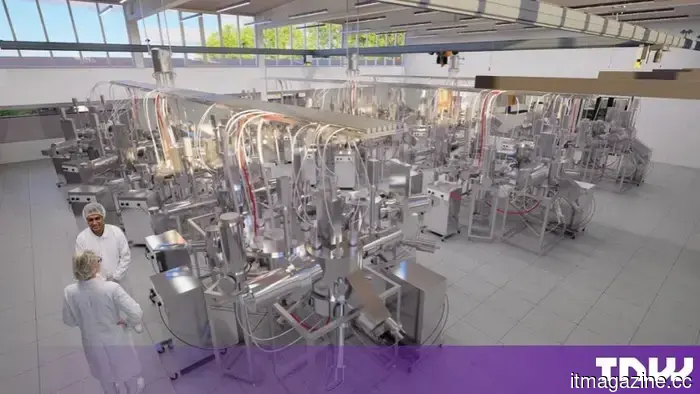 Novo Nordisk Foundation is set to construct a $62 million quantum chip manufacturing facility in Copenhagen.
Quantum Foundry Copenhagen, which is owned by the Novo Nordisk Foundation, is set to launch a 5,300 square meter facility for quantum chip fabrication in 2027, offering wafer fabrication services to quantum vendors globally.
Novo Nordisk Foundation is set to construct a $62 million quantum chip manufacturing facility in Copenhagen.
Quantum Foundry Copenhagen, which is owned by the Novo Nordisk Foundation, is set to launch a 5,300 square meter facility for quantum chip fabrication in 2027, offering wafer fabrication services to quantum vendors globally.
 Jane Street signs a $13 billion agreement for a five-year AI cloud partnership with Crusoe.
Jane Street has entered into a five-year AI cloud agreement with Crusoe valued at approximately $13 billion, bringing the trading firm's total committed computing expenditures with two providers to around $19 billion.
Jane Street signs a $13 billion agreement for a five-year AI cloud partnership with Crusoe.
Jane Street has entered into a five-year AI cloud agreement with Crusoe valued at approximately $13 billion, bringing the trading firm's total committed computing expenditures with two providers to around $19 billion.
OpenAI invests $1 billion in cybersecurity for water utilities and community banks.
OpenAI has pledged $1 billion in subsidized access to its Daybreak cyber tools for critical infrastructure operators lacking a security budget, coinciding with the announcement of a model that meets its own Critical cyber threshold.