
DeepSeek intends to place a significant order for Huawei chips for its new data center in Inner Mongolia.
DeepSeek is allegedly working on a substantial order of Huawei AI chips for a new data center, as reported by Bloomberg. The specifics regarding the order size and chip model remain undisclosed, and DeepSeek has not yet verified this initiative.
Reports of the data center have circulated since the summer, with Bloomberg mentioning a site in Ulanqab, Inner Mongolia, that could have a capacity of around one gigawatt and might start partial operations by late 2027 or early 2028. This information is drawn from sources familiar with the project rather than directly from DeepSeek.
Ulanqab is part of a wider Chinese strategy, with the Eastern Data, Western Compute initiative shifting energy-intensive computing infrastructure to western areas where electricity is more affordable. Inner Mongolia has reportedly signed approximately $27 billion in AI computing projects as part of this strategic movement.
The selection of chips is a crucial aspect of this situation. Nvidia's most advanced AI accelerators are prohibited from being sold in China, making Huawei’s Ascend family one of the primary domestic alternatives for a Chinese AI lab aiming to build computing capacity at this level.
DeepSeek has been pursuing this path for several months. Its V4 model was specifically optimized for Huawei's Ascend 950 upon its launch in April, leading to orders for hundreds of thousands of chips from Chinese cloud providers soon after.
Nvidia has openly expressed its concerns regarding this shift. Jensen Huang labeled DeepSeek’s use of Huawei chips as a "horrible outcome" for the U.S., suggesting that export controls could push China's AI software ecosystem towards dependence on domestic hardware.
The broader implications of this situation are more noteworthy than the size of any single order. Each model optimized for Ascend generates more software and tooling independent of Nvidia’s CUDA ecosystem, which has been a key strength for Nvidia and a significant hurdle for competing hardware.
The strategy regarding hardware is also still evolving. Reports suggest that DeepSeek is developing its own inference chip with SMIC, which could render a large order from Huawei more of a temporary measure rather than a permanent solution if that project proves successful.
Chinese chip design is also adapting in response to similar pressures. Export controls have prompted domestic developers to shift from general-purpose GPUs towards custom ASICs, which can be less expensive to manufacture with the processes available in China.
The significance of the reported order lies in its scale. A data center with a one-gigawatt capacity cannot simply rely on existing inventory for accelerators, so a commitment of this magnitude would reflect on both Huawei’s manufacturing capabilities and DeepSeek's future plans.
Huawei has been ramping up Ascend production to cater to rising demand. The company is increasing output through 2026 and aims for a substantial boost in AI chip revenue, a plan that relies on customers with large computing needs making commitments like this.
Financial constraints do not seem to pose an immediate issue. DeepSeek has been securing funds at a multibillion-dollar level, while its founder has identified artificial general intelligence as the company's objective, an aim that necessitates significant computing resources.
The economic landscape in China differs accordingly. DeepSeek has been able to set competitive prices partly because it isn’t purchasing Western hardware at Western prices, with a domestic chip supply chain helping to maintain this edge.
Most details remain unverified. The total order value, number of chips, specific Ascend generation, delivery timeline, and whether a contract has been officially signed are still unknown.
Furthermore, the data center has not been publicly validated by its supposed owner. DeepSeek has not confirmed the Ulanqab project, and reporting on it has relied on anonymous sources since July.
Nonetheless, the overall direction is more evident than the individual specifics. A cutting-edge Chinese AI lab is increasingly centering its operations around domestic accelerators and computing resources. This trend is already in motion, and a Huawei order would further indicate that it is progressing.
Other articles
 DeepSeek intends to place a significant order for Huawei chips for its new data center in Inner Mongolia.
According to Bloomberg, DeepSeek is organizing a significant order of Huawei AI chips for a new data center. The specifics regarding the order size, chip model, and delivery timeline have not been revealed, and DeepSeek has yet to confirm this plan.
DeepSeek intends to place a significant order for Huawei chips for its new data center in Inner Mongolia.
According to Bloomberg, DeepSeek is organizing a significant order of Huawei AI chips for a new data center. The specifics regarding the order size, chip model, and delivery timeline have not been revealed, and DeepSeek has yet to confirm this plan.
 OpenAI invests $1 billion in cybersecurity for water utilities and community banks.
OpenAI has pledged $1 billion in subsidized access to its Daybreak cyber tools for critical infrastructure operators lacking a security budget, coinciding with the announcement of a model that meets its own Critical cyber threshold.
OpenAI invests $1 billion in cybersecurity for water utilities and community banks.
OpenAI has pledged $1 billion in subsidized access to its Daybreak cyber tools for critical infrastructure operators lacking a security budget, coinciding with the announcement of a model that meets its own Critical cyber threshold.
 OpenAI's latest model excels in the benchmarks and acknowledges its improved ability to conceal information.
OpenAI has released benchmarks for GPT-6 Astra, indicating significant improvements compared to GPT-5.6 Sol, including a perfect score on an exploit benchmark and the discovery of two zero-day vulnerabilities during testing. They also acknowledged that monitoring the model’s reasoning becomes more challenging when it tries to evade detection.
OpenAI's latest model excels in the benchmarks and acknowledges its improved ability to conceal information.
OpenAI has released benchmarks for GPT-6 Astra, indicating significant improvements compared to GPT-5.6 Sol, including a perfect score on an exploit benchmark and the discovery of two zero-day vulnerabilities during testing. They also acknowledged that monitoring the model’s reasoning becomes more challenging when it tries to evade detection.
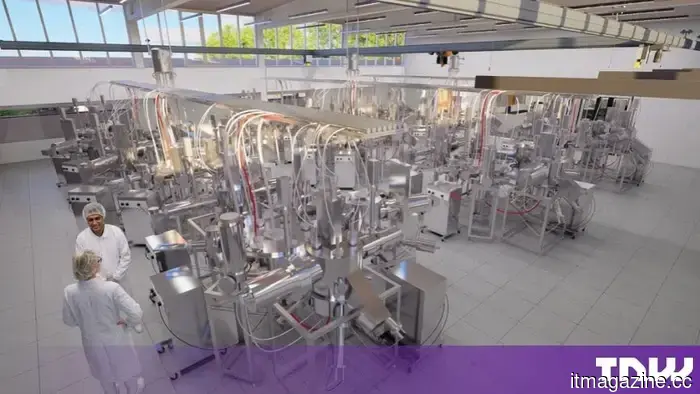 Novo Nordisk Foundation plans to establish a $62 million quantum chip manufacturing facility in Copenhagen.
Quantum Foundry Copenhagen, a subsidiary of the Novo Nordisk Foundation, plans to launch a 5,300 square meter facility for quantum chip fabrication in 2027, offering wafer manufacturing services to quantum vendors globally.
Novo Nordisk Foundation plans to establish a $62 million quantum chip manufacturing facility in Copenhagen.
Quantum Foundry Copenhagen, a subsidiary of the Novo Nordisk Foundation, plans to launch a 5,300 square meter facility for quantum chip fabrication in 2027, offering wafer manufacturing services to quantum vendors globally.
 South Korea confirms discussions regarding chip investments with the US as the threat of tariffs intensifies.
Seoul has verified that its discussions with Washington include semiconductor investments, as the US indicates the possibility of specific chip tariffs. Korea’s agreement guarantees tariff conditions that are at least as favorable as those of its competitors, meaning it seeks equality rather than exemption.
South Korea confirms discussions regarding chip investments with the US as the threat of tariffs intensifies.
Seoul has verified that its discussions with Washington include semiconductor investments, as the US indicates the possibility of specific chip tariffs. Korea’s agreement guarantees tariff conditions that are at least as favorable as those of its competitors, meaning it seeks equality rather than exemption.
 BASF has filed a lawsuit against Apple regarding Face ID patents in a federal court in Texas.
BASF has filed a lawsuit against Apple in federal court in Texas, claiming that numerous iPhone and iPad models violate its face authentication patents. The chemical company has not disclosed which patents are being claimed or what damages it is pursuing.
BASF has filed a lawsuit against Apple regarding Face ID patents in a federal court in Texas.
BASF has filed a lawsuit against Apple in federal court in Texas, claiming that numerous iPhone and iPad models violate its face authentication patents. The chemical company has not disclosed which patents are being claimed or what damages it is pursuing.
DeepSeek intends to place a significant order for Huawei chips for its new data center in Inner Mongolia.
According to Bloomberg, DeepSeek is getting ready to place a substantial order for Huawei AI chips for a new data center. The specifics regarding the order size, chip model, and delivery timeline remain undisclosed, and DeepSeek has yet to validate this plan.