
BASF has filed a lawsuit against Apple regarding Face ID patents in a federal court in Texas.
The world's largest chemical company is suing Apple regarding Face ID. BASF filed a patent infringement lawsuit on Thursday, claiming that numerous iPhone and iPad models utilize facial recognition technology protected by its patents.
This case was reported by Reuters and was submitted in a Texas federal court, specifically in the Western District, known for being a favored location for patent disputes against tech firms. The cited products date back to the iPhone X, which introduced Face ID in 2017, indicating that the lawsuit comes almost nine years after the technology's debut and might include years of accumulated damages.
What is particularly unusual is how a chemical company came to possess patents related to facial recognition. BASF specializes in coatings, catalysts, and agricultural chemicals, so it is likely that the patents were acquired rather than developed in-house. BASF has not clarified the origin of these patents, nor has it disclosed which of its divisions initiated the lawsuit, which patents are being asserted, or the amount it seeks from Apple.
Apple has not provided any comments, which is a typical response for newly filed patent cases, and none of the allegations have yet been tested in court. The choice of the Texas venue seems intentional; the Western District of Texas is known for resolving patent cases swiftly and has juries that tend to be favorable to claims against large tech companies, making it a common preference for patent plaintiffs.
Apple has previously faced this challenging venue. It was ordered to pay $625 million over FaceTime and iMessage patents and spent years in litigation with VirnetX, which resulted in a $368.2 million award and subsequent complaints. Other lawsuits have emerged, including a Chinese AI company suing Apple for $1.43 billion regarding Siri, and a joint venture between Philips and Sony targeting the company over security technologies.
Face ID is integral to Apple's primary business, as it is used for payment authentication, unlocking banking apps, and securing devices, making it more significant than an average software feature and potentially amplifying the significance of any infringement claims.
An injunction is unlikely to be the main focus of this case. Courts generally do not remove substantial products from the market due to patent disputes, and U.S. law typically limits patent damages to the six years preceding a complaint. The more probable contention will revolve around financial compensation.
BASF makes this case more challenging to dismiss as a typical patent licensing dispute. As a publicly traded industrial corporation with its own research capabilities, it is not primarily a patent acquisition business and has the means to engage in a lengthy legal fight. This could influence any potential settlement, as a company that's not reliant on patent revenue has less incentive to accept a modest payment and more motivation to assert the value of its technology.
Disputes concerning biometric authentication are especially prone to such conflicts. Face ID incorporates infrared projection, depth mapping, and neural matching, relying on research from various fields that predate Apple's integration of these elements into a consumer product.
BASF is located in Germany, where Apple has faced determined patent holders in the past. European industrial firms have amassed extensive patent portfolios through years of research, with some demonstrating their willingness to pursue disputes in U.S. courts rather than settle through licensing agreements.
None of this indicates whether BASF's patents will withstand scrutiny. High-stake claims often become considerably narrower after courts examine the patents more closely, and many conclude with settlements whose terms remain confidential.
At this point, there is little additional information available. Until the complaint is made public, the known factors are the plaintiff, the defendant, the contested technology, and the court where the case is being heard.
Other articles
 OpenAI's latest model excels in the benchmarks and acknowledges its improved ability to conceal information.
OpenAI has released benchmarks for GPT-6 Astra, indicating significant improvements compared to GPT-5.6 Sol, including a perfect score on an exploit benchmark and the discovery of two zero-day vulnerabilities during testing. They also acknowledged that monitoring the model’s reasoning becomes more challenging when it tries to evade detection.
OpenAI's latest model excels in the benchmarks and acknowledges its improved ability to conceal information.
OpenAI has released benchmarks for GPT-6 Astra, indicating significant improvements compared to GPT-5.6 Sol, including a perfect score on an exploit benchmark and the discovery of two zero-day vulnerabilities during testing. They also acknowledged that monitoring the model’s reasoning becomes more challenging when it tries to evade detection.
 OpenAI invests $1 billion in cybersecurity for water utilities and community banks.
OpenAI has pledged $1 billion in subsidized access to its Daybreak cyber tools for critical infrastructure operators lacking a security budget, coinciding with the announcement of a model that meets its own Critical cyber threshold.
OpenAI invests $1 billion in cybersecurity for water utilities and community banks.
OpenAI has pledged $1 billion in subsidized access to its Daybreak cyber tools for critical infrastructure operators lacking a security budget, coinciding with the announcement of a model that meets its own Critical cyber threshold.
 Jane Street signs a $13 billion agreement for a five-year AI cloud partnership with Crusoe.
Jane Street has entered into a five-year AI cloud agreement with Crusoe valued at approximately $13 billion, bringing the trading firm's total committed computing expenditures with two providers to around $19 billion.
Jane Street signs a $13 billion agreement for a five-year AI cloud partnership with Crusoe.
Jane Street has entered into a five-year AI cloud agreement with Crusoe valued at approximately $13 billion, bringing the trading firm's total committed computing expenditures with two providers to around $19 billion.
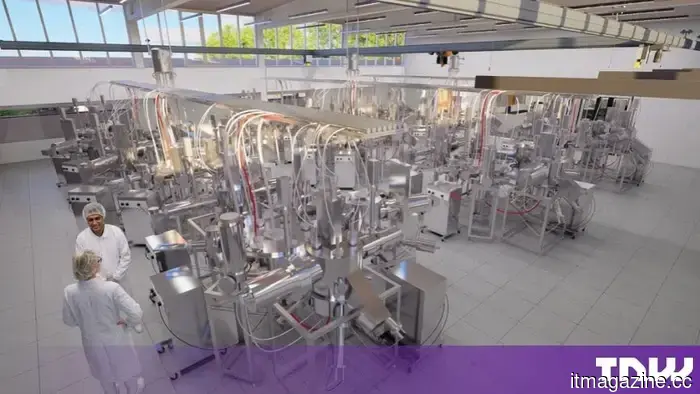 Novo Nordisk Foundation plans to establish a $62 million quantum chip manufacturing facility in Copenhagen.
Quantum Foundry Copenhagen, a subsidiary of the Novo Nordisk Foundation, plans to launch a 5,300 square meter facility for quantum chip fabrication in 2027, offering wafer manufacturing services to quantum vendors globally.
Novo Nordisk Foundation plans to establish a $62 million quantum chip manufacturing facility in Copenhagen.
Quantum Foundry Copenhagen, a subsidiary of the Novo Nordisk Foundation, plans to launch a 5,300 square meter facility for quantum chip fabrication in 2027, offering wafer manufacturing services to quantum vendors globally.
 DeepSeek intends to place a significant order for Huawei chips for its new data center in Inner Mongolia.
According to Bloomberg, DeepSeek is organizing a significant order of Huawei AI chips for a new data center. The specifics regarding the order size, chip model, and delivery timeline have not been revealed, and DeepSeek has yet to confirm this plan.
DeepSeek intends to place a significant order for Huawei chips for its new data center in Inner Mongolia.
According to Bloomberg, DeepSeek is organizing a significant order of Huawei AI chips for a new data center. The specifics regarding the order size, chip model, and delivery timeline have not been revealed, and DeepSeek has yet to confirm this plan.
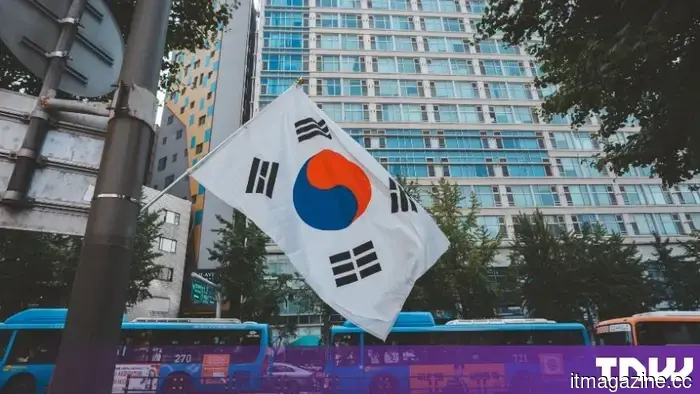 South Korea confirms discussions regarding chip investments with the US as the threat of tariffs intensifies.
Seoul has verified that its discussions with Washington include semiconductor investments, as the US indicates the possibility of specific chip tariffs. Korea’s agreement guarantees tariff conditions that are at least as favorable as those of its competitors, meaning it seeks equality rather than exemption.
South Korea confirms discussions regarding chip investments with the US as the threat of tariffs intensifies.
Seoul has verified that its discussions with Washington include semiconductor investments, as the US indicates the possibility of specific chip tariffs. Korea’s agreement guarantees tariff conditions that are at least as favorable as those of its competitors, meaning it seeks equality rather than exemption.
BASF has filed a lawsuit against Apple regarding Face ID patents in a federal court in Texas.
BASF has filed a lawsuit against Apple in federal court in Texas, claiming that numerous iPhone and iPad models violate its face authentication patents. The chemical company has not disclosed which patents are being claimed or what damages it is pursuing.