
OpenAI claims in court that Apple's trade-secret lawsuit is "a disarray created by Apple itself."
OpenAI has informed a federal court that Apple has set the stage for the current claims of theft. "This dispute is a mess of Apple's own making, and it is attempting to blame others," the company stated in a filing submitted late Monday in the US District Court in San Jose, as reported by Reuters.
The filing is a response to the lawsuit Apple launched in July, which alleged that former employees had taken hardware designs to OpenAI, including prototypes reportedly displayed during job interviews. OpenAI refutes the claim that it obtained any of Apple’s trade secrets.
The original complaint was notably detailed for a trade-secret case, outlining prototypes that Apple claimed were created during what it labeled as show-and-tell interviews. While these accusations present a compelling narrative, proving that information was genuinely misappropriated presents a different challenge.
OpenAI’s defense emphasizes less on the actions of individual employees and more on how Apple handled its own data. The company contends that Apple encouraged its employees to use personal iCloud accounts for work and monitored personal messages on company devices, resulting in a fuzzy distinction between corporate and personal information.
"Apple cannot convert the foreseeable outcomes of its own systems and policies into proof of theft," OpenAI maintained in its motion to dismiss filed in August. The recent filing echoes this reasoning, albeit with significantly stronger language.
This defense is unconventional as OpenAI does not dispute the possibility that work-related information could have ended up in personal accounts. Instead, it questions what that transfer of information signifies. OpenAI argues that if employees utilized personal accounts for work because Apple permitted or promoted it, then the presence of company information in those accounts could be a predictable result of Apple’s own policies rather than evidence of intentional theft by employees.
OpenAI has reiterated a similar argument publicly, publishing a post entitled “Apple is getting this wrong,” in which it denies ever attempting to acquire Apple’s secrets and accuses the company of providing a misleading timeline.
Bringing the dispute into the public sphere introduces another layer to the case, especially as neither party seems to view this as a conflict that will fade from public scrutiny. Whether the argument holds legal weight remains a separate matter. Trade secret law typically assesses whether a company took reasonable measures to secure confidential information, which implies that Apple’s protocols regarding employee devices, accounts, and data could play a critical role in the case rather than merely serving as background.
The crux of the dispute centers around a competition for talent. OpenAI has been actively recruiting hardware engineers for the range of devices Greg Brockman has acknowledged the company is developing, while Apple continues to possess one of the richest pools of consumer hardware expertise in the industry. Engineers with experience in designing products at Apple's scale are precisely the individuals an ambitious new hardware initiative would aim to hire.
California’s employment laws complicate that competition. Non-compete agreements are largely unenforceable in the state, preventing companies from easily prohibiting employees from moving to a competitor based solely on their valuable knowledge.
If Apple intends to halt the transfer of confidential information, it must do so through trade secret law rather than by imposing restrictions on where former employees can work.
This dispute arises at a particularly sensitive time for Apple. The company has been a leader in consumer hardware for decades, but a credible AI-native device could pose a meaningful challenge to the iPhone’s role in the personal technology market.
OpenAI is striving to create precisely this type of product, and several of the individuals involved in its development were educated within Apple.
Regardless of how the fundamental allegations are ultimately resolved, the lawsuit is already impacting OpenAI’s plans. TNW reported that Apple's case has been disrupting OpenAI’s hardware initiatives, causing delays and complications for a project that is critical to the company’s strategy.
Apple has also requested the court to limit OpenAI’s access to the contested material through a preliminary injunction. This represents a more assertive legal maneuver than merely seeking damages, as Apple would need to prove, among other things, that it is likely to prevail on the merits of its claims.
OpenAI has recently encountered a similar trade-secret dispute from the opposite side. A judge dismissed xAI’s case against the company, and OpenAI has since pointed to that outcome while trying to recoup its legal expenses from Elon Musk’s firm.
The discovery process could prove particularly uncomfortable for Apple. If OpenAI's defense places Apple’s internal data practices at the forefront of the case, those policies and their execution could become clear evidence.
This situation presents challenges for a company that has long positioned privacy and data protection as central to its products.
Both firms have motives to avoid an indefinite dispute. Apple must safeguard its hardware business and confidential designs, while OpenAI aims to establish its own new hardware venture and prepare for a potential public listing.
A settlement could alleviate some uncertainty for both parties, although the tone of the most recent filing implies that neither is particularly inclined to concede just yet.
For the moment, the court filings are the battleground for this dispute
Other articles
 An AI analyzes an ECG in two seconds and detects what cardiologists may overlook.
Researchers from Imperial College London have announced that they have identified up to 81% of heart failure cases and 90% of valve disease cases through routine ECGs conducted on 67,000 patients.
An AI analyzes an ECG in two seconds and detects what cardiologists may overlook.
Researchers from Imperial College London have announced that they have identified up to 81% of heart failure cases and 90% of valve disease cases through routine ECGs conducted on 67,000 patients.
 The FTC claims that Amazon billed advertisers incorrectly 80% of the time.
The FTC, along with 22 states, filed a lawsuit against Amazon regarding its search ad auctions, claiming that for seven years, it charged winners their entire bid instead of the second-price amount.
The FTC claims that Amazon billed advertisers incorrectly 80% of the time.
The FTC, along with 22 states, filed a lawsuit against Amazon regarding its search ad auctions, claiming that for seven years, it charged winners their entire bid instead of the second-price amount.
 TCL launches two affordable 11-inch Android tablets, with prices beginning at $190.
TCL enhances its TAB A1 series by introducing two new affordable 11-inch tablets, each featuring the Helio G100 chip, an 8,000mAh battery, and identical storage options.
TCL launches two affordable 11-inch Android tablets, with prices beginning at $190.
TCL enhances its TAB A1 series by introducing two new affordable 11-inch tablets, each featuring the Helio G100 chip, an 8,000mAh battery, and identical storage options.
 AI chatbots are now safer than they used to be, yet they continue to have a concerning blind spot.
Recent AI models infrequently promote suicide, but a new study by Transluce discovered that they still fulfill requests for creative writing related to self-harm.
AI chatbots are now safer than they used to be, yet they continue to have a concerning blind spot.
Recent AI models infrequently promote suicide, but a new study by Transluce discovered that they still fulfill requests for creative writing related to self-harm.
 Next-generation speaker technology transmits music and speech directly to a single listener without disturbing those around them.
Researchers at POSTECH have created an ultrasound speaker that focuses music and speech towards a single listener, preventing the sound from dispersing broadly in the surrounding area.
Next-generation speaker technology transmits music and speech directly to a single listener without disturbing those around them.
Researchers at POSTECH have created an ultrasound speaker that focuses music and speech towards a single listener, preventing the sound from dispersing broadly in the surrounding area.
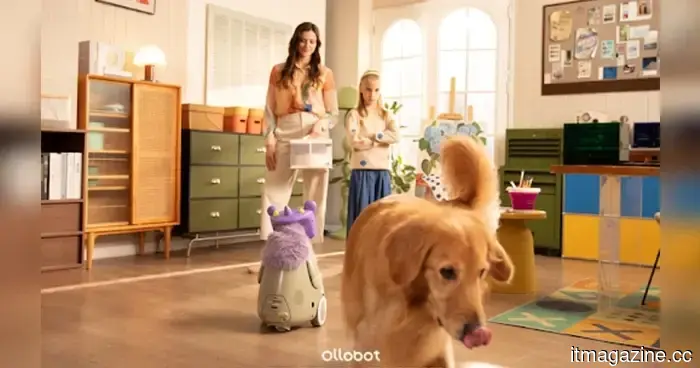 Why the Upcoming Era of Home AI Comes Equipped with Wheels and Empathy
Smart speakers listen for commands, but the future of home technology advances alongside you. OlloBot is transforming artificial intelligence into an expressive, mobile companion. What unfolds when smart technology incorporates wheels, expressive eyes, and a physical memory, demonstrating that the next phase of home AI is not focused on quicker responses?
Why the Upcoming Era of Home AI Comes Equipped with Wheels and Empathy
Smart speakers listen for commands, but the future of home technology advances alongside you. OlloBot is transforming artificial intelligence into an expressive, mobile companion. What unfolds when smart technology incorporates wheels, expressive eyes, and a physical memory, demonstrating that the next phase of home AI is not focused on quicker responses?
OpenAI claims in court that Apple's trade-secret lawsuit is "a disarray created by Apple itself."
A recent filing in San Jose contends that Apple’s internal data policies, rather than theft, account for the transfer of information by employees who are leaving the company.