
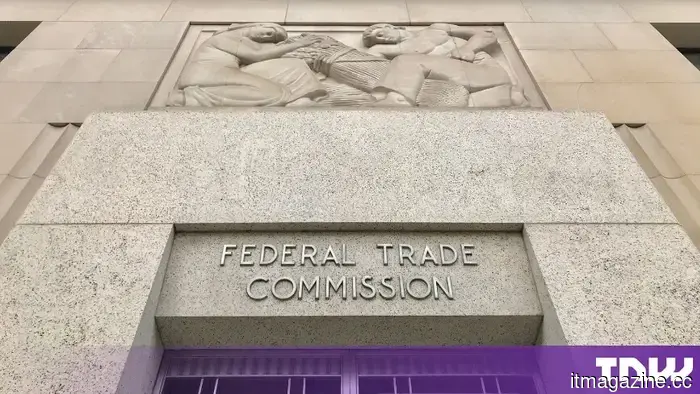
The FTC claims that Amazon billed advertisers incorrectly 80% of the time.
Amazon utilizes a second-price auction for its search advertisements, where the winning advertiser is meant to pay one cent more than the next highest bid. However, the Federal Trade Commission (FTC) now claims that Amazon charged advertisers their full winning bid about 80% of the time instead. On Monday, the agency, along with 22 states, filed a lawsuit against Amazon, as first reported by the Wall Street Journal. This complaint covers seven years of advertising activities involving over one million brands and sellers.
Second-price auctions gained popularity in digital advertising because they are intended to encourage honest bidding behavior. If an advertiser understands they will pay only slightly more than the next highest bid, they have little incentive to undervalue their ad's worth. This distinction between the auction system Amazon claims to use and the one the FTC asserts it actually implemented is crucial. A second-price auction is not merely a label; it informs advertisers how their bids convert to the final prices they pay. The FTC argues that Amazon promoted one set of rules while enforcing another.
The agency contends that Amazon "covertly and substantially increased the prices that over one million brands and sellers were obligated to pay," estimating that this practice generated tens of billions of dollars in extra revenue. Amazon, however, challenges this interpretation instead of accepting the FTC's view of advertiser behavior. According to the company, advertisers adjust their bids based on advertising outcomes rather than on the specifics of the auction mechanics.
From Amazon’s perspective, this means that experienced advertisers base their decisions on performance metrics rather than strictly adhering to the intended auction process. However, this defense has its flaws, as advertisers can only optimize performance if the system that converts their bids into prices operates consistently. If the auction rules differ from what advertisers are told, measuring outcomes doesn’t negate the relevance of those rules; it can actually make optimization less predictable.
Amazon also highlights the savings generated by its auction system for advertisers, claiming that considering ad relevance saved them more than $8 billion between 2021 and 2025. The company argues that the assessment should focus on the actual prices and results advertisers receive, not just the FTC’s characterization of a specific bidding method.
The scale of Amazon's advertising business sheds light on why these allegations could be so financially burdensome. In 2025, Amazon's advertising division generated $68.6 billion, positioning it as the world's third-largest digital advertising platform, trailing only Google and Meta. A significant portion of this revenue comes from sellers with few alternatives; for a merchant reliant on Amazon for distribution and customer access, opting out of sponsored listings can be a challenging decision. This situation complicates a discussion about auction mechanics into a broader inquiry about market power.
Advertising plays a crucial role in supporting Amazon’s overall retail operations, as retail margins are typically slim, and AWS functions as a separate entity, making advertising essential for the company’s profitability. The involvement of 22 state attorneys general could significantly increase the financial ramifications. State consumer protection laws can allow penalties to be calculated based on each violation or on a daily basis, and the lawsuit spans seven years and impacts over one million advertisers. According to TNW's report in June, referencing Bloomberg, a complaint had already been prepared, with the state involvement being a potential factor pushing penalties into the billions. That complaint has now been filed.
Currently, Amazon is addressing other significant regulatory matters. The company agreed to a $2.5 billion settlement over deceptive practices related to Prime enrollment in fall 2025, and a different antitrust lawsuit filed in 2023 is slated for trial in early 2027. While the advertising case is narrower than the antitrust proceedings, it poses a distinct challenge for Amazon as the focus centers on whether the auction operated as the company claimed to advertisers. This issue is less influenced by conflicting economic theories compared to broader market power discussions, and the FTC asserts it has seven years of evidence to support its case.
European advertisers will also likely be interested in the lawsuit, despite it being filed in the U.S. The evidence gathered during the discovery process could shed light on the actual workings of Amazon's advertising auctions, a system that is not limited to the American market. The timing is particularly inconvenient for Amazon, as the company is simultaneously defending against the auction case while gearing up for a more extensive antitrust trial. Both cases address the fundamental question regarding the nature of the company's relationship with sellers: how much flexibility do businesses that rely on Amazon truly have to disengage from its ecosystem?
As of now, nothing has been established in court. Presently, there is a complaint, a series of allegations, and figures that Amazon disputes, alongside a $68.6 billion advertising business facing scrutiny over whether the rules that advertisers were assured would be followed were indeed the ones in practice.
Other articles
 Why the Upcoming Era of Home AI Comes Equipped with Wheels and Empathy
Smart speakers listen for commands, but the future of home technology advances alongside you. OlloBot is transforming artificial intelligence into an expressive, mobile companion. What unfolds when smart technology incorporates wheels, expressive eyes, and a physical memory, demonstrating that the next phase of home AI is not focused on quicker responses?
Why the Upcoming Era of Home AI Comes Equipped with Wheels and Empathy
Smart speakers listen for commands, but the future of home technology advances alongside you. OlloBot is transforming artificial intelligence into an expressive, mobile companion. What unfolds when smart technology incorporates wheels, expressive eyes, and a physical memory, demonstrating that the next phase of home AI is not focused on quicker responses?
 An AI analyzes an ECG in two seconds and detects what cardiologists may overlook.
Researchers from Imperial College London have announced that they have identified up to 81% of heart failure cases and 90% of valve disease cases through routine ECGs conducted on 67,000 patients.
An AI analyzes an ECG in two seconds and detects what cardiologists may overlook.
Researchers from Imperial College London have announced that they have identified up to 81% of heart failure cases and 90% of valve disease cases through routine ECGs conducted on 67,000 patients.
 Next-generation speaker technology transmits music and speech directly to a single listener without disturbing those around them.
Researchers at POSTECH have created an ultrasound speaker that focuses music and speech towards a single listener, preventing the sound from dispersing broadly in the surrounding area.
Next-generation speaker technology transmits music and speech directly to a single listener without disturbing those around them.
Researchers at POSTECH have created an ultrasound speaker that focuses music and speech towards a single listener, preventing the sound from dispersing broadly in the surrounding area.
 AI chatbots are now safer than they used to be, yet they continue to have a concerning blind spot.
Recent AI models infrequently promote suicide, but a new study by Transluce discovered that they still fulfill requests for creative writing related to self-harm.
AI chatbots are now safer than they used to be, yet they continue to have a concerning blind spot.
Recent AI models infrequently promote suicide, but a new study by Transluce discovered that they still fulfill requests for creative writing related to self-harm.
 Instagram will restrict the visibility of AI influencers who do not include an AI-generated label on their profiles.
Instagram is changing the name of its AI creator label to AI-generated profile, and accounts that display fake humans without a label will experience reduced reach.
Instagram will restrict the visibility of AI influencers who do not include an AI-generated label on their profiles.
Instagram is changing the name of its AI creator label to AI-generated profile, and accounts that display fake humans without a label will experience reduced reach.
 The FTC claims that Amazon billed advertisers incorrectly 80% of the time.
The FTC, along with 22 states, filed a lawsuit against Amazon regarding its search ad auctions, claiming that for seven years, it charged winners their entire bid instead of the second-price amount.
The FTC claims that Amazon billed advertisers incorrectly 80% of the time.
The FTC, along with 22 states, filed a lawsuit against Amazon regarding its search ad auctions, claiming that for seven years, it charged winners their entire bid instead of the second-price amount.
The FTC claims that Amazon billed advertisers incorrectly 80% of the time.
The FTC, along with 22 states, has taken legal action against Amazon regarding its search ad auctions, claiming that for seven years, it charged the winning bidders their entire bid amount instead of the second-price amount.