
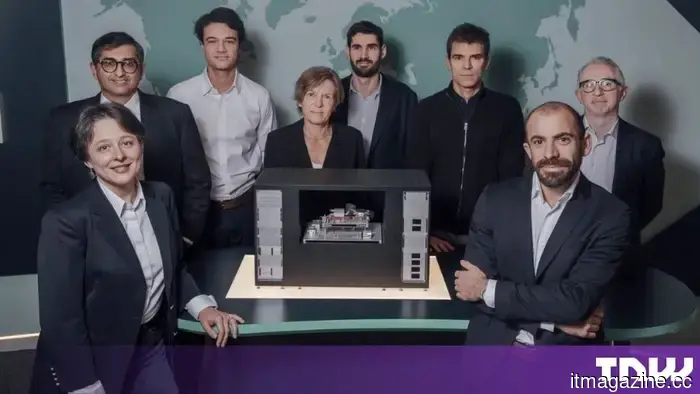
France's Pasqal is now a publicly traded company, raising $360 million and achieving a valuation roughly 100 times its revenue.
Pasqal commenced trading on Nasdaq on Friday under the ticker symbol PSQL, five months after announcing its plans to go public via a special purpose acquisition company. According to Reuters, shares jumped significantly upon debut.
The merger with Bleichroeder Acquisition Corp. II was finalized on August 27, following shareholder approval the previous day, resulting in approximately $360 million in cash for the company. In euros, this equates to €309 million, which holds more significance than the ticker itself.
The original filings anticipated around $500 million in gross proceeds, but the final figure of $360 million reflects the mathematics of redemptions, where SPAC shareholders opt to reclaim their investments instead of participating in the merger.
Nonetheless, this sum represents one of the largest cash reserves any European quantum company has ever accumulated. In 2026, the entire quantum sector in Europe raised about €1.05 billion, making this single balance sheet nearly a third of the continent's annual funding.
Valuation is the aspect likely to attract scrutiny. The deal was negotiated in March with a valuation of $2 billion pre-money, based on projected revenue of €16.5 million for 2025, yielding a multiple of around 100 times. The filings themselves admitted that achieving commercial viability in quantum computing might never happen.
What the company possesses is operational hardware rather than just a future plan. It has seven neutral-atom quantum processing units currently deployed and three more in production, supporting over 25 commercial and research applications across sectors such as energy, finance, and materials science.
The customer list is a strong point in the prospectus, featuring names like Saudi Aramco, Crédit Agricole CIB, and LG Electronics, with the Aramco machine being Saudi Arabia’s first quantum computer.
Two partnerships significantly enhance its proposition. Pasqal collaborates with Nvidia on the classical computing side and is part of the IBM Quantum Network, placing it within the ecosystems that dictate how quantum hardware is delivered to clients.
Neutral-atom systems function by confining individual atoms using laser arrays and manipulating them with additional lasers. This method bypasses the extreme cryogenic requirements of superconducting qubits, which contributes to the interest it has garnered.
"Today is not the end; it is a catalyst for further progress," stated CEO Wasiq Bokhari, who characterized the listing as a transition from foundational science to large-scale industrial deployment.
The proceeds will be allocated to increasing manufacturing capabilities at the Palaiseau headquarters, enhancing fault tolerance, developing the cloud and software platform, integrating with classical high-performance computing, and pursuing international growth. A dual listing on Euronext Paris is also in the plans.
Neutral atoms scale in a manner that aligns with the underlying physics. Adding qubits entails adding traps to an array instead of fabricating and connecting more superconducting circuits, and Pasqal surpassed 1,000 atoms in a processor back in 2024.
The board maintains the French focus that the company has carefully promoted. Alain Aspect, who shared the 2022 Nobel Prize in Physics and co-founded the company, serves as chair in a non-executive role, while Bpifrance is represented by Nicolas Berdou.
There is a more substantial assurance beneath the symbolic aspects. France retains a veto over any significant non-French and non-EU ownership stakes, requiring approval from the Ministry of the Economy, which is a rare consideration for a company listed on an American exchange.
Quantum companies that previously entered public markets often traded based on narrative rather than on statistics, experiencing considerable fluctuations. Pasqal now joins this group with a revenue stream that many investors may regard as negligible, focusing more on its technology narrative as the key asset.
Opting for Nasdaq instead of Paris was a choice based on capital availability rather than loyalty, which Bokhari has acknowledged. This decision mirrors that of several other European deep tech firms for the same articulated reason.
France has invested heavily to reach this milestone, including a €500 million program supporting domestic quantum champions. Pasqal is the first among them to confront daily share price fluctuations.
Other articles
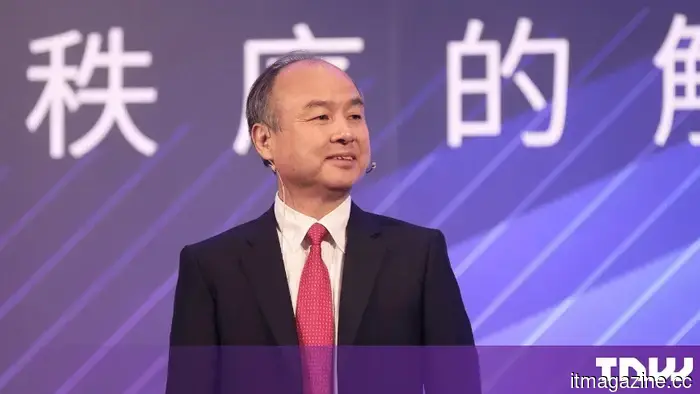 SoftBank is pursuing a second $10 billion loan secured by its stake in OpenAI.
According to Bloomberg, SoftBank is looking to secure an additional $10 billion loan linked to its OpenAI investment, just weeks after completing a similar-sized loan and considering a $20 billion bond.
SoftBank is pursuing a second $10 billion loan secured by its stake in OpenAI.
According to Bloomberg, SoftBank is looking to secure an additional $10 billion loan linked to its OpenAI investment, just weeks after completing a similar-sized loan and considering a $20 billion bond.
 The Gemini Notebook now allows you to cite books and convert them into various formats.
The newly introduced feature, known as Expert Intelligence, aims to merge Gemini's knowledge with the books you already possess. It's an interesting concept, and it will be available soon in the Gemini app and AI Mode within Search.
The Gemini Notebook now allows you to cite books and convert them into various formats.
The newly introduced feature, known as Expert Intelligence, aims to merge Gemini's knowledge with the books you already possess. It's an interesting concept, and it will be available soon in the Gemini app and AI Mode within Search.
 Lucid is recalling 27,185 Air sedans due to a software issue with a fuse that failed to disconnect the power.
Lucid is recalling 27,185 Air sedans due to a software fuse issue that can cause lighting circuits to overheat. The filing mentions three incidents of fires, with the first occurring in June 2023.
Lucid is recalling 27,185 Air sedans due to a software issue with a fuse that failed to disconnect the power.
Lucid is recalling 27,185 Air sedans due to a software fuse issue that can cause lighting circuits to overheat. The filing mentions three incidents of fires, with the first occurring in June 2023.
 HIZERO believes that your vacuum cleaner could be overworking.
HIZERO is re-evaluating the role of suction in hard-surface cleaning. With its bionic polymer roller and expanding No Suction ecosystem, it presents an alternative method for cleaning a variety of surfaces, including daily floors, countertops, and for use in autonomous cleaning.
HIZERO believes that your vacuum cleaner could be overworking.
HIZERO is re-evaluating the role of suction in hard-surface cleaning. With its bionic polymer roller and expanding No Suction ecosystem, it presents an alternative method for cleaning a variety of surfaces, including daily floors, countertops, and for use in autonomous cleaning.
 Starting Sunday, Google will no longer penalize EU publishers under its spam policy.
Starting from 30 August, Google will cease applying manual spam demotions for users in the EU, Iceland, Norway, and Liechtenstein while it works to resolve a DMA case.
Starting Sunday, Google will no longer penalize EU publishers under its spam policy.
Starting from 30 August, Google will cease applying manual spam demotions for users in the EU, Iceland, Norway, and Liechtenstein while it works to resolve a DMA case.
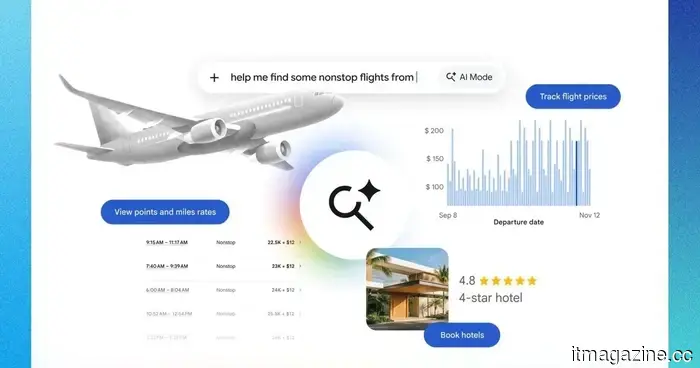 Google AI Mode can now inform you about flight price drops and assist you in booking your hotel.
Google has introduced three new travel features in AI Mode, allowing you to monitor flight prices, compare rewards points, and make hotel reservations, all within a single chat.
Google AI Mode can now inform you about flight price drops and assist you in booking your hotel.
Google has introduced three new travel features in AI Mode, allowing you to monitor flight prices, compare rewards points, and make hotel reservations, all within a single chat.
France's Pasqal is now a publicly traded company, raising $360 million and achieving a valuation roughly 100 times its revenue.
The French neutral-atom quantum firm commenced trading on Nasdaq under the ticker PSQL, collecting less capital than the $500 million projected in its filings.