
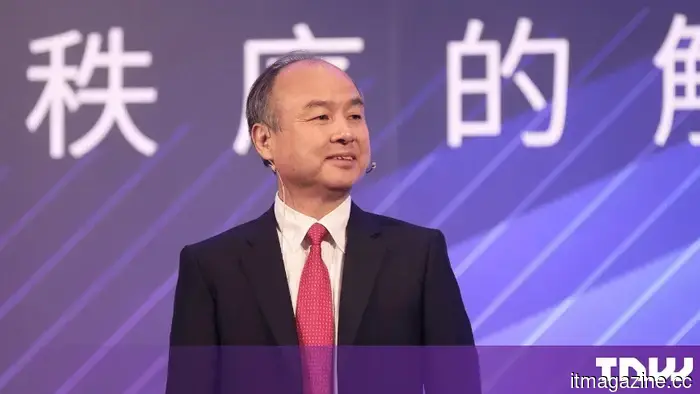
SoftBank is pursuing a second $10 billion loan secured by its stake in OpenAI.
SoftBank is reportedly seeking an additional $10 billion loan to finance its stake in OpenAI, according to Bloomberg's report on Friday. This request follows a loan of the same amount that was secured against the same asset just 22 days prior.
TNW has not verified the report independently and has not reviewed the detailed terms, so the following information contrasts the reported request with publicly available records of how SoftBank has financed this investment. This history is quite comprehensive, as each development has been documented as it occurred.
Starting with the obligation, in March, SoftBank entered into a $40 billion unsecured bridge facility to support its OpenAI commitments, which must be either repaid or refinanced by March 2027.
A bridge loan is designed to be temporary, and the past five months have focused on finding a permanent substitute. The conglomerate has committed over $60 billion to OpenAI and related AI infrastructure, which represents significant exposure in the context of short-term debt.
The margin loan was SoftBank's initial attempt to find a lasting solution. In April, it approached lenders for a $10 billion loan secured against OpenAI shares but faced challenges in determining the collateral's value due to the private company's status.
The target amount was reduced to $6 billion in May, then reinstated at $10 billion in July after SoftBank included a corporate guarantee, offering lenders security from the parent company should the pledged shares not meet expectations. Reuters, which first reported on the revival, noted that this concession was key to finalizing the deal.
On August 6, Bloomberg confirmed that the $10 billion margin loan had been closed, four months after the initial request and structured in a way that was significantly more favorable to lenders than the original proposal.
Just three weeks later, the financing activity resumed. On August 26, Bloomberg reported that SoftBank was considering a bond sale of up to $20 billion to refinance the OpenAI borrowing, followed by another report two days later regarding a second $10 billion loan.
The borrowing has not been limited to the OpenAI stake alone. This year, SoftBank approached Japanese retail investors with a record $6.3 billion bond sale, turning to this market when institutional demand needs bolstering.
For the time being, the equity market has been supportive. SoftBank surpassed Toyota to become Japan's most valuable listed company, buoyed by the AI surge, which makes leverage more palatable to shareholders who might otherwise be critical of it.
When viewed in sequence, none of this seems surprising. A $40 billion bridge loan cannot be offset entirely by a single $10 billion facility, and the mathematics has consistently indicated the necessity for multiple instruments arriving in sequence.
The original goal was even greater, as SoftBank aimed for a record facility of up to $40 billion for its OpenAI stake back in March. The series of smaller financing tools since then represents what that larger ambition looks like once lenders finalize pricing.
In terms of timing, it is harder to overlook. SoftBank is now reentering credit markets at intervals of weeks instead of quarters, with each request priced based on a collateral valuation that currently exists only theoretically.
OpenAI filed confidentially with the SEC in June, hinting at a potential public listing, which would establish a market price for the shares SoftBank continues to pledge. Until such an event occurs, each lender must base their assessment on a figure that is not publicly accessible.
Thus far, the syndication has remained strong. An additional twenty-one lenders joined the $40 billion facility after its initial signing, indicating that interest has not yet run dry, despite the frequency of requests.
Masayoshi Son has built the company's strategy around this investment, and now SoftBank’s debt-driven AI strategy aligns more with OpenAI's success than with any other assets on its balance sheet. This has been a deliberate choice, consistently emphasized.
SoftBank has not publicly commented on the latest report, and the terms, lenders, or timeline have not been confirmed. The next significant milestone in this narrative is not a loan but a deadline: March 2027, with $40 billion at stake.
Other articles
 Laurastar LIFT XTRA: a space ironing system from "Technopark"
The company "Technopark" presents an ironing system for impeccable results. The design is simply out of this world in the literal sense. It seems that the engineers at Laurastar were inspired by the blueprints of the Space Shuttle and "Buran" when designing this ironing hypercar. And now it is ready to land on your ironing board in the livery of four new colors, each of which tells a separate story.
Laurastar LIFT XTRA: a space ironing system from "Technopark"
The company "Technopark" presents an ironing system for impeccable results. The design is simply out of this world in the literal sense. It seems that the engineers at Laurastar were inspired by the blueprints of the Space Shuttle and "Buran" when designing this ironing hypercar. And now it is ready to land on your ironing board in the livery of four new colors, each of which tells a separate story.
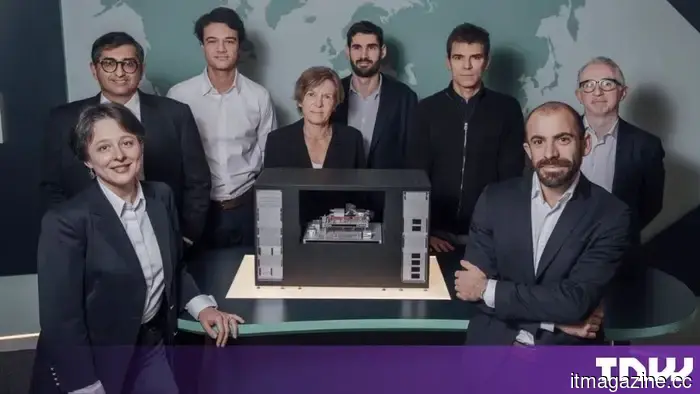 France's Pasqal has gone public, raising $360 million and achieving a valuation approximately 100 times its revenue.
The French neutral-atom quantum company has commenced trading on Nasdaq under the ticker PSQL, raising less capital than the anticipated $500 million outlined in its filings.
France's Pasqal has gone public, raising $360 million and achieving a valuation approximately 100 times its revenue.
The French neutral-atom quantum company has commenced trading on Nasdaq under the ticker PSQL, raising less capital than the anticipated $500 million outlined in its filings.
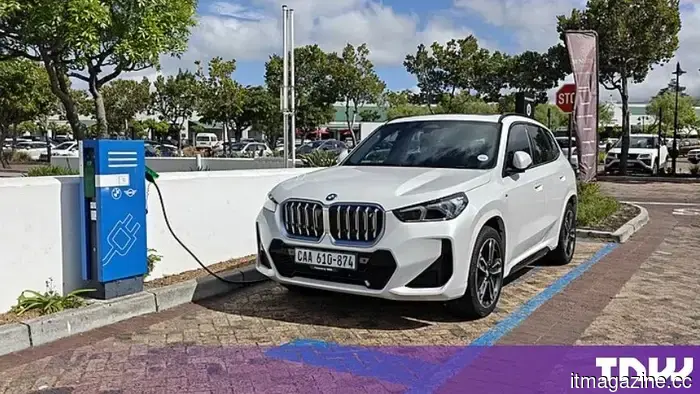 BMW has sold a total of two million electric vehicles, with Europe purchasing seven out of ten of the cars sold in the last quarter.
BMW has reached the milestone of delivering its two millionth electric vehicle, an i5 produced in Dingolfing and delivered in Spain. In the last quarter, Europe accounted for 81,445 out of a total of 116,807 electric vehicle sales.
BMW has sold a total of two million electric vehicles, with Europe purchasing seven out of ten of the cars sold in the last quarter.
BMW has reached the milestone of delivering its two millionth electric vehicle, an i5 produced in Dingolfing and delivered in Spain. In the last quarter, Europe accounted for 81,445 out of a total of 116,807 electric vehicle sales.
 OpenAI has appointed Sandhya Devanathan from Meta to oversee operations in Southeast Asia and Australia.
OpenAI has appointed a Meta executive to lead operations in Southeast Asia and Australia, marking its third senior appointment in Asia within six months. In contrast, Europe has received a headquarters.
OpenAI has appointed Sandhya Devanathan from Meta to oversee operations in Southeast Asia and Australia.
OpenAI has appointed a Meta executive to lead operations in Southeast Asia and Australia, marking its third senior appointment in Asia within six months. In contrast, Europe has received a headquarters.
 Anthropic had intended to acquire the chip startup MatX for $7 billion but ultimately decided to abandon the deal.
According to Reuters, Anthropic was ready to acquire the AI chip startup MatX for approximately $7 billion, before the discussions shifted towards a partnership instead.
Anthropic had intended to acquire the chip startup MatX for $7 billion but ultimately decided to abandon the deal.
According to Reuters, Anthropic was ready to acquire the AI chip startup MatX for approximately $7 billion, before the discussions shifted towards a partnership instead.
 Google is taking action against Android applications that consume excessive memory due to a RAM shortage driven by AI developments.
In response to a worldwide RAM shortage driven by AI needs, Google will implement new memory limits for Android applications beginning in February 2027, along with penalties for those that do not adhere to these standards.
Google is taking action against Android applications that consume excessive memory due to a RAM shortage driven by AI developments.
In response to a worldwide RAM shortage driven by AI needs, Google will implement new memory limits for Android applications beginning in February 2027, along with penalties for those that do not adhere to these standards.
SoftBank is pursuing a second $10 billion loan secured by its stake in OpenAI.
According to Bloomberg, SoftBank is looking to secure an additional $10 billion loan linked to its OpenAI investment, just weeks after completing a similar-sized loan and considering a $20 billion bond.