
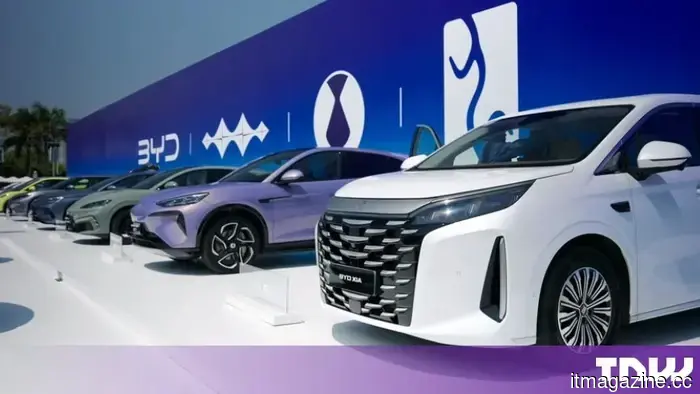
BYD recharged a vehicle 350 times over the span of nine days.
BYD announced that it conducted a test with a randomly selected Yangwang U7, driving it for 30,000 kilometres over a span of nine days, making 350 ultra-fast charging stops, and managing to retain 98.7% of the battery's capacity. According to Euro 7 regulations, new vehicle models must maintain at least 80% of their original battery capacity after five years starting from November 29.
BYD has addressed a common inquiry regarding ultra-fast charging by performing the process 350 times on a single vehicle. The Yangwang U7 completed 30,000 kilometres in nine days, concluding the test with 98.7% of its battery capacity remaining.
The testing conditions were intentionally extreme. The vehicle was driven at speeds of 240 kph on a test track in Nanning, with an average ambient temperature of 36 degrees Celsius, drawing as much as 640 kilowatts at each charging stop.
BYD claims the car used for this test was a standard model, taken directly from the showroom without any modifications, which is a detail that independent testers would seek to verify.
The results are promising on their own. High temperatures and rapid charging are known to degrade batteries, and the most significant wear generally occurs early in a battery’s lifecycle. However, a nine-day test cannot fully reflect long-term performance, as calendar aging continues regardless of vehicle use, and it is impossible to simulate five years of wear in such a short time.
Europe is about to make this a legal obligation. Under Euro 7, electric vehicles must maintain 80% of their initial battery capacity after five years or 100,000 kilometres, and 72% after eight years or 160,000.
The timeline is tight. New vehicle models must adhere to these regulations starting on November 29 this year, with all new cars sold from that date in 2027 required to meet these standards.
BYD is not idly observing this situation. The company is manufacturing cars in Hungary and has dismissed allegations that its Szeged factory violated environmental regulations.
BYD’s charging initiatives are also focused on Europe. The company plans to establish a megawatt charging network in the region, while shifting some mass production to Turkey.
The main challenge in Europe is not the speed of the chargers, but rather ensuring that sufficient power is delivered to the charging stations. This has led to companies offering more affordable solutions for installing equipment on buildings that already have electrical supplies.
However, there hasn’t been a clear explanation of how these capacities will be verified. An approval granted in November will need to satisfy regulatory authorities regarding capacity retention by 2031, suggesting reliance on accelerated aging models rather than actual mileage.
Chinese automotive brands are already gaining significant market share in European registrations, and from November, every new model they introduce must comply with these standards.
Thus, a nine-day testing period serves more as a marketing response to regulatory challenges, whereas Europe is looking for proof of 72% capacity retention over an eight-year period, documented officially.
Other articles
 The Galaxy S26 FE has been officially announced, and Samsung continues to play it safe.
Samsung has introduced the Galaxy S26 FE featuring an Exynos 2500 processor, a 4,900mAh battery, well-known camera specifications, and One UI 9.
The Galaxy S26 FE has been officially announced, and Samsung continues to play it safe.
Samsung has introduced the Galaxy S26 FE featuring an Exynos 2500 processor, a 4,900mAh battery, well-known camera specifications, and One UI 9.
 VITURE's latest XR glasses seem like they are directly inspired by Phantom Blade Zero.
Phantom Blade Zero is not just limited to your television. Its kung-fu universe is also coming right at you.
VITURE's latest XR glasses seem like they are directly inspired by Phantom Blade Zero.
Phantom Blade Zero is not just limited to your television. Its kung-fu universe is also coming right at you.
 Plaud One AI earbuds have the ability to recall conversations and assist in completing tasks afterward.
The Plaud One Explorer Edition merges AI earbuds, 4G connectivity, and the Plaud Agent to record conversations, grasp context, and generate follow-ups within work applications.
Plaud One AI earbuds have the ability to recall conversations and assist in completing tasks afterward.
The Plaud One Explorer Edition merges AI earbuds, 4G connectivity, and the Plaud Agent to record conversations, grasp context, and generate follow-ups within work applications.
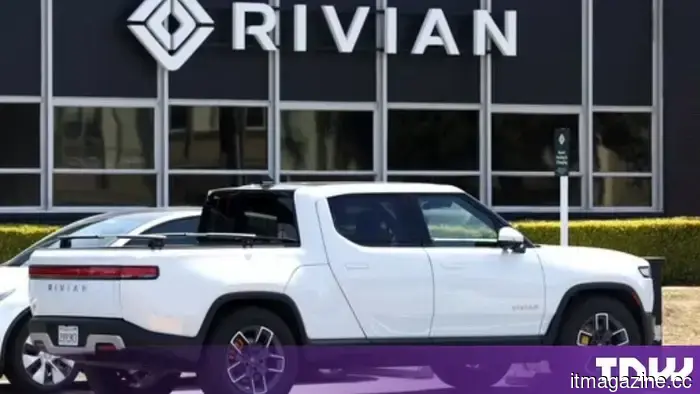 Rivian's Chief Financial Officer is departing after six years.
Claire McDonough will depart from Rivian in October after six years with the company. Volkswagen is currently the largest shareholder, with a significant portion of its $5.8 billion commitment linked to specific milestones.
Rivian's Chief Financial Officer is departing after six years.
Claire McDonough will depart from Rivian in October after six years with the company. Volkswagen is currently the largest shareholder, with a significant portion of its $5.8 billion commitment linked to specific milestones.
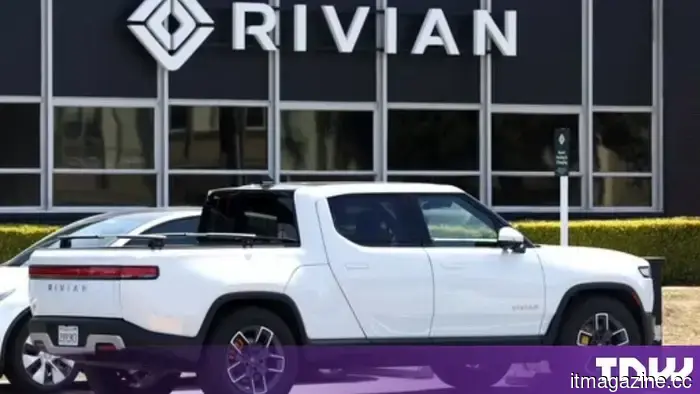 Rivian's Chief Financial Officer is departing following six years in the role.
Claire McDonough is departing from Rivian in October after six years. Volkswagen is now the company's largest shareholder, with a significant portion of its $5.8 billion commitment linked to specific milestones.
Rivian's Chief Financial Officer is departing following six years in the role.
Claire McDonough is departing from Rivian in October after six years. Volkswagen is now the company's largest shareholder, with a significant portion of its $5.8 billion commitment linked to specific milestones.
 AI agents are being equipped with wallets: the Web3 framework supporting the machine economy.
Varun Datta, CEO of Truth Ventures and Web3 venture capitalist, examines how AI agents, digital wallets, and micropayments generate fresh investment prospects.
AI agents are being equipped with wallets: the Web3 framework supporting the machine economy.
Varun Datta, CEO of Truth Ventures and Web3 venture capitalist, examines how AI agents, digital wallets, and micropayments generate fresh investment prospects.
BYD recharged a vehicle 350 times over the span of nine days.
BYD reports that a Yangwang U7 retained 98.7% of its battery capacity following 350 ultra-fast charges within a span of nine days. The Euro 7 regulation will begin requiring 80% retention after five years starting in November.