

AI agents are being equipped with wallets: the Web3 framework supporting the machine economy.
**Summary**
Varun Datta, CEO of Truth Ventures and a Web3 venture capitalist, discusses how AI agents acquiring the capability to transact autonomously could hasten the development of the machine economy and open up fresh investment opportunities. After years of potential, the machine economy is beginning to materialize, with AI agents receiving wallets to make decisions for their owners. This situation offers significant prospects for investors who get in early.
A key development is the launch of Cloudflare Wallets on August 4, 2026, part of its agents week, which enables AI agents on its network to hold a stablecoin balance and have a readable identity for transactions involving APIs, data, and content. The primary wallet will be managed by account holders, who can create individual virtual wallets for agents that are funded by the parent account and have limitations on spending, including approved merchants and maximum transaction amounts.
This wallet functionality complements Cloudflare’s monetization service introduced on July 1, which allows websites and APIs to charge agents in stablecoins per request, creating a machine-to-machine marketplace touching a fifth of the world's websites.
Mainstream media described the update as “AI agents gaining wallets,” but Datta argues this misses the essence of Cloudflare's offering. He believes they implemented a delegated authority system that enables machine agents to make independent decisions, which is a significant advancement.
Datta points out the engineering constraints involved in allowing software to manage money, emphasizing that determining what systems can do with their funds and establishing accountability are complex issues. He suggests that Web3 investment should focus on the infrastructure necessary for emerging technologies to be viable and scalable.
He highlighted concerns regarding governance in the machine economy. Stakeholders are apprehensive about how AI will handle funds and the potential for agents to make poor purchasing decisions without real-time spending limits.
The rollout by Cloudflare is not yet complete; foundational functions like funding and full payment capabilities are set to be introduced in the coming months.
Micro payments are emerging as a mainstream phenomenon, utilizing x402—a payment structure initially developed by Coinbase but now backed by the Linux Foundation and including Cloudflare. x402 has facilitated over 160 million transactions worth $41.2 million across seven chains, averaging around $0.26 per transaction.
Datta notes that micropayments previously failed because transaction costs outweighed transaction value, but he believes this is changing. Traditional card networks find it challenging to price payments at very low values due to fixed fees and dispute handling, which are impractical for tiny transactions. However, stablecoin settlements make these transactions financially feasible.
Datta emphasizes that the infrastructure for agent payments may not rest at the rail level. Major players like Visa and Mastercard are developing payment systems for agents, focused on trust and reliability, which suggests their expectation that agent payments will significantly influence the market dynamics.
Datta views the introduction of wallets for AI agents as a significant departure from earlier crypto trends that were more asset-focused. He believes AI agents necessitate features like autonomous transactions with unknown counterparts and cannot rely on traditional banking systems, indicating a genuine demand that is not speculative.
Truth Ventures, under Datta’s guidance, is keen to identify significant investment opportunities rooted in infrastructure rather than superficial asset trends. He predicts that future recognitions in the industry will lean towards the foundational layers of settlement, metering, and identity rather than which specific AI frameworks dominate the market. The competition now includes heavyweights like Google Cloud, Circle, Visa, Mastercard, Cloudflare, and AWS, who perceive the relatively small $41.2 million in current settlements as merely the beginning. Ultimately, Datta believes that what will endure is not merely scale but the emerging standards set by these new systems.
Other articles
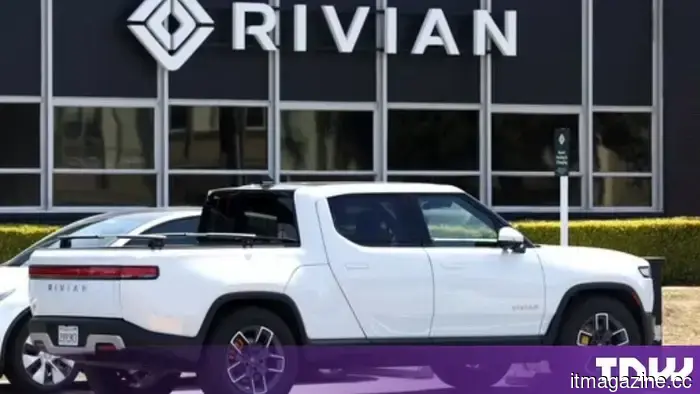 Rivian's Chief Financial Officer is departing after six years.
Claire McDonough will depart from Rivian in October after six years with the company. Volkswagen is currently the largest shareholder, with a significant portion of its $5.8 billion commitment linked to specific milestones.
Rivian's Chief Financial Officer is departing after six years.
Claire McDonough will depart from Rivian in October after six years with the company. Volkswagen is currently the largest shareholder, with a significant portion of its $5.8 billion commitment linked to specific milestones.
 BYD recharged a vehicle 350 times over the span of nine days.
BYD reports that a Yangwang U7 retained 98.7% of its battery capacity following 350 ultra-fast charges within a span of nine days. The Euro 7 regulation will begin requiring 80% retention after five years starting in November.
BYD recharged a vehicle 350 times over the span of nine days.
BYD reports that a Yangwang U7 retained 98.7% of its battery capacity following 350 ultra-fast charges within a span of nine days. The Euro 7 regulation will begin requiring 80% retention after five years starting in November.
 AI agents are being equipped with wallets: the Web3 framework supporting the machine economy.
Varun Datta, CEO of Truth Ventures and Web3 venture capitalist, examines how AI agents, digital wallets, and micropayments generate fresh investment prospects.
AI agents are being equipped with wallets: the Web3 framework supporting the machine economy.
Varun Datta, CEO of Truth Ventures and Web3 venture capitalist, examines how AI agents, digital wallets, and micropayments generate fresh investment prospects.
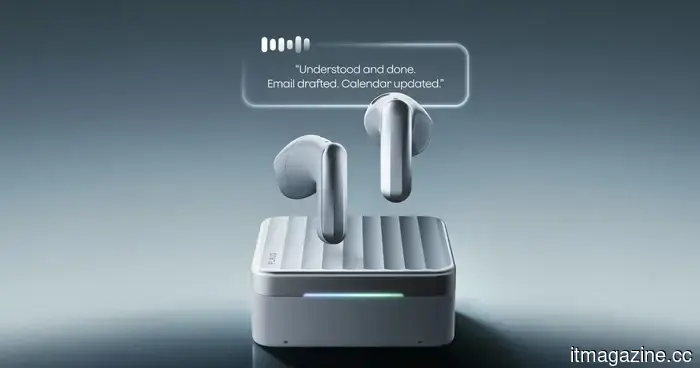 Plaud One AI earbuds have the ability to recall conversations and assist in completing tasks afterward.
The Plaud One Explorer Edition merges AI earbuds, 4G connectivity, and the Plaud Agent to record conversations, grasp context, and generate follow-ups within work applications.
Plaud One AI earbuds have the ability to recall conversations and assist in completing tasks afterward.
The Plaud One Explorer Edition merges AI earbuds, 4G connectivity, and the Plaud Agent to record conversations, grasp context, and generate follow-ups within work applications.
 Windows 11 might soon allow you to turn off your computer using your mobile device.
Microsoft is said to be testing new Phone Link features that would allow Android users to remotely power off, restart, or put a Windows 11 PC into sleep mode.
Windows 11 might soon allow you to turn off your computer using your mobile device.
Microsoft is said to be testing new Phone Link features that would allow Android users to remotely power off, restart, or put a Windows 11 PC into sleep mode.
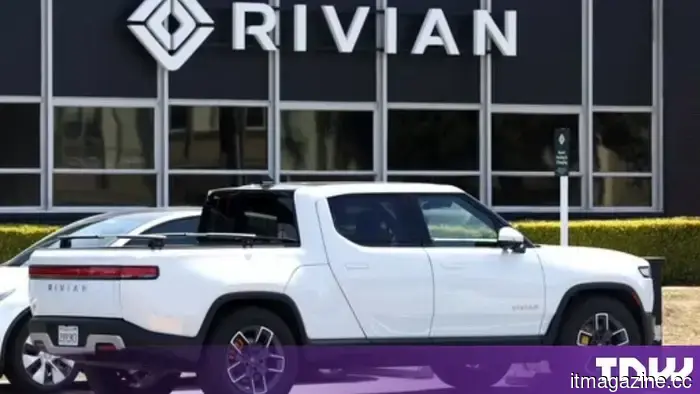 Rivian's Chief Financial Officer is departing following six years in the role.
Claire McDonough is departing from Rivian in October after six years. Volkswagen is now the company's largest shareholder, with a significant portion of its $5.8 billion commitment linked to specific milestones.
Rivian's Chief Financial Officer is departing following six years in the role.
Claire McDonough is departing from Rivian in October after six years. Volkswagen is now the company's largest shareholder, with a significant portion of its $5.8 billion commitment linked to specific milestones.
AI agents are being equipped with wallets: the Web3 framework supporting the machine economy.
Varun Datta, a venture capitalist in the Web3 space and the CEO of Truth Ventures, examines the ways in which AI agents, digital wallets, and micropayments generate new investment possibilities.