
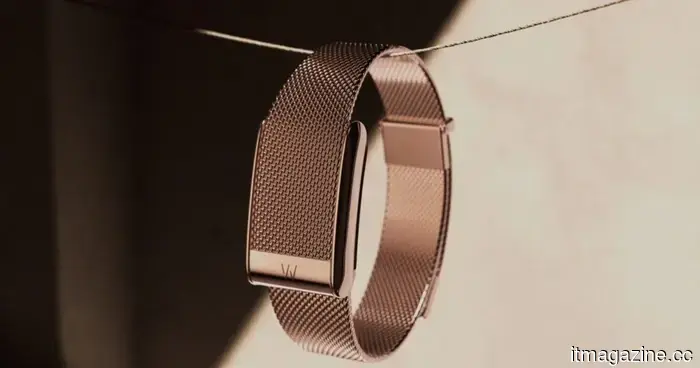
Whoop’s $149 jewelry band is priced higher than the total cost of Google's Fitbit Air.
Whoop's latest smart band enhances its appearance but sacrifices some functionality at the same time.
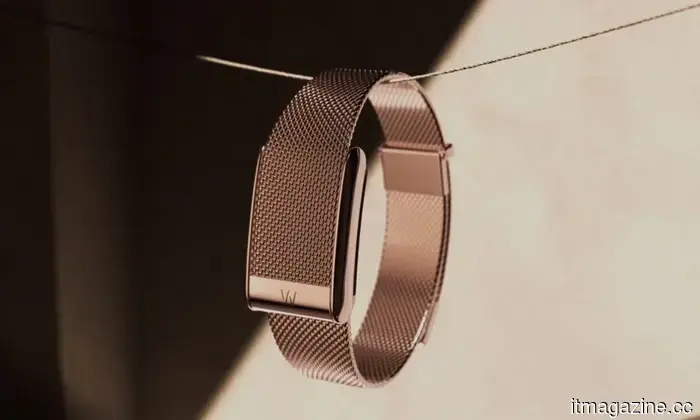
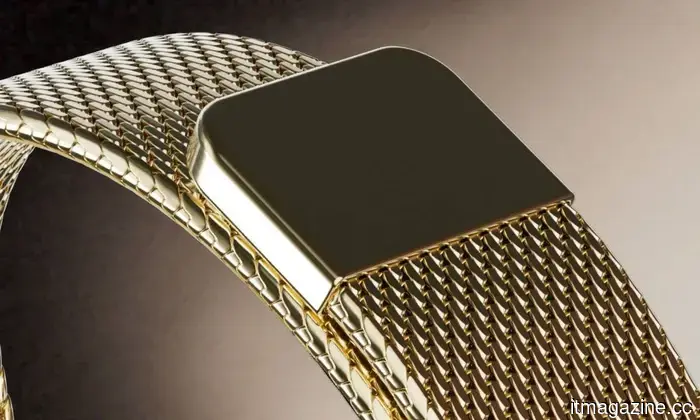
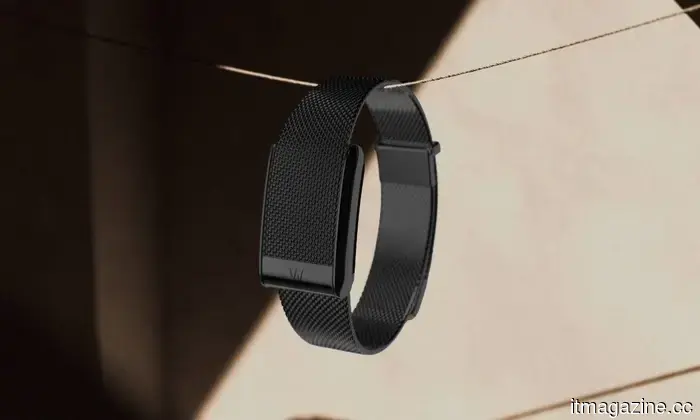
The Whoop Meridian transforms the typically sporty, screenless fitness tracker into a luxurious accessory. Instead of a silicone strap, it features a refined metal mesh band, a magnetic clasp, and four distinct finishes that fit better with jewelry than athletic footwear. Starting today, Whoop offers the Meridian in Gold, Rose Gold, Alloy, and Black for $149.
However, there is a minor issue. One of Whoop's key concepts is that users should wear the tracker continuously, and the higher-tier Whoop 5.0 memberships include a wireless power pack that charges the tracker without removing it. Unfortunately, the Meridian does not support this feature.
Improving aesthetics necessitates removing the tracker
Whoop’s wireless charger cannot deliver power through Meridian’s metal band, meaning the tracker must be taken off to charge it. This absence of a convenient feature may disappoint users who are meticulous about continuous health tracking and prefer not to have any gaps in their data.
The company addressed this design shift in its official announcement, highlighting that the new look suits environments where individuals typically take off a fitness tracker—such as during meals, events, travel, or when a fabric sports band doesn’t fit their outfit.
The tapered silhouette, Milanese-style mesh, and continuously adjustable magnetic clasp aim to make the Whoop resemble jewelry. This design change is appealing; during our review of the Whoop 5.0, we found the standard version comfortable and subtle, although its bulky fabric band was a drawback. The Meridian successfully addresses that concern.
Google’s Fitbit Air looks costlier
The Meridian retails for $149 just for the band. Users still require compatible Whoop hardware and an active membership, with subscriptions starting at $199 annually. In contrast, Google offers a complete Fitbit Air for $99.99, which includes a full health tracker that operates around the clock, featuring heart-rate monitoring, sleep tracking, workout detection, a seven-day battery life, and compatibility with both Android and iOS. More crucially, its primary health-tracking functionalities function without a Google Health Premium subscription.
These products target slightly different audiences. Whoop places greater emphasis on detailed recovery, strain, and performance metrics, while Fitbit Air aims to simplify and economize passive health tracking. For $50 less than Whoop's new strap, Google provides the entire tracker, making it more attractive for users already embedded in Whoop's ecosystem.
Vikhyaat Vivek is a tech journalist and reviewer with seven years of experience in consumer hardware, focusing on…
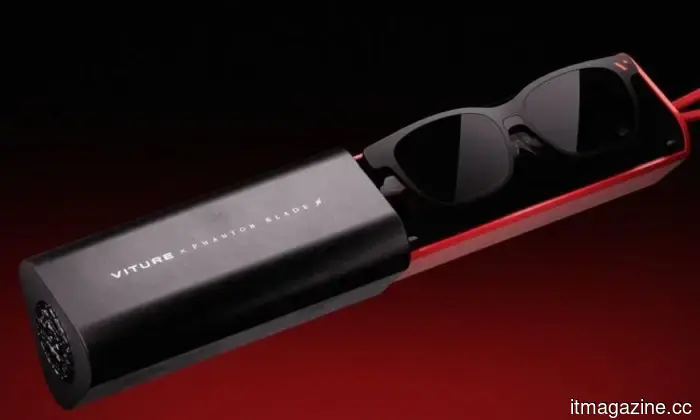
VITURE’s new XR glasses are reminiscent of Phantom Blade Zero
Phantom Blade Zero is poised to be among the year's more compelling action games, but it seems that playing it on a standard screen isn't fully immersive. VITURE collaborated with developer S-GAME to create a unique pair of XR glasses tailored specifically for the game.
Named the VITURE x Phantom Blade Zero: Phantom Beast, these limited-edition glasses modify VITURE’s existing Beast XR hardware, giving it a striking redesign inspired by the game's fusion of wuxia, martial arts, and punk fantasy themes. Pre-orders are available for $599, with an official launch on October 29, coinciding with the release of Phantom Blade Zero itself.
Apple may unveil AirPods 5 alongside new iPhones
Your next earbuds upgrade might be imminent. Apple is anticipated to refresh its entry-level AirPods this autumn, aligning perfectly with the company's iPhone launch event. Mark Gurman of Bloomberg suggests that AirPods 5 could be revealed during the September 9 event featuring the foldable iPhone and iPhone 18 Pro lineup. This update is overdue, as the current AirPods 4 have not been refreshed since their release in September 2024. If you've been holding off on upgrading your older pair, this might be the moment.
macOS 26.7 intensifies the launch speculation.
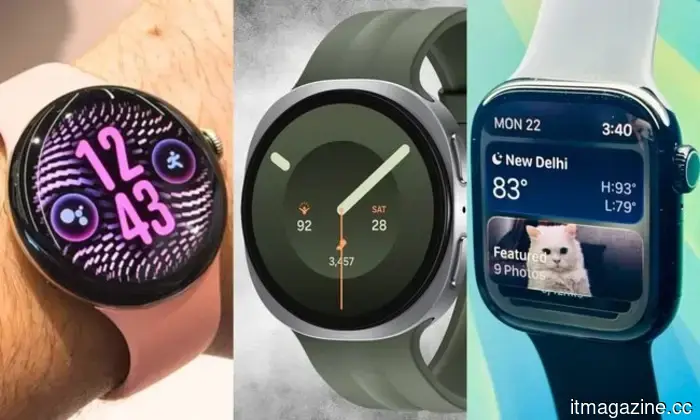
Pixel Watch 5 vs. Galaxy Watch 9 vs. Apple Watch Series 11: Exploring different ways to prioritize health
Google has Health Guardian, Samsung offers BioActive Sensor, and Apple provides Hypertension Notifications.
While Google has struggled to keep up with its competitors in the smartwatch space—especially regarding health tracking features—the Pixel Watch 5 seems to be its most robust attempt to bridge that gap. With innovative offerings like Insulin Resistance Trends and Breathing Emergency Detection, Google is making a significant move in a domain where wellness and proactive monitoring are increasingly valued.
As the Pixel Watch 5 competes with Samsung’s Galaxy Watch 9 and Apple’s Watch Series 11, the distinctions go beyond the typical Android versus iOS separation. The pertinent question is not which smartwatch boasts the longest feature list, as they are all confined to their ecosystems, but which device implements those features more effectively or innovates using existing sensors.


Otros artículos
 Windows 11 might soon allow you to turn off your computer using your mobile device.
Microsoft is said to be testing new Phone Link features that would allow Android users to remotely power off, restart, or put a Windows 11 PC into sleep mode.
Windows 11 might soon allow you to turn off your computer using your mobile device.
Microsoft is said to be testing new Phone Link features that would allow Android users to remotely power off, restart, or put a Windows 11 PC into sleep mode.
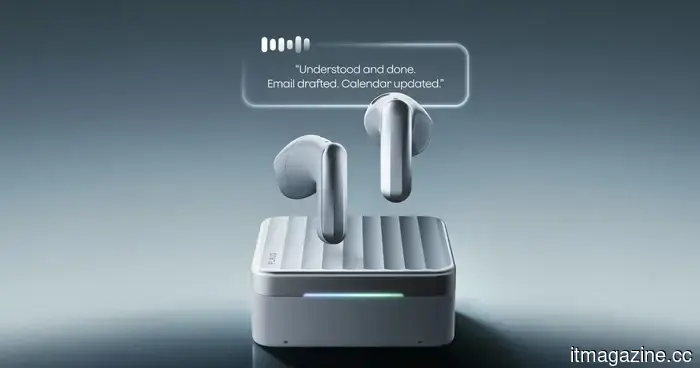 Plaud One AI earbuds have the ability to recall conversations and assist in completing tasks afterward.
The Plaud One Explorer Edition merges AI earbuds, 4G connectivity, and the Plaud Agent to record conversations, grasp context, and generate follow-ups within work applications.
Plaud One AI earbuds have the ability to recall conversations and assist in completing tasks afterward.
The Plaud One Explorer Edition merges AI earbuds, 4G connectivity, and the Plaud Agent to record conversations, grasp context, and generate follow-ups within work applications.
 The Galaxy S27 Pro may adopt the Ultra's new design, capturing the essence of the iPhone.
Recent CAD renders allegedly reveal that the Galaxy S27 Pro will feature a significant camera redesign akin to that of the forthcoming Galaxy S27 Ultra.
The Galaxy S27 Pro may adopt the Ultra's new design, capturing the essence of the iPhone.
Recent CAD renders allegedly reveal that the Galaxy S27 Pro will feature a significant camera redesign akin to that of the forthcoming Galaxy S27 Ultra.
 Rivian's Chief Financial Officer is departing after six years.
Claire McDonough will depart from Rivian in October after six years with the company. Volkswagen is currently the largest shareholder, with a significant portion of its $5.8 billion commitment linked to specific milestones.
Rivian's Chief Financial Officer is departing after six years.
Claire McDonough will depart from Rivian in October after six years with the company. Volkswagen is currently the largest shareholder, with a significant portion of its $5.8 billion commitment linked to specific milestones.
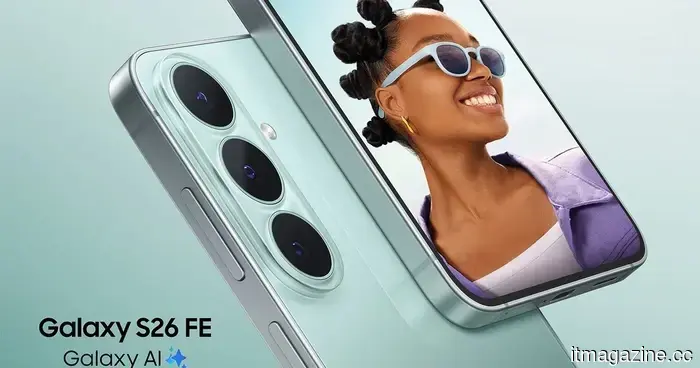 The Galaxy S26 FE has been officially announced, and Samsung isn't significantly changing its approach.
Samsung has introduced the Galaxy S26 FE, featuring an Exynos 2500 processor, a 4,900mAh battery, well-known camera systems, and One UI 9.
The Galaxy S26 FE has been officially announced, and Samsung isn't significantly changing its approach.
Samsung has introduced the Galaxy S26 FE, featuring an Exynos 2500 processor, a 4,900mAh battery, well-known camera systems, and One UI 9.
 BYD recharged a vehicle 350 times over the span of nine days.
BYD reports that a Yangwang U7 retained 98.7% of its battery capacity following 350 ultra-fast charges within a span of nine days. The Euro 7 regulation will begin requiring 80% retention after five years starting in November.
BYD recharged a vehicle 350 times over the span of nine days.
BYD reports that a Yangwang U7 retained 98.7% of its battery capacity following 350 ultra-fast charges within a span of nine days. The Euro 7 regulation will begin requiring 80% retention after five years starting in November.
Whoop’s $149 jewelry band is priced higher than the total cost of Google's Fitbit Air.
The new $149 Meridian band from Whoop outfits the Whoop 5.0 in a metal mesh inspired by jewelry, but its design requires you to take off the tracker whenever it requires charging.