
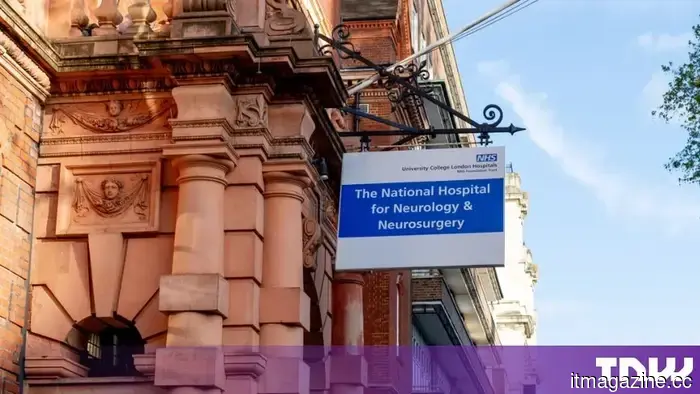
Surgeons in London have performed the first-ever brain tumor removal surgery with the assistance of AI.
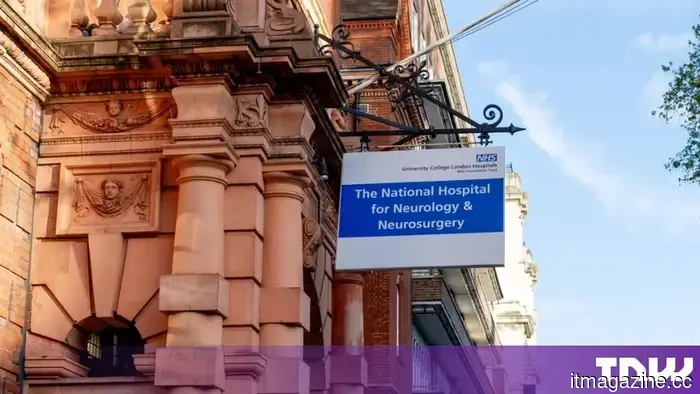
Surgeons at the National Hospital for Neurology and Neurosurgery in London have successfully performed the world’s first AI-assisted brain tumor removal, according to University College London Hospitals. The AI system analyzed live footage during the surgery, aiding the team in pinpointing nearby nerves and blood vessels. This technology is part of a suite of clinical tools that have demonstrated greater accuracy in assessing certain rare cancers than traditional biopsy methods.
The procedure took place in May, but updates were kept confidential until Thursday to allow the patient to recover. It was performed at NHNN, which is part of University College London Hospitals NHS Foundation Trust, established in 1859 as the first hospital dedicated to neurosurgery.
The patient, Rhys Hibbert, a 48-year-old customer service manager from Bedfordshire, had been diagnosed in 2024 with an 11mm tumor on his pituitary gland, which he initially managed without surgery. His symptoms worsened, leading to severe hormone imbalance and vision issues, with health professionals stating that without the surgery, he risked going blind.
The pituitary gland is located behind the nasal cavity and beneath the optic nerves, and in this type of operation, the team accesses it using an endoscope inserted through the nose. This endoscope provided the camera feed utilized by the AI system.
According to UCLH, the AI system assisted the surgical team in identifying vital anatomy, surgical instruments, and tissue interactions in real-time while the team retained complete control of the surgery.
Dr. Sophia Bano, an associate professor of robotics and AI at UCL, led the technical efforts. “By analyzing hundreds of surgical videos, [the system] learned from a wide range of surgical examples that would take a surgeon many years to experience firsthand,” she noted.
An earlier phase of the UCL research program was publicly shared in 2023 when the technology had been trained using over 200 recordings of pituitary surgeries. At that time, researchers anticipated that AI would assist in brain surgeries within two years. UCLH reported that the AI system gathered the equivalent of a decade's worth of surgical experience in approximately 10 months.
Hibbert shared how his recovery has positively impacted his vision, stating, “When I woke up, I could see everything in the room clearly.” He described it as if he now has “a 360-degree panoramic view of everything around me.” He returned to work just weeks after the surgery, experiencing rapid recovery of his vision and mobility. He also highlighted the hospital's legacy, remarking that it is fitting for it to be the first in the world to perform AI-assisted neurosurgery.
The National Institute for Health and Care Research funded the operation as part of a clinical trial. Prof. Mike Lewis, the NIHR's scientific director for innovation, referred to it as “pioneering surgery” that underscores “the potential of advanced AI to assist surgeons and enhance patient care.”
The team has previously published findings related to this issue. A 2024 study in npj Digital Medicine evaluated the approach offline on static images, indicating that AI assistance improved the accuracy of anatomical annotation from 70.7% to 77.5% using a standard overlap metric. The study noted more significant improvements for medical students, with their scores increasing from 66.2% to 78.9%, compared to more seasoned participants. When operating independently, the model attained a score of 79.1% on a separate test set.
The model discussed in that paper was trained on 640 images sourced from 64 surgical videos. The authors characterized the work as an offline assessment rather than evaluating the system in an actual surgical context.
The AI system utilized in the operation has not been disclosed to the public, and no data regarding accuracy or outcomes from the surgery has been released. Additionally, details about the trial's name, size, and design were not provided, and no regulatory status was specified, as is the case with clinical devices like the FDA-authorized robotic blood-draw system or commercially used clinical AI agents in hospitals.
Other articles
 The regulator in South Korea has stated that the restrictions imposed by Meta for teenagers should be enforced globally, rather than being limited to the United States.
South Korea's media regulator has contended that Meta's recently announced youth protections should be implemented globally, shortly after the company stated that these measures do not automatically apply everywhere.
The regulator in South Korea has stated that the restrictions imposed by Meta for teenagers should be enforced globally, rather than being limited to the United States.
South Korea's media regulator has contended that Meta's recently announced youth protections should be implemented globally, shortly after the company stated that these measures do not automatically apply everywhere.
 Huawei aims to establish additional AI partnerships in the pharmaceutical sector, primarily with Chinese pharmaceutical companies.
The president of Huawei's healthcare division has stated that additional collaborations with pharmaceutical companies are on the horizon, primarily involving local Chinese drug manufacturers.
Huawei aims to establish additional AI partnerships in the pharmaceutical sector, primarily with Chinese pharmaceutical companies.
The president of Huawei's healthcare division has stated that additional collaborations with pharmaceutical companies are on the horizon, primarily involving local Chinese drug manufacturers.
 I tuned in to Gamescom 2026 so you don't have to — here are 6 games that are worth the wait.
Gamescom 2026 offered a plethora of trailers and announcements, but these six titles — ranging from Metro 2039 to Nodus Fall — are the ones that have stayed with me.
I tuned in to Gamescom 2026 so you don't have to — here are 6 games that are worth the wait.
Gamescom 2026 offered a plethora of trailers and announcements, but these six titles — ranging from Metro 2039 to Nodus Fall — are the ones that have stayed with me.
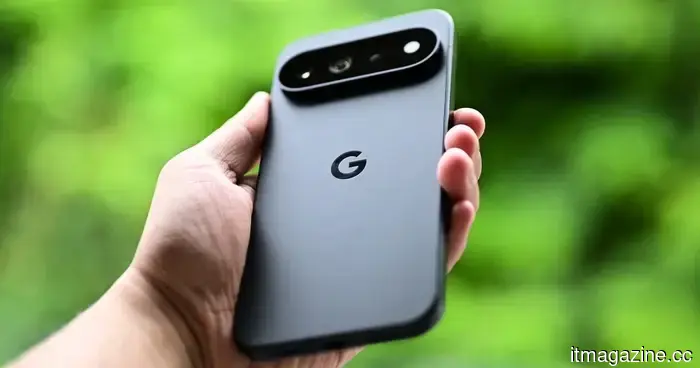 A few days in, the battery life of the Pixel 11 Pro XL hasn't been great for me so far.
After 72 hours of using the Pixel 11 Pro XL, I'm achieving less than 6 hours of screen-on time, which is significantly lower than the Galaxy S26 Ultra and iPhone 17 Pro Max.
A few days in, the battery life of the Pixel 11 Pro XL hasn't been great for me so far.
After 72 hours of using the Pixel 11 Pro XL, I'm achieving less than 6 hours of screen-on time, which is significantly lower than the Galaxy S26 Ultra and iPhone 17 Pro Max.
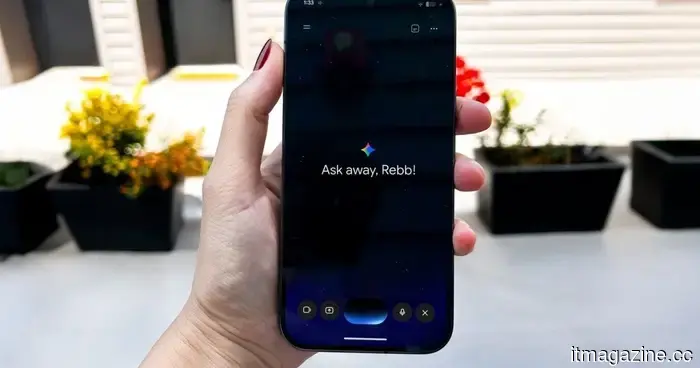 Gemini 3.5 Transcribe encourages you to let go of the pressure to be a flawless speaker.
Google's Gemini 3.5 Transcribe automatically eliminates filler words such as "um" and "ah" from your spoken content, converting disjointed speech into polished, organized text.
Gemini 3.5 Transcribe encourages you to let go of the pressure to be a flawless speaker.
Google's Gemini 3.5 Transcribe automatically eliminates filler words such as "um" and "ah" from your spoken content, converting disjointed speech into polished, organized text.
 Huawei intends to expand its AI pharmaceutical collaborations, primarily with drug manufacturers in China.
The president of Huawei's healthcare division mentioned that further collaborations with pharmaceutical companies are on the horizon, primarily focusing on partnerships with domestic Chinese drug manufacturers.
Huawei intends to expand its AI pharmaceutical collaborations, primarily with drug manufacturers in China.
The president of Huawei's healthcare division mentioned that further collaborations with pharmaceutical companies are on the horizon, primarily focusing on partnerships with domestic Chinese drug manufacturers.
Surgeons in London have performed the first-ever brain tumor removal surgery with the assistance of AI.
Surgeons at the National Hospital for Neurology and Neurosurgery in London successfully extracted an 11mm pituitary tumor using an AI system that analyzed the live feed from the endoscope.