

The regulator in South Korea has stated that the restrictions imposed by Meta for teenagers should be enforced globally, rather than being limited to the United States.
South Korea’s media regulator has stated that Meta's new protections for young users should ideally be implemented globally, rather than just in the markets that mandated them, which may seem like a modest statement but carries a significant request.
These measures stem from Meta's agreement with state attorneys general in the US, and the company has made it clear that these protections do not automatically extend beyond the US. The Korea Media and Communications Commission noted in a statement that social media companies must take more responsibility for safeguarding minors. Additionally, it highlighted that there are currently seven bills in the National Assembly intended to enhance youth protection on social media platforms.
Meta's commitments in the United States are notably detailed for a settlement of this nature. Accounts belonging to users under 18 will have a default daily limit of two hours across Facebook and Instagram, access will be restricted from midnight to 6am, and notifications will be disabled from 8am to 3pm on school days.
Further measures include a chronological feed option bypassing the recommendation algorithm, improved AI-based age estimation, hidden like counts on accounts for teens, and limitations on cosmetic surgery and makeup filters. An independent auditor will ensure compliance, although the arrangement still requires court approval and $5.3 billion of the funds depend on TikTok and YouTube adhering to these terms.
Meta has been clear that these changes do not automatically extend beyond US borders. When asked whether Canadian teenagers would receive the same protections, the company responded that it would “continue to monitor how these changes are working in the U.S. and engage in productive dialogue with other governments.”
This highlights the gap identified by the Korean regulator, as a product change settled in an American court becomes a baseline for American teens and a topic for discussions elsewhere, which seems a peculiar way to distribute safety features.
It is important to clarify that the commission's actions have been limited to discussion. The statement was issued to a news agency rather than a formal request, lacking any legal framework, deadline, or mandate.
The commission can resort to formal actions when necessary. For instance, in January, it used the Information and Communications Network Act to mandate X to establish youth protection measures for Grok and report on their outcomes, which reflects a significantly different kind of intervention.
The cautious approach has historical context. Korea's 2011 “shutdown law,” which prohibited under-16s from online gaming after midnight, was repealed in 2022 as unfeasible. Chairman Kim Jong-cheol has expressed a preference for a “customized and phased approach based on public deliberation” to avoid repeating past mistakes.
The pending bills in parliament propose a variety of approaches, from prohibiting those under 14 from accessing social networks, to limiting personalized recommendation algorithms for minors, to a daily usage cap for under-16s that closely resembles what Meta has accepted in the US.
Korea is not the only region voicing this concern this week. Australia's communications minister Anika Wells mentioned that platforms have always had the means to protect young users but have opted not to implement it, while the technology secretary in the Philippines expressed hope that the settlement would aid his discussions with the company.
Meanwhile, Europe has been addressing this issue through authoritative measures rather than mere statements, with the Commission determining that Meta’s autoplay and infinite scroll violate the Digital Services Act. The effectiveness of persuasion versus legal proceedings in prompting change is presently being tested across multiple continents.
Interestingly, Korea's authority to make such requests is contested from another angle. Republican members of the US House Judiciary Committee wrote to the commission's chairman this month challenging a specific amendment to that same Network Act, arguing that it targets American platforms. This complicates Korea’s call for the global application of an American settlement, making it a rather sensitive diplomatic issue.
Other articles
 LibreOffice 26.8 introduces many great features while avoiding any intrusive AI elements.
The Document Foundation has launched LibreOffice 26.8, which introduces enhanced paragraph typography, expanded spreadsheet functionalities, and no intrusive AI features to the open-source office suite.
LibreOffice 26.8 introduces many great features while avoiding any intrusive AI elements.
The Document Foundation has launched LibreOffice 26.8, which introduces enhanced paragraph typography, expanded spreadsheet functionalities, and no intrusive AI features to the open-source office suite.
 Apple has announced its 'Surprise and Shine' event scheduled for September 9.
Apple has announced an event for September 9, during which a foldable iPhone is anticipated, while the regular iPhone 18 has been postponed to spring.
Apple has announced its 'Surprise and Shine' event scheduled for September 9.
Apple has announced an event for September 9, during which a foldable iPhone is anticipated, while the regular iPhone 18 has been postponed to spring.
 Increasing expenses associated with the token consumption competition.
The reasons behind tokenmaxxing increasing AI expenses, the impact of model selection and context windows on LLM costs, and the importance for companies to prioritize results.
Increasing expenses associated with the token consumption competition.
The reasons behind tokenmaxxing increasing AI expenses, the impact of model selection and context windows on LLM costs, and the importance for companies to prioritize results.
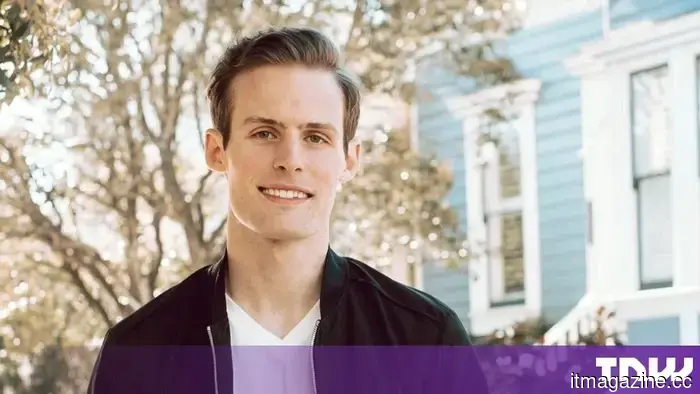 Barret Zoph is returning to Google after six years and two startup ventures.
Barret Zoph, co-founder of Thinking Machines Lab, is set to join Google DeepMind as Vice President of Research, just weeks after Demis Hassabis stepped down from his role as CEO.
Barret Zoph is returning to Google after six years and two startup ventures.
Barret Zoph, co-founder of Thinking Machines Lab, is set to join Google DeepMind as Vice President of Research, just weeks after Demis Hassabis stepped down from his role as CEO.
 Surgeons in London have successfully excised a brain tumor in the first operation of its kind to utilize AI assistance.
Surgeons at the National Hospital for Neurology and Neurosurgery in London excised an 11mm pituitary tumor while an AI system analyzed the live feed from the endoscope.
Surgeons in London have successfully excised a brain tumor in the first operation of its kind to utilize AI assistance.
Surgeons at the National Hospital for Neurology and Neurosurgery in London excised an 11mm pituitary tumor while an AI system analyzed the live feed from the endoscope.
 Ridley Scott has confirmed that the upcoming Alien film will focus on Michael Fassbender's character, David.
Ridley Scott has confirmed that a new Alien film will focus exclusively on Michael Fassbender's character, David, picking up from the cliffhanger conclusion of Covenant after a lengthy period of ambiguity.
Ridley Scott has confirmed that the upcoming Alien film will focus on Michael Fassbender's character, David.
Ridley Scott has confirmed that a new Alien film will focus exclusively on Michael Fassbender's character, David, picking up from the cliffhanger conclusion of Covenant after a lengthy period of ambiguity.
The regulator in South Korea has stated that the restrictions imposed by Meta for teenagers should be enforced globally, rather than being limited to the United States.
South Korea's media regulator has contended that Meta's recently announced youth protections should be implemented globally, shortly after the company stated that these measures do not automatically apply everywhere.